
Drawing a deer can be a challenging task for artists of all skill levels, but with some guidance and practice, anyone can capture its natural beauty in art. The anatomy of a deer is quite unique, with its slender legs, long neck, and distinctive antlers making it an interesting subject to draw. When attempting to draw a deer, understanding the essential poses and positions it assumes in nature is crucial, such as grazing or running through the forest. This article will cover the basic techniques for drawing a deer, including capturing its gentle movement, characteristic features, and natural habitat. By following these steps, you’ll be able to bring this majestic animal to life on paper, creating an accurate representation of its beauty in art.
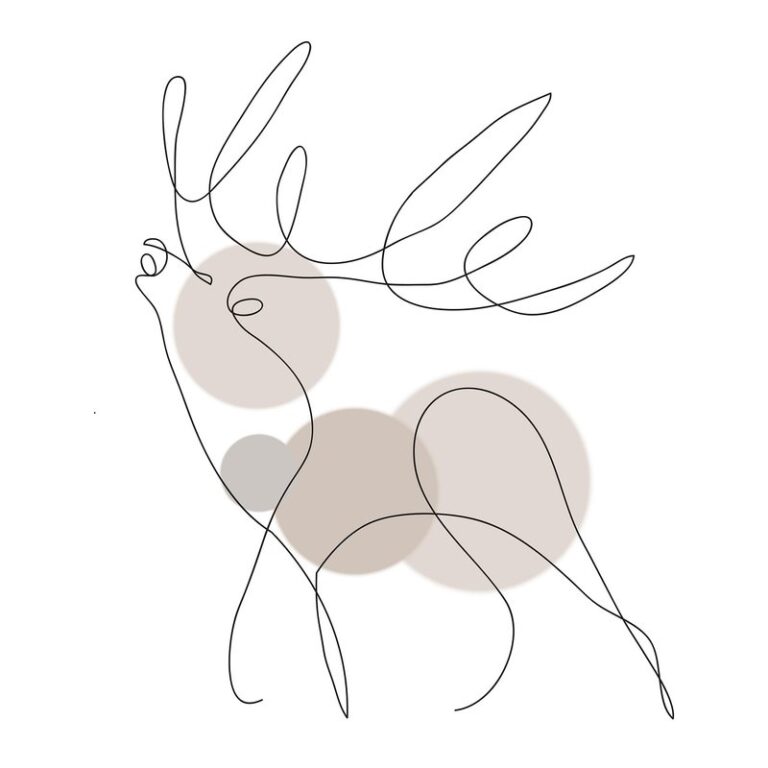
Understanding Deer Anatomy
To accurately capture a deer’s likeness on paper, it’s essential to understand its unique body structure and distinctive features. Let’s start by examining the key components of a deer’s anatomy.
Recognizing Key Features
When drawing a deer, it’s essential to recognize its key features, which can be simplified for artistic purposes. Start by noting the deer’s overall size and posture. A deer typically stands between 4 to 6 feet tall at the shoulder, with males being slightly larger than females. Observe how the body is proportioned, with a relatively long torso and shorter legs.
Pay attention to distinctive features like antlers in males or ears in both sexes. Antlers can be simplified by drawing them as a series of triangular shapes, while ears are more rounded and often framed by short fur. Note that deer have a relatively narrow chest and shoulders compared to their hindquarters.
When observing the body shape, consider simplifying it into basic forms like cylinders and ovals. This will help you capture the overall proportions and movement of the animal. For example, the torso can be broken down into an elongated oval, while the legs are cylindrical in shape. By breaking down the deer’s anatomy into these simplified forms, you’ll have a solid foundation for creating a realistic drawing.
Observing Deer Movement and Pose
When drawing deer, it’s essential to observe their movement and pose to capture their natural behavior. Deer are agile creatures, but they often take specific poses when grazing, running, or resting. For example, when grazing, a deer may assume a relaxed stance with its head lowered and legs spread wide. In contrast, when running, it will crouch low to the ground with its legs tucked under its body.
Observe how deer transition between these poses in nature. Notice how their posture changes depending on their activity level. For instance, a grazing deer may shift its weight onto one leg while raising the other, or a running deer may momentarily pause to catch its breath before resuming its sprint.
To accurately depict these movements and poses, pay attention to the deer’s muscle structure and flexibility. Observe how its muscles flex and relax as it moves. Notice also how its joints bend and straighten, especially in the legs, hips, and back. By observing deer movement and pose, you’ll gain a deeper understanding of their anatomy and be able to render them with greater accuracy in your art.
Sketching Basics: Tools and Techniques
To draw a deer that looks natural, you’ll first need to understand the basics of sketching, including choosing the right tools and techniques. Let’s start with the essentials.
Choosing the Right Medium
When it comes to drawing deer, choosing the right medium is crucial for capturing their unique features and subtle expressions. You have a variety of options to consider, each with its own strengths and weaknesses.
Pencils are an excellent choice for drawing deer, as they allow for a range of line weights and nuances in value. Graphite pencils provide great detail work and can be layered to achieve deep shading, while colored pencils add a pop of color without the need for mixing mediums. Charcoal is another popular option, offering expressive lines and rich textures that work well for capturing the deer’s musculature.
Ink can also be effective, especially when paired with a brush pen or dip pen for more fluid, gestural marks. Watercolor, on the other hand, requires a looser approach, using wet-on-wet techniques to achieve soft, blended edges and subtle color shifts. Digital tools, such as drawing software or tablets, offer unparalleled flexibility and control.
Consider your personal preference when selecting a medium: do you enjoy working with delicate lines or bold brushstrokes? Do you prefer the tactile feel of traditional materials or the precision of digital tools?
Basic Shapes and Lines
When sketching a deer, it’s essential to understand how to break down its body into fundamental shapes. Start by drawing an oval for the head, making sure it’s slightly tilted and positioned above the center of the page. The torso can be represented by a pair of connected rectangles: one larger rectangle for the main body and a smaller one for the ribcage. Don’t forget to add two smaller ovals for each hip.
Straight lines are used to draw the deer’s limbs, while curved lines help define its shoulders and chest. Pay attention to how these lines interact with one another – for example, where the shoulder meets the neck, or where the thigh meets the leg. Angled lines can be used to add depth and dimension, particularly when drawing the deer’s back legs.
When using basic shapes and lines, remember that proportions are key. A deer’s head is typically about one-fifth the size of its body, with the torso taking up around two-thirds of the overall length. By focusing on these fundamental forms, you’ll be able to capture the deer’s essence and lay a solid foundation for more detailed work later on.
Drawing Deer from Different Angles
Now that you have a solid understanding of deer anatomy, let’s explore how to draw a deer from unique perspectives and angles to add depth to your artwork.
Front View
When drawing a deer from the front view, it’s essential to consider the placement of its antlers. For males, these can be prominent and curved outward from the head, while females typically have smaller or absent antlers. Position them about one-third to halfway down the forehead, taking into account the deer’s breed and individual characteristics.
Next, focus on the ear position. Deer ears are relatively long and triangular in shape, often facing forward but sometimes slightly turned back. You can place them slightly above the eye level, angling them outward from the head.
The facial structure is also crucial for a convincing front view. Pay attention to the shape of the muzzle, which should be rounded and smooth. The eyes are usually positioned relatively close together and slightly above the nose. If you’re drawing a buck with large antlers, consider adding some expression to its face – perhaps tilting its head or raising an eyebrow.
To add character to your drawing, experiment with different postures and expressions. A deer that’s alert and aware might have its ears perked up and its eyes narrowed, while one that’s relaxed could have its ears laid back and a slightly open mouth.
Side Profile
When drawing a deer from a side perspective, it’s essential to consider its proportions and alignment. The shoulder alignment is particularly crucial, as it will determine the overall pose of the deer. Imagine a vertical line running down the center of the body; this should be roughly where the shoulder blades meet the spine. From there, you can draw the ribcage and hip area in proportion to the rest of the body.
Pay attention to how the legs are positioned in relation to the body. The front legs should be slightly forward of the hind legs, and the hooves should be placed on the ground with a slight weight-bearing pose. This will help capture the movement and energy of the deer.
To add dynamism to your side profile drawing, consider capturing the deer’s movement by suggesting its motion rather than drawing it explicitly. Use gentle lines and soft shapes to convey the flow of the animal as it moves through space. Avoid stiffening the legs or making them look too rigid; this will help create a sense of fluidity in the sketch.
When drawing from a side perspective, remember that less is more – don’t feel obligated to draw every detail. Focus on capturing the overall shape and movement of the deer, and you’ll be surprised at how much character and personality comes through in your drawing.
Adding Details and Texture
Now that you have a basic deer shape, let’s add some personality to your drawing by incorporating details like eyes, nose, and fur texture. This will bring your deer to life!
Antlers and Horns
When drawing antlers or horns, consider the overall shape and proportion to the deer’s body. Antlers are typically wider at the base than they are tall, with a broad, triangular shape that can be symmetrical or asymmetrical. Horns, on the other hand, tend to be more slender and curved.
Notice how the branching patterns of antlers vary depending on the species of deer. For example, white-tailed bucks often have branching antlers with multiple points, while mule deer have a single main beam with fewer tines. When drawing horns, you can observe the distinctive shape and texture of each individual’s unique growth pattern.
When working with different mediums, think about how they will enhance or distort these features. For example, watercolors can create soft, wispy branches, while pencil sketches allow for more precise definition. Experiment with layering mediums to achieve a realistic sheen on antlers or horns – this is particularly effective when drawing in light.
Pay attention to the overall shape of the antlers or horns in relation to the deer’s head and neck. Typically, the base of the antler or horn should align roughly with the base of the ear, while the tips extend outwards from the crown of the head. This helps create a balanced composition that draws the viewer’s eye to the deer’s distinctive features.
Furr and Coat Patterns
When drawing deer, it’s essential to capture their unique fur textures and coat patterns. These characteristics can vary significantly across different species, such as the white-tailed deer, mule deer, and reindeer. For instance, white-tailed deer often have a reddish-brown coat with white undersides, while reindeer sport thick, dark brown coats that help them blend into snowy environments.
To achieve realistic fur textures, use gentle lines and short strokes to suggest the direction of individual hairs. You can also employ hatching techniques, starting from light values and gradually building up to darker shades to create depth and dimension. For example, the guard hairs on a deer’s back might be rendered with thicker, more deliberate lines, while the undercoat is suggested by finer, softer strokes.
Different coat patterns require distinct approaches. A white-tailed deer’s white undersides, for instance, can be achieved by layering soft white hatching over the underlying brown color. Conversely, the darker patches on a mule deer’s forehead are best captured with short, dark lines that follow the contours of the face. By paying close attention to these details and experimenting with various techniques, you’ll be able to bring your deer drawing to life.
Advanced Techniques: Shading and Atmospheric Perspective
As we move on to adding depth and dimension to our deer drawing, let’s focus on mastering shading techniques that create a sense of atmosphere. Mastering atmospheric perspective will transport your deer to a more realistic environment.
Understanding Light Sources and Shadows
When drawing a deer, understanding light sources and shadows is crucial for capturing its three-dimensional form. You’ll want to consider the type of light source you’re using – direct sunlight, soft overcast light, or artificial lighting – as each will produce distinct shadow effects.
Soft light produces gentle, diffuse shadows that can create a sense of depth without harsh lines. Hard light, on the other hand, generates sharp, well-defined shadows that add volume and texture to your deer’s body. To capture these effects, use a range of values in your drawing, from pure white to deep black.
There are three main types of shadows: cast shadows (the dark area under an object), form shadows (the darker areas on the surface of an object), and core shadows (the darkest part of an object’s form). When drawing a deer, pay attention to how these shadow types interact with its body. For example, the cast shadow under the deer’s neck will be deeper than the one under its belly. By studying the interplay between light sources and shadows, you can create a more believable, three-dimensional representation of your subject.
Creating Depth and Distance
When drawing a deer from life or reference images, it’s easy to get caught up in rendering every detail with equal clarity. However, our eyes don’t perceive reality that way – distant objects blend into the background, and only the closest features stand out. To create depth and distance in your drawings, apply atmospheric perspective by manipulating details like texture, color, and contrast.
Start by softening textures and patterns as they recede into the background. For a deer drawing, this might mean fading the fur pattern on the hindquarters or losing definition in the coat’s darker areas. Contrast is also crucial – reduce it gradually as objects move further from the viewer. Use lighter shades of color for distant elements, like the far shoulder or hind legs.
Another key aspect of atmospheric perspective is occlusion: use overlapping limbs or foliage to suggest depth and distance. For example, a deer’s front leg might overlap its back leg, making the latter appear farther away. Remember that this is not about rendering everything with precision – it’s about creating a sense of space through subtle suggestions rather than explicit details.
Tips and Tricks: Overcoming Common Challenges
You may encounter some common challenges while drawing a deer, but don’t worry, we’ve got you covered with our top tips to overcome them. From proportion issues to antler woes, we’re sharing our expert advice.
Troubleshooting Proportion Issues
When drawing a deer, proportion issues can be frustrating and difficult to correct. To avoid mistakes, it’s essential to understand the basic proportions of the animal. Start by sketching the deer’s overall shape, paying attention to the placement of the head, body, and legs. Measure the distance between these key features using a ruler or measuring tool.
If you’re working from reference images or sketches, compare your drawing to the original. Notice if any areas seem off-proportion. Common mistakes include making the head too large or the antlers too small. To correct this, try reducing the size of the head or enlarging the antlers proportionally.
When measuring and adjusting proportions, remember that deer have a distinctive body shape. The head makes up about one-quarter of the animal’s total height, while the neck is roughly the same length as the head. Use these guidelines to check your drawing and make adjustments as needed. For example, if you’ve drawn the head too large, try shortening the neck or reducing the size of the ears to maintain balance.
Creating Expressive Portraits
When drawing a deer’s portrait, it’s essential to capture its personality and emotional state. This can be achieved through expression, posture, and body language. Start by considering the deer’s mood: is it alert and watchful or relaxed and curious? You can convey this through the angle of its head, the position of its ears, and the tension in its muscles.
A deer that’s feeling anxious or fearful will likely have a more tense posture, with its ears laid back and its eyes wide. In contrast, a calm deer might have its ears forward and its eyes relaxed. Experiment with different facial expressions by subtly altering the shape and position of the muzzle, nostrils, and lips.
To add depth to your portrait, pay attention to the deer’s gaze. Does it seem focused or distracted? You can convey this through the direction of its eyes and the subtle tension in its facial muscles. Remember, a deer’s expression is not just about its face – consider how its entire body language contributes to its overall demeanor. By capturing these subtleties, you’ll be able to create a portrait that truly conveys the deer’s personality.
Final Tips and Encouragement
Now that you’ve completed the step-by-step guide, let’s focus on a few final tips to help solidify your deer-drawing skills and boost your confidence.
Practice and Experimentation
As you continue to practice drawing deer, it’s essential to experiment with different mediums and techniques. Don’t be afraid to try new things – it’s often through experimentation that we discover our own unique style. For instance, you might find that you prefer the texture of charcoal or pastels for capturing the intricate details of a deer’s coat.
One way to stimulate your creativity is to seek inspiration from nature. Spend time observing deer in their natural habitats, taking note of their movements and poses. You can also use reference images of deer from various angles and lighting conditions. Don’t just limit yourself to photographs – explore paintings, drawings, or sculptures created by other artists that showcase the beauty and majesty of deer.
When experimenting with different mediums, it’s helpful to keep a sketchbook or journal where you can test out new techniques and materials. You might discover that you prefer the expressiveness of watercolors for capturing the subtleties of light and shadow on a deer’s hide. Or, you may find that digital drawing tools allow you to achieve a level of precision and detail that’s difficult to replicate with traditional media.
To take your practice to the next level, try incorporating different styles and perspectives into your work. You might draw a deer from a unique angle, such as a low-angle shot or a profile view. Alternatively, you could experiment with abstracting certain features, like simplifying the antlers or exaggerating the shape of the ears.
Remember that there’s no one “right” way to draw a deer – it’s all about developing your own voice and style through experimentation and practice. By embracing this process, you’ll not only become more confident in your drawing abilities but also develop a deeper appreciation for the natural world and its many wonders.
Frequently Asked Questions
How to Know When I’ve Finished Adding Details?
When drawing a deer, it can be challenging to know when you’ve added enough details without overdoing it. To gauge this, refer back to your reference images and compare the level of detail in those with your own sketch. Focus on capturing key features like fur texture, antler shape, and eye expression. If you’re still unsure, practice drawing deer from life or using different mediums to develop a sense of balance.
Can I Use Colored Pencils for Drawing Deer?
Yes, colored pencils can be an excellent choice for drawing deer, especially if you want to capture the rich colors and textures found in their coats. However, keep in mind that they may not be suitable for creating fine details or antlers. Choose a high-quality pencil with soft leads (B, 2B, or 4B) and layer your colors carefully to achieve deep, even tones.
How Do I Capture the Motion of Running Deer?
To draw deer running, observe how their legs are positioned in relation to their body and focus on capturing this movement. Use dynamic lines to convey energy and speed, and consider using a range of values (light and dark) to suggest motion. Practice drawing different poses and angles to develop your skills.
What if I’m Not Seeing Progress in My Deer Drawings?
If you’re struggling to see progress in your deer drawings, don’t be discouraged! Learning to draw takes time and practice. Try breaking down the process into smaller steps, focusing on one aspect at a time (e.g., mastering facial structure or antler shape). Use reference images and sketches to track your improvement, and consider experimenting with different mediums to find what works best for you.
Can I Draw Deer from Different Perspectives?
Yes, drawing deer from various angles can help add depth and interest to your art. Practice drawing them from the side profile, three-quarter view, and even rear perspective. Experiment with using atmospheric perspective to create a sense of distance and depth in your drawings.

