As an adult, you’ve probably been conditioned to believe that “creative” activities are only suitable for children. But what about those of us who still yearn for a creative outlet? Research shows that engaging in crafts can have a profound impact on our mental health and wellbeing, reducing stress and anxiety while stimulating our creativity. From intricate paper marbling techniques to vibrant fiber art installations, there’s a world of unusual crafts waiting to be explored. In this article, you’ll discover unique pursuits that not only bring joy and fulfillment but also provide opportunities for social connection and community building. Whether you’re a seasoned crafter or just looking for a new hobby, we’ll delve into the fascinating realm of paper crafts, fiber arts, and other unconventional creative endeavors that are perfect for adults seeking to express themselves and find calm in a chaotic world.
Getting Started: Choosing Your First Unconventional Craft
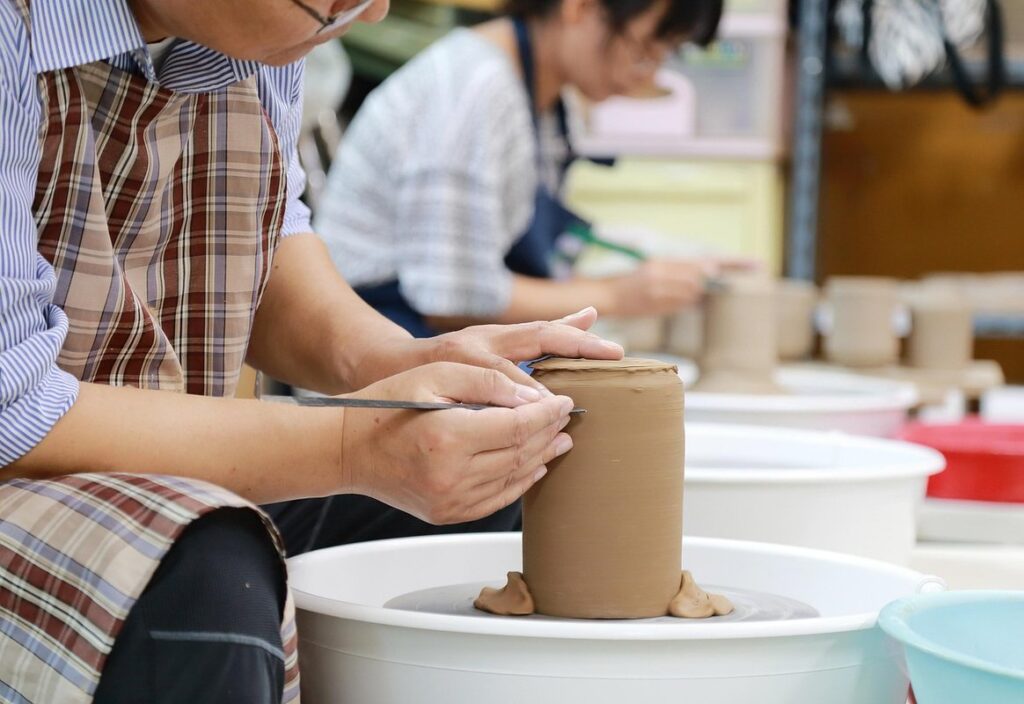
Choosing a new craft can be overwhelming, but starting with an unconventional one requires even more consideration. Let’s look at some key factors to consider when picking your first unique craft.
Understanding the Benefits of Adult Crafting
Crafting can be a powerful tool for adults to improve their mental and emotional well-being. One of the primary benefits is stress relief: engaging in creative activities has been shown to lower cortisol levels, heart rate, and blood pressure. This is because crafting allows individuals to focus on the present moment, quieting the mind and promoting relaxation. Additionally, crafting stimulates creativity, encouraging adults to think outside the box and explore new ideas. Whether it’s painting, drawing, or working with fabric, crafting provides an outlet for self-expression and imagination.
Crafting also offers opportunities for social connections. Join a local craft group or online community to meet like-minded individuals who share your interests. This can be especially beneficial for those who struggle to connect with others or feel isolated in their daily lives. Many craft groups offer classes, workshops, or events where you can learn new skills and collaborate on projects.
Some popular crafting activities that promote stress relief and social connections include knitting circles, art jam sessions, and DIY workshops. By incorporating these types of activities into your routine, you can experience the benefits of adult crafting firsthand.
Setting Up a Home Craft Space
Creating a dedicated home craft space is essential for unleashing your creativity and exploring unusual crafts. Start by designating a quiet, clutter-free area with good natural light. Consider investing in a comfortable ergonomic chair and a spacious worktable or desk to accommodate various projects.
When setting up your space, prioritize necessary tools and materials. Begin with the basics: scissors, glue, tape, and a variety of paints and markers. For paper crafts, you’ll need a cutting mat, craft knife, and ruler. Fiber arts require a loom or rigid heddle, while mixed media projects involve combining disparate materials like fabric, found objects, and adhesives.
To ensure ergonomic comfort during extended crafting sessions: maintain good posture by keeping your chair at the correct height; use a document holder to avoid neck strain; and take regular breaks to stretch your hands, wrists, and back. You can also incorporate storage solutions like bins, baskets, or shelves to keep supplies organized and within reach. As you experiment with different crafts, adapt your space accordingly to accommodate new tools and materials.
Paper Crafts: Beyond Scrapbooking
Paper crafting offers a wide range of creative possibilities beyond traditional scrapbooking, from intricate card making to elaborate origami designs. Explore these unique and engaging paper crafts that will challenge and inspire you.
Origami Artistry: Creating Intricate Designs
Origami has its roots in ancient Japanese tradition, where paper was folded to create simple offerings for temples. Over time, origami evolved into a sophisticated art form, with intricate designs and complex techniques. Today, origami artists push the boundaries of this traditional craft by experimenting with new folds, materials, and themes.
One key aspect of origami artistry is mastering the fundamental folds: valley fold, mountain fold, squash fold, and petal fold. These basic folds serve as building blocks for more intricate designs. For example, a simple cube can be transformed into a stunning 3D sculpture by combining these folds with precision and patience.
Incorporating origami into art and design adds an element of elegance and sophistication. Origami-inspired sculptures are often used in interior design to create unique decorative pieces. For instance, a large-scale origami installation can become the focal point of a room, adding texture and visual interest. To get started with origami artistry, begin by practicing basic folds and experimenting with different paper types, such as kami or washi. As you progress, explore more complex designs and themes to push your creativity and technical skills.
Card Making: A Guide to Unique Greeting Cards
When it comes to creating unique greeting cards, you have a wide range of paper crafting techniques at your disposal. One approach is to experiment with layering different textures and patterns. For instance, you can combine embossed cardstock with hand-stamped images or die-cut shapes.
To add an extra dimension, consider incorporating dimensional elements such as ribbons, buttons, or even 3D flowers. These can be attached using adhesives like glue or tape runners, but be mindful of the weight and balance on your design.
You can also use various folding techniques to create unique card designs. Examples include accordion folds, gatefold cards, or even pop-up elements that extend from the card’s surface.
Here are some key considerations when working with paper crafting techniques:
- Choose high-quality paper stocks that will hold their shape and withstand handling.
- Experiment with different folding techniques to add visual interest.
- Balance texture and pattern to create visually appealing designs.
- Don’t be afraid to add embellishments, but keep them tasteful and proportional to the overall design.
Fiber Arts: Unconventional Textiles and Weaving
From natural dyes to innovative loom techniques, we’ll explore the creative possibilities of fiber arts, where art meets textile innovation. Discover unconventional textiles and weaving methods to try at home.
Macrame Wall Hangings: A Beginner’s Guide
To create a macrame wall hanging, start by gathering materials. You’ll need cord or twine made from cotton, linen, or another natural fiber. A set of wooden dowels or rods will serve as the hanger’s base, and a few metal rings will help secure the knots in place. Don’t be afraid to experiment with different textures and colors; macrame is all about mixing patterns and materials.
Begin by learning basic knots. The lark’s head knot is a good starting point – it forms a loop at one end of the cord that can be easily tied around the dowel. Practice tying this knot until you feel comfortable with it, then move on to more complex ones like the clove hitch or sheet bend.
To create a wall hanging, tie multiple knots along the length of the cord, spacing them evenly apart. You can also experiment with different knot combinations and patterns. Once you’ve achieved the desired design, attach the metal rings to the top of the dowel to secure the cord in place. Hang your macrame masterpiece on a sturdy nail or hook, and enjoy the unique piece of textile art you’ve created.
Shibori Dyeing: Creating Unique Textile Patterns
Shibori dyeing is a traditional Japanese technique used to create unique and intricate patterns on fabric. The word “shibori” roughly translates to “wrinkled” or “folded,” which refers to the method of binding or folding cloth before dyeing it. This technique has been practiced for centuries, with evidence suggesting its use dates back to the Heian period (794-1185 CE).
To apply shibori dyeing to your fiber art projects, you’ll need to fold or bind fabric in a specific way. You can tie knots, fold fabric into accordion pleats, or even use a resist like wax or thread to create unique patterns. The bound areas will resist the dye, resulting in contrasting colors and textures.
The possibilities with shibori are endless, as you can experiment with different folding techniques, fabrics, and dyes to achieve one-of-a-kind results. You might try folding silk into intricate pleats and dyeing it indigo for a rich, luxurious effect or binding cotton with wax resist and dyeing it bright pink for a bold, graphic pattern.
When experimenting with shibori, keep in mind that the more complex your folds or bindings, the more interesting the resulting patterns will be.
Mixed Media Crafts: Combining Unusual Materials
Get ready to push the boundaries of creativity by learning how to combine unexpected materials, like fabric and metal, into one-of-a-kind art pieces. From repurposed containers to upcycled textiles, the possibilities are endless.
Assemblage Art: Creating Three-Dimensional Collages
Assemblage art is a unique and creative way to combine disparate objects into a cohesive three-dimensional collage. At its core, assemblage involves selecting and arranging found objects and recycled items to create a visually striking piece of art. You can use anything from old machinery parts to vintage clothing to create the base structure of your assemblage.
When working with assemblage, it’s essential to consider the weight, texture, and scale of each object. For example, pairing heavy metal pieces with delicate glass or fabric can create an interesting contrast that adds depth to your art piece. You can also experiment with different adhesives, such as hot glue, epoxy resin, or wire wrapping, to attach objects to a base material like wood or canvas.
Some popular materials for assemblage include:
- Found metal and machinery parts
- Vintage clothing and textiles
- Recycled cardboard and paper products
- Natural materials like branches, rocks, and shells
- Repurposed household items, such as old keys, gears, and other hardware
When creating an assemblage, remember to balance your objects visually and pay attention to negative space. Experiment with different arrangements and compositions until you achieve a cohesive look that tells a story or conveys a message.
Decoupage: Transforming Surfaces with Paper
Decoupage is a versatile and creative technique that involves applying cut paper designs to various surfaces. Before you begin, it’s essential to choose the right surface for decoupage. Consider using items like furniture, boxes, or even walls as canvases. The surface should be clean, dry, and free of dust.
To prepare your chosen surface, lightly sand it to create a smooth finish. This step helps the paper adhere evenly. Next, apply a coat of gesso or primer to the surface. This will help the paper stick and provide an even base for subsequent layers.
When selecting cut paper designs, consider the theme and style you want to achieve. You can use printed papers from magazines, books, or purchase specialty decoupage paper. Cut out intricate shapes and patterns, leaving a small border around each piece. Apply a thin layer of varnish or decoupage medium to the back of each design before placing it on the surface. Secure the design with a brush or your fingers, smoothing out any air bubbles that may form.
Upcycling and Repurposing: Turning Trash into Treasure
From old pallets to vintage bottles, you can breathe new life into discarded items by turning them into one-of-a-kind crafts that showcase your creativity. This section highlights some amazing upcycling ideas.
Old Map Art: Creating Unique Decorative Pieces
Old maps can be a fascinating material to work with in creating unique decorative pieces. To begin, select maps that have some visual interest, such as old navigational charts or vintage travel posters. You’ll need a cutting mat and a craft knife or scissors for the next step.
Cutting techniques depend on the desired outcome: you can use straight cuts for a clean border or curved cuts to create a more organic look. Consider using a technique called “map collage,” where multiple maps are arranged together to form a new composition. This approach is especially effective when working with maps of different scales or periods.
When arranging your maps, think about balance and contrast: pair bold colors with muted tones or juxtapose intricate details with simple borders. To add an extra layer of depth, consider layering transparent maps over solid-colored ones. Finally, choose a suitable frame that complements the style of your map art – wooden frames work well for vintage maps, while metal frames can give a more modern look.
Bottle Cap Crafts: Making Jewelry and Home Decor
To create jewelry and home decor from bottle caps, start by collecting a variety of caps with different sizes, shapes, and colors. Clean each cap thoroughly to remove dirt, grime, and residual adhesive. For jewelry-making, use a strong adhesive like epoxy or super glue to attach the caps to a chain or a pendant base. You can also use a jump ring or a head pin to connect multiple caps together.
For home decor items, consider using a hot glue gun to attach the caps to a wooden board or a canvas. This allows for more flexibility in design and arrangement. To add a personal touch, paint or draw designs onto the caps before assembling them into your project.
Some popular bottle cap crafts include creating a mobile by attaching multiple caps to a metal ring or a fishing line, or making a tabletop coaster using a single large cap as the base. When working with metal materials like bottle caps, be sure to wear protective gloves and work in a well-ventilated area to avoid inhaling any debris.
Advanced Techniques: Pushing the Boundaries of Unusual Crafts
Take your unusual craft skills to the next level by mastering advanced techniques, such as glassblowing and blacksmithing. These demanding crafts require patience, practice, and dedication to perfect.
Sgraffito Painting: A Guide to Layered Techniques
To master sgraffito painting, you need to understand its layered techniques. Preparation is key: start with a smooth surface, such as gessoed board or paper, and prime it if necessary. Choose the right tools – a sharp stylus or modeling tool will help you achieve fine lines.
When layering, begin with a base coat of paint, allowing it to dry completely before applying subsequent layers. This is crucial: even a small amount of moisture can cause the paint to lift, ruining your work. Next, use a gentle scraping motion to remove paint and reveal underlying layers. Experiment with different materials for scraping – metal or plastic tools will produce varying textures.
For successful sgraffito painting, pay attention to paint consistency and application methods. Apply thin coats to avoid overwhelming the surface, and consider using glazes for added depth. Practice different layering techniques, such as building up bold colors or creating subtle gradations.
Fused Glass Art: Creating Colorful, Textured Pieces
Working with fused glass requires a solid foundation in basic glassworking skills. You’ll need to learn how to handle and manipulate molten glass safely, which involves wearing protective gear such as heat-resistant gloves and safety glasses. A well-ventilated workspace is also essential due to the fumes emitted by some types of glass.
To create colorful, textured pieces, you’ll typically start with a flat sheet or rod of glass. This can be colored, transparent, or opaque, depending on your desired effect. To achieve texture, you might use various techniques such as layering different colors or applying powdered glass to the surface before firing. Fusing multiple sheets together at high temperatures will melt them into a single, cohesive piece.
Some common fused glass techniques include slumping, where the glass is formed over a mold, and frit work, which involves using small fragments of colored glass to create detailed designs. When working with heat-sensitive materials like frit or powdered glass, it’s crucial to follow specific firing schedules to avoid damage or discoloration.
Frequently Asked Questions
What if I’m a complete beginner with no crafting experience? Where do I start?
Start by exploring the different craft sections and find one that resonates with you. For example, if you enjoy paper crafts, begin with origami or card making. Don’t be afraid to ask for guidance from online communities or local craft stores. Begin with simple projects and gradually move on to more complex ones.
How can I combine multiple unusual crafts to create a unique piece of art?
Combining crafts is an excellent way to experiment and push your creativity. Start by selecting two or three crafts that you enjoy, such as paper crafting and fiber arts. Experiment with different techniques and materials to see what works well together. Don’t be afraid to try new things and make mistakes – they can often lead to innovative results.
Can I use unusual craft supplies in my everyday life, like decorating a room or making gifts?
Yes, you can definitely use your newfound crafting skills for practical applications. Consider upcycling old items or using materials you might otherwise throw away. This not only reduces waste but also adds a personal touch to your home decor or gifts.
How do I know if my unusual craft is worth displaying in my home, and what’s the best way to showcase it?
When deciding whether to display your craft, consider its aesthetic value and how it makes you feel. If you’re proud of your creation, it’s likely worth showcasing. Use a mix of presentation techniques such as framing, hanging, or displaying on a shelf to create visual interest.
Can I adapt unusual crafts for children, or are they best suited for adults?
While the article focuses on adult crafting, many unusual crafts can be adapted for kids with some creativity and patience. For example, you can use simpler materials and techniques in paper crafting or fiber arts. Be sure to involve your child in the creative process, as this will not only make it more enjoyable but also help them develop their fine motor skills and imagination.