French knitting has long been a beloved technique for crafting beautiful garments with intricate textures and delicate patterns. But where did this ancient craft originate, and how can you master its unique skills to create stunning pieces? For beginners, French knitting can seem intimidating, but with the right tools and techniques, anyone can learn to produce exquisite results. In this guide, we’ll take a step back in time to explore the history of French knitting, covering the essential tools and materials needed to get started. You’ll also discover expert tips for mastering key techniques such as plying and cabling, allowing you to create intricate patterns with ease. By the end of this article, you’ll be well on your way to crafting beautiful garments that showcase your unique style and flair.
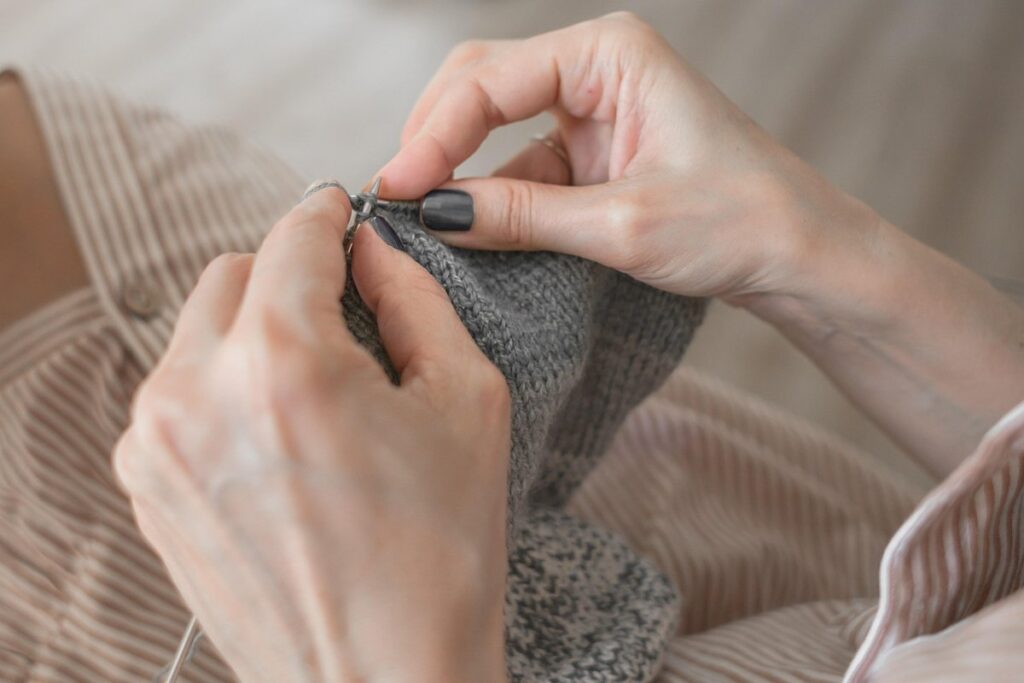
What is French Knitting?
French knitting, also known as tambour beading, is a traditional form of needlework that creates a unique fabric texture and visual effect. Let’s start by understanding its basic principles and how it differs from other types of knitting.
History and Origins of French Knitting
French knitting has its roots in traditional European knitting techniques, dating back to the Middle Ages. During this time, knitters in Europe developed various methods of creating intricate patterns and textures using a combination of knit and purl stitches. The unique twist that sets French knitting apart from other forms of knitting emerged in the 17th century in France, where it was known as “tambour.” This style of knitting used a specialized tool called a tambour needle to create a smooth, flat fabric with intricate patterns.
The tambour needle allowed for greater control and precision than traditional knitting needles, enabling knitters to produce complex designs quickly and easily. French knitting evolved over time, influenced by various cultural and artistic movements, including the Art Nouveau period in the late 19th century. During this time, designers experimented with new yarns, colors, and techniques, further developing the distinctive characteristics of French knitting.
Today, French knitting is prized for its unique blend of traditional craftsmanship and modern design flair. By understanding the history and origins of French knitting, you can appreciate the rich cultural heritage behind this beautiful and versatile craft.
Key Features and Benefits of French Knitting
One of the standout advantages of French knitting is its remarkable flexibility. Unlike other forms of needlework that require a rigid framework or stiff materials, French knitting can be worked on a variety of surfaces and with a range of yarns. This makes it an ideal choice for beginners who want to create garments on-the-go or experiment with different textures.
French knitting’s portability is also a significant benefit. Because the technique doesn’t rely on a fixed loom or frame, you can work on your French knitting project anywhere – whether that’s at home, in a park, or while traveling. This flexibility allows you to take breaks whenever you need to and pick up where you left off easily.
In addition to its practical advantages, French knitting also offers unique characteristics that set it apart from other needlework techniques. For example, the use of a single needle means that French knitting creates fabric with a soft, drapey texture that’s perfect for garments like scarves and shawls. This subtle difference in texture can make all the difference in creating a beautiful and functional piece.
French knitting is also surprisingly durable, making it an excellent choice for clothing and accessories that need to withstand wear and tear. With its flexible nature and soft, breathable fabric, French knitting projects are perfect for beginners who want to create garments that look and feel great.
Choosing the Right Tools and Materials
Now that you’ve mastered the basics of French knitting, it’s time to think about what you’ll need to bring your projects to life. Let’s look at how to select the right tools and materials for success.
Essential Tools for French Knitting
To get started with French knitting, you’ll need a few essential tools. These include a set of double-pointed needles (DPNs) and a pair of circular needles. The DPNs are used for working on small projects like hats and sleeves, while the circular needles come in handy for larger garments.
When it comes to yarn, choose one that’s suitable for French knitting. Look for yarns with a smooth, even texture and good stitch definition. Cotton, wool, and blends of these fibers work well. Avoid using very thin or very thick yarns, as they can be difficult to work with. Typically, you’ll want to use yarns with a medium weight.
In addition to needles and yarn, consider investing in a tapestry needle for weaving in ends and a yarn needle for sewing seams. A measuring tape or ruler is also essential for ensuring accurate gauge. Don’t forget to have some basic notions on hand, such as stitch markers and scissors. For beginners, it’s best to start with a simple project that requires minimal materials.
Understanding Yarn Weights and Fibers
When choosing a yarn for your French knitting project, it’s essential to consider not only the weight but also the fiber content. You can opt for natural fibers like wool, alpaca, or cotton, which offer excellent stitch definition and durability. However, they may be prone to pilling or shedding.
On the other hand, synthetic fibers like nylon or polyester are often smoother and easier to care for. They’re a good choice if you want a low-maintenance project. Blended yarns combine natural and synthetic fibers, offering a balance between performance and aesthetics.
When selecting a yarn weight, keep in mind that thicker yarns work up faster but may not be as drapey or flexible. Thinner yarns take longer to knit but can produce a more intricate fabric with better texture retention. Consider the project’s intended use and your personal preference for knitting speed versus stitch definition.
Some popular yarn weights for French knitting include sport, worsted weight, and bulky. You’ll also find specialty yarns like lace or chunky weights. When in doubt, consult the pattern recommendations or ask a knowledgeable seller at a craft store for guidance on choosing the right yarn for your project.
Basic French Knitting Techniques
Let’s start by covering the fundamental stitches that are the building blocks of any French knitting project, including the basic loop and wrap techniques. Mastering these essentials will set you up for success as you move on to more complex projects.
Cables and Twists: Essential Patterns for Beginners
To master French knitting, you need to understand two fundamental patterns: cables and twists. These techniques are essential for creating beautiful garments with texture and interest.
Cables involve crossing one stitch over another, creating a rope-like effect. To create a cable, start by placing the right needle in front of the left needle, then bring it back over the top, and insert it into the next available stitch. Hold the yarn in your non-dominant hand, keeping it taut but not too tight.
Twists involve crossing one stitch over another, but in the opposite direction of cables. To create a twist, place the right needle behind the left needle, then bring it forward under the top stitch and insert it into the next available stitch.
To begin with cables or twists, start with a simple project like a scarf or hat. Practice these techniques until you feel comfortable with them. Use online tutorials or knitting books for guidance if needed.
Working with Yarn Overs and Increases
When working with yarn overs and increases in French knitting, it’s essential to understand how these techniques interact. A yarn over (yo) is a simple stitch that creates a small hole in the fabric, while an increase (inc) adds one or more stitches to the row. In combination, these stitches can create complex textures and patterns.
To work with yarn overs and increases effectively, focus on maintaining consistent tension. Too much tension can cause the yarn over to pucker or distort the fabric, while too little tension may result in a loose, sloppy texture. Practice yo and inc stitches separately before combining them, as this will help you develop muscle memory and ensure accuracy.
When increasing with yarn overs, keep the following tips in mind:
• Use two consecutive yarn overs to create a wider increase.
• Try a knitted increase (knit into the front and back of the stitch) for a neater appearance.
• When decreasing (working decreases after increases), work two stitches together to maintain fabric balance.
By mastering these techniques, you’ll be able to add depth and interest to your French knitting projects. With practice, you’ll find that combining yarn overs and increases becomes second nature, allowing you to create intricate patterns with ease.
Intermediate French Knitting Projects
Now that you’ve mastered basic French knitting techniques, it’s time to challenge yourself with more complex projects, such as intricate lace shawls and textured sweaters. In this section, we’ll guide you through some beautiful intermediate-level designs.
Cabled Sweaters and Cardigans: A Step-by-Step Guide
To tackle a cabled sweater or cardigan project, start by selecting a pattern specifically designed for French knitting. Look for patterns with clear instructions and diagrams demonstrating cable techniques. Ensure you have the necessary tools: a set of double-pointed needles (DPNs) or circular needles in the correct size, along with a cable needle.
Next, review the pattern’s yarn requirements and select a suitable weight yarn that will hold the cables properly. Acrylic yarns are often preferred for their stitch definition and durability. Familiarize yourself with the basic cable techniques: knit two together (k2tog), slip one, knit one (skp), and twist two stitches.
Begin by knitting the body of your sweater or cardigan, focusing on creating a smooth, even fabric. Insert the cable needle to hold stitches while you work cables. To create a classic cable pattern, work a series of twists in a specific sequence: typically four or six stitches together, then knit the twisted stitches as one.
Pay close attention to the pattern’s increase and decrease instructions, as these can be critical in maintaining even tension and preventing a misshapen fabric. Practice makes perfect; don’t be discouraged if your first attempts at cabling are not flawless – with patience and practice, you’ll develop the skills needed to create beautiful, intricate cables.
Advanced Lace Patterns: Techniques and Tips
To achieve intricate designs with French knitting, you can employ techniques like Fair Isle knitting and intarsia. These methods involve working with multiple colors simultaneously to create complex patterns. With Fair Isle knitting, you’ll be alternating between two or more colors for each stitch, whereas intarsia involves carrying one color across an entire row before switching back to the next.
Brioche is another technique that can add visual interest to your French-knitted garments. This method creates a textured fabric with columns of knit stitches and purl stitches, often worked in two colors. To master brioche, it’s essential to pay attention to the way you handle the yarn overs and slipped stitches.
When working with advanced lace patterns, keep in mind that they can be quite demanding on your yarn. Choose materials that are suitable for intricate designs, such as fine merino or silk blends. These yarns will provide a smooth drape and subtle sheen, making them perfect for showcasing delicate patterns.
For Fair Isle knitting, try using a simple, repetitive pattern to begin with, and gradually introduce more complex designs as you become more comfortable with the technique. Experimenting with different color combinations can also help you develop your skills and style.
Tips for Troubleshooting Common Issues
When working on a French knitting project, it’s inevitable that you’ll encounter some setbacks – dropped stitches, uneven tension, and more. Here’s how to quickly identify and fix these common issues.
Managing Yarn Tangles and Snags
When working with yarns in French knitting, tangles and snags can be frustrating obstacles. To manage these issues, it’s essential to understand their causes. Tangles often arise from incorrect tension or excessive twisting of the yarn. To prevent tangles, always hold the yarn at a comfortable distance and maintain a consistent tension while knitting. When a tangle does occur, gently tease out the knots with your fingers, working from the end of the knitted fabric.
Snags are typically caused by misaligned stitches or uneven yarn tension. To address this, regularly check your gauge to ensure it’s consistent throughout the project. If you notice irregularities, adjust your stitch count and tension accordingly. For minor snags, try carefully picking out the snagged stitches with a yarn needle.
In some cases, tangles or snags can lead to more significant problems, such as holes or runs in the fabric. To prevent this, inspect your work regularly for signs of trouble. Use a magnifying glass or lamp to examine areas where tangles or snags are likely to occur. Regularly blocking your work also helps identify and resolve potential issues before they become major problems.
Addressing Inconsistent Gauge
Inconsistent gauge can be frustrating and costly to fix, especially when working on intricate French knitting projects. To identify the issue, check for irregular stitch counts, loose tension, or uneven fabric density. Measure your gauge regularly throughout the project to catch any problems early.
When measuring gauge, ensure you’re using a consistent method: take 10-15 stitches from the center of the work and measure them over a specific number of rows (usually 4-6). This will give you an accurate reading. If you notice discrepancies, check your yarn weight, needle size, or stitch pattern.
To address inconsistent gauge, try re-measuring with different needles or yarn weights to see if that improves the results. You can also adjust your tension by knitting more loosely or tightly depending on the project’s requirements. Another option is to use a ruler or measuring tape specifically designed for knitters, which can provide more accurate readings.
To maintain consistent gauge throughout a project, it’s essential to work in a distraction-free environment and focus on maintaining even tension.
Expert Tips and Variations for Advanced Knitters
For those who’ve mastered the basics of French knitting, we’ll share expert techniques to elevate your projects, including advanced stitch patterns and yarn combinations.
Experimenting with Colors and Yarn Combinations
When experimenting with colors and yarn combinations in French knitting, advanced knitters can create truly unique and breathtaking projects. One approach is to pair contrasting colors to highlight specific textures or patterns within a design. For instance, you might combine a rich, dark brown yarn for the main fabric with lighter beige or cream-colored accents to add visual interest.
To take this idea further, consider playing with subtle shades of the same color family. Soft pastel hues, muted earth tones, or gentle blues can create an ombre effect when layered in graduated intensity. This technique works particularly well with lace patterns, where the gradual shift in hue can evoke a sense of fluid movement.
Incorporating bold, bright colors can also add energy to your design. For example, you might use a primary color for a contrasting cowl or hatband, while matching the rest of the garment with more subdued tones. To tie these disparate elements together, experiment with subtle texture variations, such as combining smooth and chunky yarns in different sections.
Experimenting with bold colors requires careful consideration of how they will interact within your design. Try pairing a single bright color with multiple neutral shades to create visual balance.
Customizing Patterns: Tips and Tricks
When adapting existing patterns or creating entirely new ones, French knitting techniques offer a wealth of opportunities for customization. To begin, consider modifying an established pattern by swapping out colors or experimenting with different yarn weights and textures. This can create unique visual interest without requiring extensive reworking.
For instance, replace a standard cable pattern with an intricate lace motif to add a touch of whimsy. Alternatively, try substituting a plain sweater body with one featuring an ornate broderie anglaise trim – the possibilities are endless.
To take customization to the next level, create entirely new patterns from scratch using French knitting fundamentals. Start by designing a repeating sequence of stitches, incorporating variations in color and texture as desired. This can be achieved through strategic use of yarn overs, increases, and decreases.
One key consideration is choosing the right stitch ratio for your design. Typically, a 4:1 or 5:1 ratio works well for intricate patterns, while simpler designs may call for a 2:1 or 3:1 ratio. By experimenting with different ratios and techniques, you can develop a truly one-of-a-kind French knitting project that reflects your unique style and preferences.
Conclusion and Future Projects
Now that you’ve completed your first French knitting project, let’s talk about what’s next. We’ll explore ideas for new projects to keep your needles busy and skills sharp.
Final Thoughts and Encouragement for Beginners
You’ve made it through the beginner-friendly guide to French knitting! This is a major accomplishment, and you should be proud of yourself for taking on a new craft. As you continue to practice and hone your skills, remember that every project is an opportunity to learn and improve.
One key takeaway from this article is that French knitting is not just about creating beautiful garments – it’s also a way to express yourself creatively. Don’t be afraid to experiment with different yarn weights, fibers, and colors to find the combinations that work best for you. And when things don’t go as planned (and they probably will!), use those mistakes as chances to learn and adapt.
As you move forward in your French knitting journey, consider trying out new projects that challenge you but also excite you. You might be inspired by a beautiful cabled sweater or a delicate lace shawl – whatever it is, make sure it’s something that sparks your creativity and motivation. And don’t forget to join online communities or local knitting groups to connect with other knitters who share your passion.
Some specific project ideas for beginners to try next include a simple French-knitted scarf, a cabled hat, or a pair of fingerless gloves. These projects are great because they introduce you to new techniques while still being manageable and rewarding to complete. And remember, the most important thing is to have fun and enjoy the process – it’s okay if your finished project isn’t perfect!
Lastly, don’t be discouraged if your first few projects take longer than expected or require some ripping out of mistakes along the way. This is all part of the learning process, and every experienced knitter has been in your shoes at some point. So keep going, stay motivated, and celebrate your small victories – you’re building a beautiful collection of French-knitted garments that will bring joy to yourself and others for years to come.
Frequently Asked Questions
Can I use French knitting for baby clothes?
Yes, French knitting is ideal for creating adorable and delicate garments for babies. The technique’s flexibility allows for intricate patterns and soft textures that are perfect for little ones.
When selecting yarns for baby clothing, prioritize gentle materials with a soft texture to ensure the garment remains comfortable against sensitive skin. Consider using lightweight yarns or blends specifically designed for baby wear.
How do I adapt French knitting techniques for different body types?
French knitting is highly versatile and can be adapted to suit various body types by adjusting pattern repeats, stitch density, or modifying the original design. Experiment with different gauge settings or try creating custom patterns tailored to individual shapes.
To achieve a flattering fit, consider factors like proportion, balance, and harmony when selecting patterns and choosing yarns. Consult pattern tutorials or online resources for guidance on tailoring French knitting techniques to suit your body type.
Can I use French knitting for making socks?
French knitting is typically used for creating garments with intricate patterns and textures, but it’s not the best choice for making socks due to its limited dexterity in working with circular shapes. Traditional sock-knitting methods or specialized techniques are more suitable for this task.
If you’re determined to try French knitting on a sock project, be prepared for potential issues like uneven stitches, dropped yarns, and difficulties managing shaping. Start by practicing simple French knitting projects before attempting something as intricate as socks.
How do I troubleshoot inconsistent gauge in French knitting?
Inconsistent gauge can significantly affect the final appearance of your project. To address this issue, verify that you’re using the correct needle size, yarn weight, and tension for the pattern. Check your gauge regularly throughout the project by measuring a swatch or specific section.
If gauge inconsistencies persist, adjust your technique to achieve consistency. Practice maintaining an even tension while working with French knitting techniques to minimize errors. Keep track of your gauge measurements to identify potential issues early on.
Can I combine French knitting with other needlework techniques?
French knitting can be combined with other needlework techniques like lace-making or crochet for unique and innovative projects. This blending of methods allows you to experiment with different textures, patterns, and materials, expanding the creative possibilities of your craft.
When combining techniques, choose elements that complement each other in terms of texture, pattern density, and material properties. Research specific guidelines on how to merge French knitting with other needlework techniques for successful results.