
French knitting is an ancient craft that has been shrouded in mystery for centuries. Its rich history spans continents, with evidence of its use found in medieval Europe and Africa. Despite its age, French knitting remains a vital part of textile art today, offering a unique way to create intricate and textured fabrics. Unlike machine-knitted yarns, which can lack depth and character, hand-finished French knits possess a tangible quality that adds warmth and personality to any garment. You may have come across French knitting in high-end fashion or artisanal markets, but mastering the techniques behind this ancient craft requires more than just curiosity – it demands patience, skill, and practice. This article will explore the history of French knitting, expert techniques for creating textured textiles, and provide a comprehensive guide to help you bring this unique art form into your own creative projects.
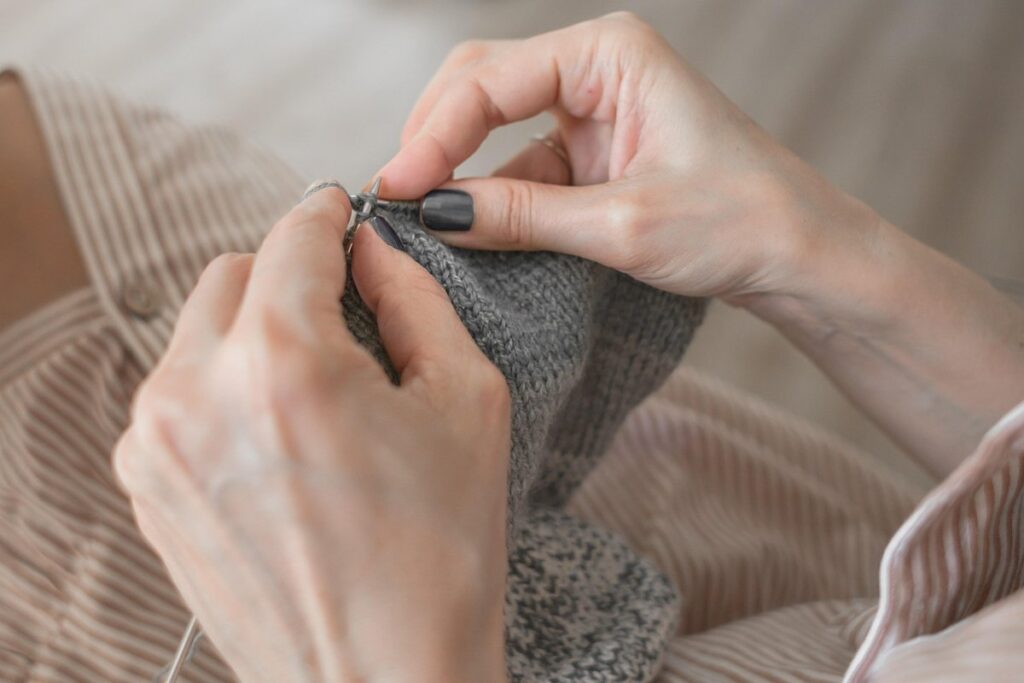
Understanding the Basics of French Knitting
French knitting has a rich history, and understanding its basic techniques is essential for mastering the craft. Let’s start by exploring the fundamental principles that underpin this ancient art form.
What is French Knitting?
French knitting is a distinctive type of needlework that stands out from other forms of knitting due to its unique process and appearance. At its core, French knitting involves using two or more needles to create fabric with a textured, woven look. This technique allows for the creation of intricate patterns and designs, often mimicking the appearance of woven fabric.
One key characteristic of French knitting is that it does not require the use of looms or other specialized equipment, unlike some other forms of needlework. Instead, the needles are used to manipulate yarn in a way that creates a dense, woven-like fabric. This makes French knitting an accessible and versatile technique for crafters of all skill levels.
French knitting can be created using a variety of yarn types and weights, allowing for a wide range of colors and textures to be incorporated into projects. Whether you’re looking to create clothing, accessories, or home decor items, French knitting offers a unique set of possibilities that are worth exploring further.
History of French Knitting
French knitting has a rich history dating back to 16th-century Europe. It’s believed to have originated in France, where it was known as “faux druid.” Initially, French knitting was used primarily for decorative purposes, such as creating intricate designs on gloves and other clothing items.
During the 17th century, French knitting gained popularity among European aristocrats who sought to create elaborate textiles with complex patterns. The craft required great skill and patience, but the end result was well worth it – delicate, lacy fabrics that shone like silk in the light.
Over time, French knitting spread throughout Europe, with different regions developing their own unique styles and techniques. In England, for example, French knitting became known as “Jacobean” or “Staircase knitting,” while in Germany, it was referred to as “Fransenstrick.” Despite its evolution, French knitting remained a beloved craft among the upper class.
By the 19th century, French knitting had become an integral part of European textile production. Its intricate patterns and delicate stitches made it an ideal choice for creating fine lace and embroidery. Today, French knitting continues to be practiced by enthusiasts around the world, who cherish its beauty and historical significance.
Choosing the Right Tools for French Knitting
When it comes to mastering the art of French knitting, having the right tools can make all the difference. In this next part, we’ll cover the essential equipment you need to get started.
Types of Needles Used in French Knitting
French knitting needles come in various materials, each with its own unique characteristics. Aluminum and steel needles are common choices due to their durability and affordability. They are available in a range of sizes, from small 1mm needles for intricate lacework to larger 10mm needles for chunky textures.
Another material option is wood, which offers a smooth, gentle feel on the yarn. Wooden needles can be particularly pleasant to work with, especially for those who prefer not to use metal. Some artisans also opt for bamboo or plastic needles, which are lightweight and easy to handle.
When selecting needles, it’s essential to consider the type of project you’re working on. For example, delicate lace patterns may require smaller, finer needles, while thicker yarns demand larger gauges. Additionally, some French knitting techniques involve using multiple needles at once, so be sure to choose ones that are comfortable to hold and work together smoothly.
In general, most needle manufacturers offer a range of sizes and materials specifically designed for French knitting. It’s worth checking the specifications and features of each type to ensure they meet your project needs.
Other Essential Tools for French Knitting
French knitting can be worked with a variety of yarns, each offering unique textures and properties. For example, smooth cotton or wool yarns are ideal for creating crisp, clean stitches, while chunky or bouclé yarns add depth and visual interest to the fabric. When selecting a yarn, consider the project’s intended use: delicate lace patterns often require fine-gauge yarns, while thick, warm sweaters benefit from bulky yarns.
In addition to needles and yarns, scissors are also an essential tool for French knitting. They come in handy for cutting excess yarn or trimming loose ends that can compromise the fabric’s integrity. Some knitters also use specialized tools like yarn needle tips or cable cutters to manage complex stitches or shapes.
Other supplies worth mentioning include measuring tapes or rulers for ensuring accurate gauge and pattern repeats, stitch markers for keeping track of place holders or patterns, and a good quality ruler for cutting straight edges in your work.
Basic Techniques of French Knitting
Now that you have a solid understanding of the history and origins of French knitting, let’s move on to the fundamental techniques that make it so unique. You’ll learn essential stitches and manipulations to master this intricate craft.
Casting On and Knitting Your First Row
Casting on for French knitting is a straightforward process. Begin by holding the needle with the points facing away from you and the cable end closest to your body. Make sure the yarn is hanging loosely, not twisted or bunched up. To cast on, create a slipknot on the needle by making a loop with the yarn and then hooking it with the needle. Pull the yarn gently to tighten the knot.
To cast on the first stitch, insert the right needle into the first stitch of the left needle, wrapping the yarn around the right needle as you would for a regular knit stitch. Then, pull the yarn through the loop on the right needle. This will create a French knit stitch.
Now that you have your first stitch cast on, it’s time to start knitting your first row. Hold the working yarn in your non-dominant hand and insert the right needle into the first stitch of the left needle. Wrap the yarn around the right needle as you would for a regular knit stitch, then pull the yarn through the loop on the right needle. Repeat this process until all stitches are complete.
A common mistake to avoid when casting on is creating twisted loops. To prevent this, make sure to keep the yarn tension even and not too tight.
Purling and Working with French Knit Stitches
To work with French knit stitches, you need to understand how they differ from regular knit stitches. The key difference lies in the way the yarn is manipulated on the needle. In a French knit stitch, the yarn travels under two needles before being worked back up through them, creating a smooth and flat fabric.
Purling with French knitting involves reversing this process. To purl a French knit stitch, you’ll bring the working yarn across to the right needle, but then pass it behind both needles instead of in front. This creates a textured stitch that’s slightly raised on one side.
When combining French knit stitches with purls, be mindful of how they interact. You may need to adjust your tension or make slight adjustments to the pattern to achieve the desired effect. For example, if you’re creating a fabric with alternating rows of French knit and purl stitches, you might find that the French knit stitch tends to pull the fabric slightly to one side.
To minimize this effect, try working a few rows of purls in between each row of French knit stitches. This will help balance out the texture and create a more even fabric.
Advanced Techniques in French Knitting
As you become more confident in your French knitting skills, it’s time to take on some of the most intricate and beautiful techniques that will elevate your projects to the next level. From cables to lace, we’ll explore the advanced methods that set true masters apart.
Cables, Twists, and Other Decorative Elements
French knitting offers a wide range of possibilities for creating intricate patterns and designs through cables, twists, and other decorative elements. To create cables, you’ll need to use a specific technique known as “cable needle manipulation,” which involves using a spare needle to hold stitches while working the rest of the row. This allows you to form the characteristic twisted stitch that gives cables their signature texture.
Twists, on the other hand, are created by manipulating individual stitches or groups of stitches to produce a diagonal or curved effect. This can be achieved through techniques such as crossing one stitch over another or using a combination of knit and purl stitches.
In addition to cables and twists, there are many other decorative elements you can incorporate into your French knitting designs. These might include increases, decreases, yarn overs, and simple textures created by alternating between knit and purl stitches. Experimenting with these techniques will help you develop the skills and confidence needed to tackle more complex patterns and projects. By mastering cables, twists, and other decorative elements, you’ll be able to add depth and visual interest to your French knitting creations.
Creating Textured Patterns with French Knitting
To create textured patterns with French knitting, you can experiment with various stitch combinations and techniques. One way to achieve texture is by incorporating different yarn weights and colors into your design. For example, alternating between a smooth, lightweight yarn for the background and a chunky, textured yarn for accents can add visual interest.
You can also manipulate the French knit stitches themselves to create texture. Try using a combination of knit and purl stitches to create a subtle ribbing effect or experiment with different stitch patterns, such as herringbone or chevron. These textures not only add depth to your design but can also help conceal any minor errors in the knitting.
Another technique is to use French knitting’s inherent flexibility to create three-dimensional effects. By manipulating the stitches on both sides of a row, you can create subtle undulations or even create small loops and coils that resemble embroidery. This technique requires some practice to master, but it allows for an incredible range of creative possibilities.
Tips for Troubleshooting Common Issues in French Knitting
As you continue with your French knitting journey, common issues may arise that can be frustrating to resolve. This section addresses some of the most frequent problems and offers practical solutions to help you get back on track.
Dealing with Tangles and Knots
When you encounter tangles and knots while French knitting, it can be frustrating, especially when working on a delicate or intricate piece. To prevent tangles from forming, try to keep your stitches even and not too tight. This will also help prevent the development of knots, which often occur when stitches are uneven.
To deal with existing tangles, work slowly and gently, carefully separating each stitch without pulling on the yarn too hard. You can use a detangling tool or a pair of thin needles to help work out the knot. If the tangle is particularly stubborn, try turning your work inside out and working from the wrong side.
To prevent knots from forming in the first place, make sure to keep your French knitting needles clean and free of debris. Regularly sweep away any stray yarn or fibers that may be accumulating on the needles. When changing colors or moving from one stitch pattern to another, take a moment to gently pull out any excess yarn to avoid tangles.
Fixing Mistakes and Errors in Your Work
When you make a mistake while working on a French knitting project, it’s essential to address the issue promptly to avoid spreading the error throughout the fabric. The first step is to identify the problem and its location. Take a close look at the stitches around the mistake to understand how it was created and what can be done to fix it.
In most cases, small mistakes can be easily corrected by ripping out the affected stitches and re-knitting them. For larger errors, you may need to remove several rows or even start over from scratch. To minimize the damage, try to catch mistakes as soon as they occur, rather than waiting until the end of a row or section.
To fix dropped stitches, carefully pick up the missed stitch with your needle and work it into place. For yarn overs or other small errors, you can often simply knit or purl over them without affecting the surrounding stitches. When fixing mistakes, keep in mind that French knitting’s texture is more forgiving than some other types of knitting, so you may be able to cover up minor errors with clever pattern placement.
Projects and Applications for French Knitting
French knitting has a multitude of practical uses, from decorative embellishments on garments to innovative textile art pieces. We’ll explore some inspiring projects that showcase its versatility.
Making Clothing with French Knitting
French knitting’s versatility makes it an excellent choice for creating a variety of clothing items. Scarves are a great place to start, as they require minimal shaping and can be completed quickly. A simple scarf pattern can be created using basic French knit stitches, while more complex designs can incorporate cables or twists.
When making sweaters or cardigans, French knitting’s ability to create textured patterns is particularly useful. For example, you can use the technique to create a subtle cable or twill pattern on the body of the garment, while leaving the sleeves plain. Alternatively, you can use French knitting to create a visually interesting trim for cuffs and hems.
Some key considerations when making clothing with French knitting include choosing the right yarn weight and needle size. As French knitting creates a dense fabric, it’s essential to select yarns that will hold their shape and provide adequate drape. Additionally, be mindful of the stitch pattern’s density when choosing a needle size – too large can result in a fabric that is loose and unfashionable.
A simple way to start experimenting with clothing projects is to try creating a basic hat or cowl using French knitting.
Using French Knitting for Home Decor and Accessories
French knitting is a versatile technique that can be used to create not only clothing but also home decor and accessories. One of the most popular applications of French knitting for home decor is making pillow covers, which can add a touch of elegance and sophistication to any room. To make a French-knitted pillow cover, you will need a bit of extra yarn and some basic knowledge of shaping and seaming.
You can also use French knitting to create bags, such as tote bags or market bags, that are both functional and stylish. These types of projects are perfect for using up leftover yarn and experimenting with different stitch patterns and colors.
When it comes to accessories, French knitting can be used to make a variety of items, including coasters, placemats, and even decorative wall hangings. For example, you could use French knitting to create a set of coasters with a unique geometric pattern or a decorative wall hanging that adds texture and interest to a room.
Remember to always swatch your yarn before starting any project to ensure the correct gauge and drape. This will help you achieve the desired look and prevent any potential issues down the line.
Conclusion: Exploring the World of French Knitting
Now that we’ve explored the history and techniques of French knitting, let’s summarize the key takeaways from our journey through this intricate craft.
Recap of Key Takeaways
French knitting is a unique and versatile craft that offers endless possibilities for creative expression. By mastering its basic techniques, you can create stunning garments, home decor items, and accessories with a distinct texture and visual appeal. This comprehensive guide has walked you through the history of French knitting, essential tools, and various techniques to help you get started.
You now know how to choose the right needles and other essential tools for French knitting. You’ve also learned basic techniques such as casting on, purling, and working with French knit stitches. Furthermore, you’re familiar with advanced techniques like cables, twists, and creating textured patterns. These skills will enable you to tackle various projects, from intricate lace shawls to cozy cardigans.
To recap the key takeaways:
- The history of French knitting dates back to the 19th century, where it was a popular pastime among European aristocracy.
- To get started with French knitting, you’ll need a pair of straight or circular needles and some practice with basic stitches.
- Casting on is an essential technique in French knitting, as it sets the foundation for your project. You can use either long-tail cast-on or knitted cast-on, depending on your preference.
- Purling and working with French knit stitches are crucial skills to master, as they provide texture and interest to your projects.
By applying these key takeaways, you’ll be well on your way to exploring the world of French knitting. Remember that practice makes perfect, so don’t be discouraged if your first attempts result in mistakes or uneven tension. Keep practicing, and soon you’ll be creating beautiful pieces with ease.
Frequently Asked Questions
How Long Does it Take to Master French Knitting?
Mastering French knitting requires time and practice, but with consistent effort, you can develop the necessary skills in a few weeks to several months. Start by dedicating a set amount of time each day or week to practicing different techniques.
Can I Use Regular Knitting Needles for French Knitting?
No, regular knitting needles are not suitable for French knitting due to their smooth surface and lack of specialized features that help create the distinctive woven texture. Invest in specialized needles designed specifically for French knitting.
What if My Fabric Becomes Misshapen or Uneven During the Knitting Process?
If your fabric becomes misshapen or uneven, don’t panic! Simply rip out the affected stitches, re-knit the problematic section, and continue with your project. Make sure to work in a consistent tension to prevent similar issues in the future.
How Do I Know When to Use Cables versus Twists in French Knitting?
The choice between cables and twists depends on the specific pattern you’re working on and the desired effect. If you want a more intricate, dimensional look, use cables. For a simpler, more subtle texture, opt for twists. Experiment with different techniques to develop your own style.
Can I Use Any Type of Yarn for French Knitting?
While French knitting can be done with various yarn weights and types, some materials may not produce the desired textured effect. Choose yarns that are specifically designed for French knitting or have a high texture and fiber content, such as wool or blends with a significant wool content.

