
Creating realistic depth in your artwork can be a challenging task, especially when trying to convey a sense of space and distance. One point perspective drawings are an essential tool for artists looking to achieve this effect, allowing them to create convincing illusions of three-dimensional environments on a flat surface. However, many beginners struggle to master the technique, finding it difficult to balance accuracy with artistic expression. In this comprehensive guide, you’ll learn the beginner basics and advanced techniques needed to create stunning one point perspective drawings that transport your viewers into another world. We’ll start from the fundamentals of establishing a vanishing point and gradually build up to more complex compositions, covering everything in between. By the end of this article, you’ll be able to confidently tackle even the most challenging one point perspective drawing projects with ease.
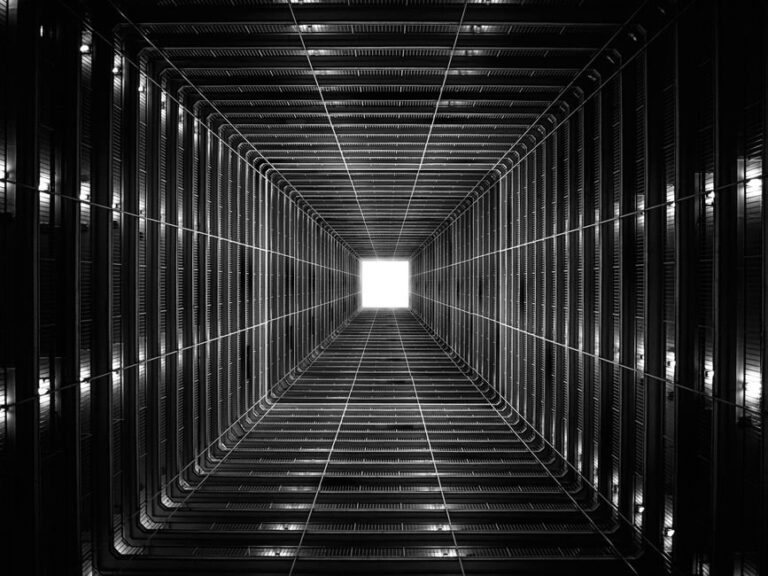
Understanding One Point Perspective
Let’s start by understanding the basics of one point perspective, where a single vanishing point on the horizon line helps create depth and dimension. This fundamental concept will be our building block for more complex techniques.
What is One Point Perspective?
One point perspective is a drawing technique that creates the illusion of depth on a flat surface by using a single vanishing point. This method is commonly used in architecture, interior design, and landscape painting because it allows artists to convey a sense of space and distance with precision.
To achieve one point perspective, you’ll need to identify a vanishing point on your paper and use it as a reference for drawing lines that converge at a single point. The vanishing point can be anywhere on the page, but it’s usually placed off-center to create a more dynamic composition. When drawing parallel lines that appear to recede into the distance, they should all converge at this single vanishing point.
One of the key benefits of one point perspective is its ability to create a sense of depth and space in a two-dimensional drawing. By using a single vanishing point, you can create a convincing illusion of distance and scale, which is particularly useful for artists working on architectural or interior design projects.
History of One Point Perspective
One point perspective has its roots in the Renaissance period, where it was employed by masters like Leonardo da Vinci and Michelangelo to create highly realistic and immersive drawings. These artists used the technique to depict grand architectural spaces, such as churches and palaces, with a high degree of accuracy.
Da Vinci’s use of one point perspective is particularly notable, as he often utilized it to convey a sense of depth and distance in his works. In his famous drawing, “The Virgin of the Rocks,” da Vinci employed a single vanishing point to create a convincing illusion of space. This technique allowed him to create a sense of airiness and grandeur in the composition.
Michelangelo also made use of one point perspective in his own work, often employing it to depict complex architectural spaces with multiple levels and perspectives. His use of this technique added a level of sophistication and realism to his drawings that was unmatched by other artists of the time.
The Renaissance masters’ use of one point perspective marked a significant turning point in the development of Western art, paving the way for future generations of artists to experiment with and refine this powerful drawing technique.
Benefits of Using One Point Perspective
One point perspective offers several benefits that make it a valuable technique for artists. By creating a sense of depth and space, one point perspective allows viewers to perceive a two-dimensional image as if they are looking down a real road or corridor. This illusion of depth is achieved by using converging lines that appear to recede into the distance, creating a clear hierarchy of elements within the scene.
One of the most significant advantages of one point perspective is its ability to enhance realism. By accurately depicting the way objects and spaces interact with each other in three-dimensional space, artists can create convincing and engaging scenes. This technique is particularly useful for drawing buildings, streets, and interior spaces where a clear sense of depth and proportion is essential.
Simplifying complex scenes is another benefit of using one point perspective. By establishing a single vanishing point, artists can create the illusion of a vast space from a relatively small area of the paper. This makes it easier to draw large-scale compositions without getting bogged down in details or feeling overwhelmed by the complexity of the scene.
Setting Up Your Paper
Before you start drawing, it’s essential to set up your paper correctly to achieve a convincing one point perspective. Let’s get started with creating a vanishing point and establishing your perspective lines.
Choosing the Right Paper Size
When choosing a paper size for one point perspective drawings, consider the scale and level of detail you want to achieve. A larger paper allows for more details and a greater sense of depth, but it also means you’ll have less room to refine your drawing. On the other hand, smaller papers can make your scene feel cramped.
Typically, artists prefer to work with a paper size that’s at least 11 x 17 inches (A3) or larger for one point perspective drawings. This gives them enough space to create a convincing illusion of depth without sacrificing too much detail. However, some artists may find smaller papers suitable for more stylized or abstract pieces.
To determine the ideal paper size for your project, think about the scene you’re trying to depict and how much depth you want to convey. If you’re drawing a large landscape with multiple layers, a larger paper will be necessary. But if you’re focusing on a simple still life or interior, a smaller paper might suffice.
Keep in mind that working with a larger paper can also lead to more precise measurements and calculations when setting up your perspective grid.
Understanding Vanishing Points
A vanishing point is a critical component in one point perspective drawing, serving as an imaginary point on the horizon line where parallel lines appear to converge. To locate a vanishing point effectively, start by identifying the center of your paper and extending it outwards along the horizontal axis.
Draw a small mark at this extended point, which will represent the vanishing point. When drawing, keep the vanishing point in sight as you work on your scene. Remember that each set of parallel lines should appear to converge at this single point. You can use a ruler or straightedge to help guide your pencils as you draw.
When working with one point perspective, it’s essential to place the vanishing point directly above or below the center of your paper for correct proportions. For example, if you’re drawing a cityscape, placing the vanishing point at eye level will create a realistic and balanced scene. Conversely, positioning it higher or lower can create an exaggerated or distorted effect.
By focusing on this single vanishing point, you’ll be able to achieve a more accurate representation of depth and scale in your one point perspective drawings. With practice and attention to detail, mastering the use of vanishing points will become second nature.
Measuring Your Paper
To ensure accurate measurements for your one point perspective drawing, start by measuring the length of your paper. Place a ruler along the longest edge and note the measurement. Typically, a standard A4 or letter-sized sheet is around 8-10 inches (20-25 cm) in height. For larger drawings, use a longer piece of paper or multiple sheets taped together.
Next, measure the width of your paper, using the same ruler. This will help you determine the proportions of your scene. Remember that one point perspective relies on converging lines, so it’s essential to have accurate measurements from the outset.
When measuring, take care to align your ruler with the edges of the paper, ensuring a straight edge. If necessary, use a combination square or other tool to guarantee accuracy. Consider using a pencil mark to indicate the measured length, allowing you to easily reference it later. By taking these simple steps, you’ll establish a solid foundation for your one point perspective drawing, ensuring that your proportions and measurements are accurate throughout the process.
Drawing the Horizon Line
Drawing a convincing horizon line is crucial for creating a believable one point perspective drawing, so let’s explore how to achieve it effectively. We’ll walk through the key techniques and tips to master this essential aspect of perspective drawing.
Identifying the Vanishing Point
To identify the vanishing point, start by holding your paper at eye level and looking down the center of the sheet. Place a ruler or straightedge along the edge of the paper, perpendicular to the direction you want the lines to converge. This will help you establish the horizon line’s position on the page. As you gaze down the ruler, focus on where the lines appear to meet in the distance – this is your vanishing point.
A common mistake is to place the vanishing point too close to one edge of the paper. Remember that the vanishing point should be roughly a third to halfway down from the top edge, depending on the scene’s height. If you’re drawing a low-angle perspective, such as a cityscape or a street, the vanising point may be closer to the middle.
To ensure accuracy, use a light box or a tracing paper to lightly draw a small dot where your eye perceives the vanishing point. Then, measure from that point to mark the position of the horizon line on both edges of the paper.
Creating the Horizon Line
To create the horizon line in your one point perspective drawing, start by placing a ruler or straightedge on your paper and locating the vanishing point. This is the single point where lines seem to converge as they recede into the distance. Using this point as a guide, draw a horizontal line across your paper with a pencil or pen. The position of this line will set the scale and proportion for the rest of your drawing.
As you draw the horizon line, consider the perspective you’re trying to achieve. Is it a wide landscape or a narrow alleyway? This will help determine where on your paper the horizon should fall. Typically, in one point perspective drawings, the vanishing point is placed about one-third from the top edge of the paper for exterior scenes and closer to the center for interior spaces.
Keep your line smooth and continuous as you draw it. Avoid wobbling or wavering, which can throw off the entire composition. You’ll use this horizon line as a reference later on when adding depth with orthogonals and building out your scene. Make sure it’s accurately positioned to establish a strong foundation for your one point perspective drawing.
Adding Depth with Orthogonals
Orthogonals are a crucial element in creating depth and structure in one point perspective drawings. These lines intersect at the vanishing point, pulling the viewer’s eye into the scene. To effectively use orthogonals, identify the main points of interest within your drawing, such as buildings or trees. Draw a line from each point to the vanishing point, ensuring these lines are parallel and evenly spaced.
By creating a series of intersecting orthogonals, you establish a framework for your scene. This grid-like structure helps define depth and proportion, guiding the viewer’s eye through the composition. For example, in a cityscape, draw an orthogonal from the top of each building to the vanishing point, then add additional lines to create depth and layers.
When drawing orthogonals, remember that their intersections should be precise and evenly spaced. A small mistake can disrupt the entire structure of your scene. To avoid this, use a ruler or straightedge to draw your initial lines, then carefully adjust them as needed. With practice, you’ll become more comfortable creating complex networks of intersecting orthogonals, adding depth and visual interest to your one point perspective drawings.
Building Your Scene
Now that you have a solid grasp of one point perspective basics, let’s focus on creating your scene by mastering the vanishing points and horizon line. This will help you build a visually appealing composition.
Drawing Parallel Lines
Drawing parallel lines is a crucial element in creating a convincing one point perspective drawing. When done correctly, parallel lines help establish depth and scale in the scene, making it feel more immersive and realistic. To practice drawing parallel lines, start by using the horizon line as a guide. Identify two or three points on the horizon line that are evenly spaced apart, then draw a line through each of these points, creating a series of parallel lines.
As you draw, pay attention to the direction and slope of each line. Make sure they converge at a vanishing point in the distance, rather than meeting abruptly at a 90-degree angle. This will help maintain the illusion of depth and create a more believable scene. It’s also essential to vary the length and spacing of your parallel lines to add visual interest and create a sense of movement.
When drawing parallel lines, it’s not just about creating a series of straight edges. Experiment with different shapes and forms, such as archways, columns, or doorways, using parallel lines as their foundation. This will help you develop a more nuanced understanding of one point perspective and improve your skills in drawing convincing architectural elements.
Adding Shapes and Forms
When adding shapes and forms to your one point perspective drawing, it’s essential to maintain accuracy and consistency. Use your established vanishing point, horizon line, and orthogonals as a guide to ensure that your objects are proportionate and correctly aligned.
To add a building or structure, for example, start by creating a rectangle on the ground plane using one of your orthogonals as a reference. From there, you can use measurement tools or perspective grids to draw the remaining walls and features, paying close attention to their proportions and angles relative to each other. Remember that in one point perspective, parallel lines converge at the vanishing point, so make sure to adjust your drawing accordingly.
When adding shapes and forms, also consider their height and depth in relation to the rest of the scene. Use orthogonals to create a sense of layering and depth, with objects receding into the distance as they approach the horizon line. By doing so, you’ll create a more convincing and immersive one point perspective drawing that draws the viewer’s eye through the space.
Refining Your Drawing
When refining your drawing, it’s essential to pay close attention to proportions and measurements. In one point perspective, parallel lines converge at a single vanishing point on the horizon line, creating depth and visual interest. To maintain accuracy, ensure that your shapes and forms are correctly proportioned relative to each other and the space they occupy.
For example, if you’re drawing a building with a clear facade, make sure the windows and doors are in proportion to the overall structure. You can do this by measuring the size of the building’s base and dividing it into sections or using a proportional grid system.
As you refine your scene, also consider the overall composition. Ask yourself: Are the elements in my drawing balanced and harmonious? Is there a clear focal point that draws the viewer’s eye? Use the rule of thirds to guide your placement of key features, such as buildings, roads, or other dominant elements.
In one point perspective drawings, it’s often helpful to use visual aids like a grid system or orthogonal lines to maintain accuracy and create a sense of depth. By paying attention to proportions, measurements, and composition, you can refine your drawing and create a more convincing, realistic scene.
Advanced Techniques
Now that you’ve mastered the fundamentals of one point perspective, let’s take it up a notch by exploring more complex techniques for creating realistic and engaging scenes. We’ll examine vanishing points, overlapping planes, and other advanced methods to add depth to your drawings.
Using Multiple Vanishing Points
Using multiple vanishing points is a technique used to create more complex scenes and add depth to your drawings. This approach involves identifying two distinct vanishing points on the horizon line, rather than relying on a single point as in one-point perspective. When using multiple vanishing points, you’ll need to establish two sets of parallel lines that converge at each point, creating a more dynamic and layered scene.
To effectively use multiple vanishing points, start by identifying the main areas of your composition where depth is key. This could be a building or an archway in a scene. Once you’ve identified these areas, create two vanishing points on either side of the horizon line, making sure they are equidistant and symmetrical.
When drawing parallel lines that converge at each vanishing point, use the same measuring technique as with one-point perspective to ensure accuracy. Be aware that using multiple vanishing points can introduce more visual complexity, so be mindful of maintaining consistent proportions and perspective throughout your scene. Practice is key when mastering this advanced technique, but with time and patience, you’ll be able to achieve stunning results in your one-point perspective drawings.
Creating Realistic Textures
Creating realistic textures is an essential aspect of one point perspective drawings. To add depth and immersion to your scene, you can practice creating different textures using various techniques. One way to achieve this is by studying the play of light on various surfaces. Observe how light falls on rough stone walls, smooth glass windows, or wooden furniture.
To create realistic textures, consider the following techniques:
- Use hatching and cross-hatching to suggest the texture of rough surfaces like stone or wood.
- Employ stippling for more detailed, intricate textures such as fabric or metal.
- Vary line weight and density to convey the smoothness or coarseness of a surface.
When drawing textures, remember that it’s not just about replicating what you see, but also about conveying the sensation of touch. Study the way light interacts with different materials, and experiment with different techniques to achieve a realistic effect. By mastering various texture-creating techniques, you can elevate your one point perspective drawings from simple representations to immersive experiences that draw the viewer in.
Advanced Perspective Grids
When working with complex scenes, a standard perspective grid may not provide enough structure. That’s where advanced perspective grids come into play. One technique is to create a grid system with multiple rows and columns, each representing a different depth level within the scene. For instance, you can use a 3×3 grid for a simple interior space, but a 5×5 or larger grid may be necessary for more complex compositions.
To determine the size of your advanced perspective grid, measure the width and height of the area you want to draw. Divide these measurements by the number of rows and columns you plan to use, ensuring that each section accurately represents the corresponding depth level. You can also use a measuring tool or a digital drawing program with a built-in measurement feature to help you create precise sections.
A key aspect of advanced perspective grids is using different measurement tools for various elements within your scene. For example, you might use a protractor to measure angles and create accurate vanishing points, while using a ruler for more straightforward measurements like widths and lengths. Experiment with different grid systems and measurement tools to find the combination that works best for your specific drawing needs.
Troubleshooting Common Issues
Don’t let frustrating mistakes hold you back from mastering one point perspective drawings – we’ll tackle common issues and show you how to overcome them. From vanishing points to proportion problems, get ready for solutions.
Overlapping Lines
Overlapping lines can create a confusing and disorienting effect in your drawing. To avoid this issue, it’s essential to understand how parallel lines interact with each other in one point perspective.
When drawing parallel lines, such as roads or buildings, it’s easy to accidentally overlap them. This happens when you draw two or more lines that appear to converge at the vanishing point but actually intersect before reaching it. To avoid overlapping lines, focus on drawing lines that are truly parallel by using a ruler and setting your pencil at a consistent angle.
If you’ve already made the mistake of overlapping lines, don’t worry – it’s an easy fix. Simply erase the incorrect line and redraw it, making sure to keep it parallel to the other lines. To ensure accuracy, use a vanishing point technique called “extending” – draw a short line from the vanishing point to your paper, then measure out the correct length for your line using this reference.
When drawing in one point perspective, remember that parallel lines should never intersect or overlap. By paying attention to your lines and using simple measuring techniques, you can create convincing and believable scenes that engage your viewer’s eye.
Incorrect Proportions
In one point perspective drawing, proportions are crucial to creating a believable and accurate scene. The problem of incorrect proportions often arises from misunderstanding how lines converge at the vanishing point. When parallel lines appear too far apart or converge at an incorrect angle, it can be distracting and take away from the overall effect of the drawing.
To check for correct proportions, compare the size and placement of objects in your drawing to their counterparts in real life. For example, if you’re drawing a street scene, ensure that the buildings on either side of the road are proportionate to each other and to the distance between them. Measure the size of objects relative to one another using a ruler or measuring tool.
Pay particular attention to symmetrical elements like doorways, windows, and arches. These should be identical in size and placement on both sides of the vanishing point. By double-checking your proportions regularly, you can catch mistakes before they become major issues and ensure that your drawing looks convincing and well-crafted.
Perspective Grid Errors
Perspective grid errors can arise from a variety of sources, including misaligned vanishing points, incorrect proportions, and mistakes when drawing the horizon line. To identify these errors, examine the orthogonals and lines within your perspective grid for inconsistencies. Check if any lines appear to converge at a different point than the vanishing point. If you notice this issue, re-check your measurements and ensure that your vanishing point is correctly positioned.
When creating a new grid, start with a fresh sheet of paper or clear your digital workspace. This will help prevent errors from carrying over from previous drafts. When drawing the horizon line, use a ruler to establish its position relative to the vanishing point. Double-check that your lines are evenly spaced and parallel to each other.
Common perspective grid errors can be corrected by re-establishing the vanishing point or recalibrating the entire grid. If you’re working digitally, try adjusting the perspective settings in your software. For traditional drawing methods, consider using a new sheet of paper or starting over with a fresh grid.
Conclusion
Mastering one point perspective drawings takes time and practice, but with dedication and patience, you can achieve stunning results. As you continue to hone your skills, remember that it’s not just about accurately depicting a scene, but also about conveying atmosphere and mood. One key aspect of effective one point perspective drawing is learning to capture the subtleties of light and shadow. This involves observing how different elements in the scene interact with each other, from the way shadows fall across walls to the soft glow of distant windows. To take your skills to the next level, focus on experimenting with different perspectives and compositions, and don’t be afraid to break free from traditional representations. With persistence and creativity, you’ll find that one point perspective drawing becomes an intuitive language for expressing your artistic vision.
Frequently Asked Questions
Can I use one point perspective in digital art?
Yes, you can use one point perspective in digital art by using software that allows for grid-based drawing or perspective guides. This technique is particularly useful when creating architectural renderings or interior designs.
How long does it take to master one point perspective drawings?
Mastering one point perspective drawings requires patience and practice. It’s essential to start with simple exercises, such as drawing parallel lines and shapes, before moving on to more complex scenes. As you become more comfortable with the technique, your skills will improve, and the time spent on each project will decrease.
Can I use one point perspective in landscape painting?
While one point perspective is commonly used in architectural drawings, it can also be applied to landscape painting by using a single vanishing point for distant horizons or atmospheric perspectives. This technique creates a sense of depth and distance, adding realism to your artwork.
How do I know if my drawing has too many orthogonals?
A good rule of thumb is to use no more than 5-7 intersecting lines (orthogonals) in a single scene, as excessive lines can create visual clutter. Experiment with different numbers of orthogonals and observe how they affect the overall balance and depth of your drawing.
What if my paper size isn’t perfect for one point perspective?
If your paper size is not ideal for one point perspective, you can still achieve a convincing effect by using proportionally scaled measurements or adjusting your vanishing point accordingly. This flexibility allows artists to adapt their technique to various paper sizes and mediums.

