Pen ink drawing is an art form that allows you to create intricate, expressive pieces with just a few lines. With its unique ability to produce varying line widths and textures, it’s no wonder that many artists have fallen in love with the medium. However, for those new to pen ink drawing, the possibilities can be overwhelming – where do you start? Whether you’re looking to add some flair to your sketchbook or push your artistic skills to the next level, mastering various techniques is key.
This article will explore expert tips on pen ink drawing, covering everything from basics to advanced methods. You’ll learn how to experiment with different styles and media, including fine liners, brush pens, and dip pens, to discover a range of new techniques that will elevate your artistic expression. By the end of this guide, you’ll be equipped with the knowledge to create stunning pen ink drawings that showcase your unique vision and skill.
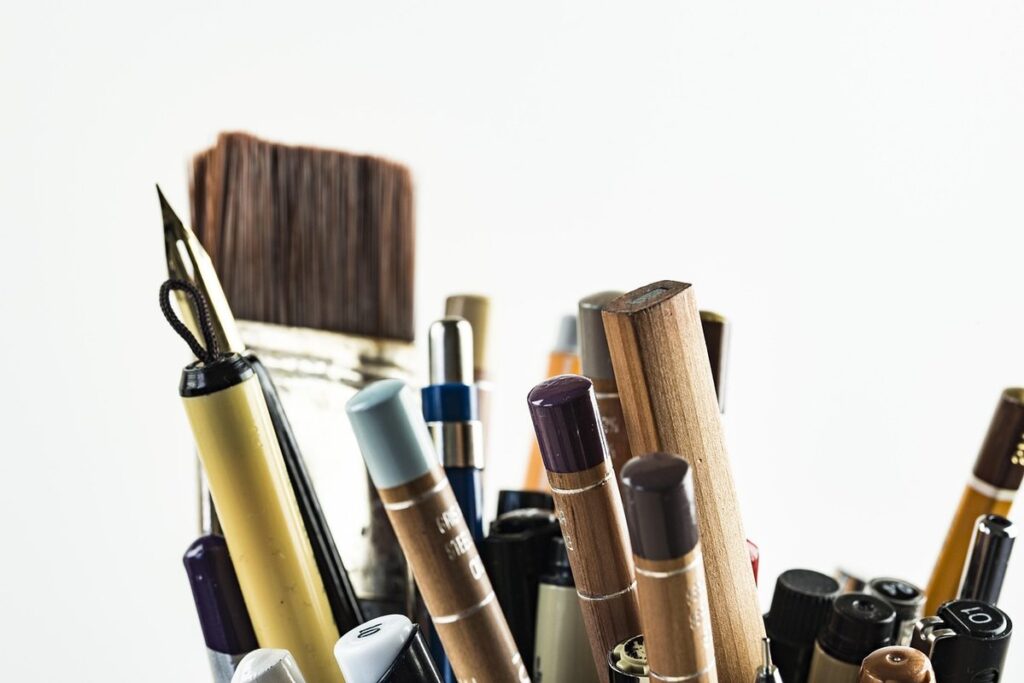
Understanding Pen and Ink Techniques
Mastering various pen and ink techniques is essential for creating unique, high-quality artworks. This section will guide you through the fundamental methods to enhance your artistic expression.
The Basics of Dip Pens and Nib Sizes
Dip pens have been a staple of artistic expression for centuries. These handheld writing instruments consist of a metal nib attached to a wooden or plastic handle. The nib is responsible for creating lines and varying line widths, which can greatly impact the overall aesthetic of your artwork.
To choose the right nib size, consider the type of lines you want to achieve in your drawing. Fine nibs (typically 0.2-0.5mm) are ideal for detailed work, such as illustrations or intricate designs. Medium-sized nibs (0.5-1.5mm) can produce a range of line widths and are often used for everyday writing or sketching. Broad nibs (1.5-3mm) create bold lines and are suitable for expressive artwork or calligraphy.
The shape and style of the nib also affect its performance. Some nibs have a flat tip, while others are round or pointed. A flat-tip nib is best suited for broad strokes and loose, gestural lines. In contrast, a pointed nib excels at creating fine details and sharp edges. When selecting a dip pen, consider your personal preference for line quality and style.
Most art suppliers offer a range of nib sizes and styles to accommodate different artistic needs.
Mastering Line Control with Felt Tips
When working with felt-tip pens, achieving varying line widths and styles can be a challenge. Felt tips, also known as brush tips, are designed to mimic the look of traditional brushes but offer more precision and control. To master line control with felt tips, it’s essential to understand their characteristics.
Felt tips come in various tip sizes and shapes, which affect their line width and style. A smaller tip produces finer lines, while a larger tip creates broader strokes. Some pens also feature interchangeable tips or dual-tip designs for added versatility.
To achieve varying line widths with felt tips, experiment with different pressure levels and angles of attack. Gentle pressure produces fine lines, while increased pressure results in thicker lines. Varying the angle of your pen can also create unique effects, such as thickening the line at the start and thinning it towards the end.
For example, try creating a detailed illustration by using fine lines for details and broad strokes for background elements. By mastering line control with felt tips, you can add depth and visual interest to your drawings, elevating your artistic expression.
Exploring Different Drawing Styles
Pen ink drawing is all about experimentation, and exploring different styles can help you discover what works best for your artistic vision. Let’s take a closer look at some unique techniques to add variety to your work.
Whimsical Illustrations with Expressive Lines
When incorporating whimsical illustrations with expressive lines into your pen and ink drawings, think about capturing the essence of movement and energy. This can be achieved by varying line widths, applying gentle pressure to create soft contours, and experimenting with different nib sizes.
To convey a sense of flow, try creating loose loops and curved lines that seem to dance across the page. You can also use expressive lines to suggest texture and pattern, such as swirling brushstrokes or wavy tendrils that evoke leaves or vines.
One way to practice capturing movement is by drawing from observation. Observe the way people move, animals roam, or water flows in different environments. Study how these movements create fluid shapes and dynamic lines.
Incorporating expressive lines can also add a sense of playfulness and whimsy to your illustrations. Think about using bold, gestural strokes to depict characters, objects, or scenes that evoke a sense of joy and wonder.
Geometric Patterns for Intricate Designs
When working with pen and ink, creating intricate geometric patterns can add a level of sophistication and visual interest to your artwork. Geometric shapes such as triangles, hexagons, and chevrons can be used to create complex designs that appear almost three-dimensional.
To get started, consider using a ruler or other straightedge to draw precise lines and shapes. You can also use a stencil or tracing paper to help you achieve uniform patterns. For more organic-looking results, try using a pen with flexible nibs that allow for expressive line variation.
When combining geometric patterns with textures, the possibilities are endless. Experiment with layering different pattern elements, such as repeating chevrons over a background of fine lines or hatching. You can also use contrasting line weights and styles to create visual tension within your design.
Some useful techniques include using hatching and cross-hatching to suggest texture and depth, while stippling can be used to create intricate, high-contrast patterns. Experiment with combining different geometric shapes and patterns to discover new effects and textures.
Creating Realistic Drawings with Pen and Ink
To create truly realistic drawings with pen and ink, you’ll want to focus on mastering techniques for varying line weight and texture. This involves experimenting with different tools and strokes.
Achieving Shading and Tonal Range
To achieve realistic shading and tonal range in pen and ink drawings, you can use hatching and cross-hatching techniques. Hatching involves creating closely spaced parallel lines that follow the contours of a subject to suggest depth and volume. The direction and spacing of these lines can be adjusted to create different effects – for example, dense hatching can produce dark shadows, while loose hatching can indicate lighter areas.
Cross-hatching takes this technique a step further by layering multiple layers of hatching at different angles. This creates a more textured appearance and allows you to achieve a wider range of tonal values. To try cross-hatching, start with a light layer of hatching and then add additional layers at increasingly darker values. Experiment with different angles and densities to build up the desired level of detail.
Some artists also use stippling – creating images using small dots rather than lines – to achieve subtle shading and texture. This technique can be time-consuming but allows for incredible levels of detail and expressiveness.
Depicting Textures and Details
When drawing realistic subjects with pen and ink, accurately depicting textures and details is crucial for creating a believable and engaging piece. To achieve this, you can employ various techniques to capture the intricate qualities of your subject.
One method involves using different line weights to convey texture and depth. For example, fine lines can be used to suggest smooth surfaces, while thicker lines can indicate rougher textures. You can also experiment with varying the angle and direction of your lines to create a sense of visual interest.
Another approach is to focus on capturing subtle details through hatching and cross-hatching techniques. By layering closely spaced parallel lines or crossing them at different angles, you can build up rich, detailed textures that draw the viewer’s eye in. To take it further, try incorporating stippling – small dots placed closely together to create a textured effect.
When drawing complex subjects like architecture or still-life compositions, consider breaking down the surface into separate components and tackling each one individually. This approach will help you achieve greater accuracy and detail in your rendering.
Using Pen and Ink to Create Abstract Art
As we explore new ways to express ourselves through pen ink drawing, let’s see how loose brushstrokes and fluid lines can create dynamic abstract art pieces. With minimal effort, you can achieve stunning results.
Expressive Mark-Making Techniques
Gestural drawing involves capturing the movement and energy of a subject through expressive strokes. To achieve this with pen and ink, try using large, sweeping motions to create bold lines that convey a sense of dynamism. Spontaneous marks can add an element of unpredictability to your artwork, allowing you to tap into your subconscious mind and create unique, unplanned patterns.
Practice gestural drawing by quickly sketching the contours of a subject, focusing on capturing its overall shape and movement rather than precise details. Experiment with different brushstrokes and line weights to achieve varying levels of expressiveness. For example, loose, hatching-style lines can convey texture and depth, while tighter, more controlled strokes can create sharp contrasts.
Some techniques for incorporating spontaneous marks into your work include:
• Doodling around the edges of a drawing to create soft, blurred boundaries
• Making random scribbles or gestures within a composition to add visual interest
• Using a wet-on-wet technique by layering ink washes over still-damp paper to achieve unique blending effects
By embracing gestural and spontaneous mark-making techniques with pen and ink, you can tap into your creative subconscious and produce truly original abstract artworks.
Creating Patterns and Geometries
When creating patterns and geometries with pen and ink, think beyond simple shapes and explore intricate compositions. Start by playing with different nib sizes to achieve varying line widths, which can add visual interest to your designs. For example, a fine nib can create delicate details, while a broader nib can produce bold strokes.
Experiment with repeating patterns using shapes like triangles, hexagons, or chevrons. You can use a single shape or combine multiple ones to create complex, layered designs. To add depth and texture, incorporate diagonal or curved lines that intersect with your geometric forms. Consider the negative space around your patterns – how you leave some areas empty can help guide the viewer’s eye through the composition.
When creating repeating patterns, try using symmetry or asymmetry to create visual tension. For instance, use a symmetrical arrangement of shapes to evoke a sense of order, or intentionally disrupt this balance with an irregular pattern placement. Remember that the goal is to create visually appealing compositions that engage the viewer. Don’t be afraid to break free from traditional geometry and try unconventional shapes or layouts – it’s often in these unexpected combinations that you’ll find unique inspiration.
Tips for Experimenting with Pen and Ink
To truly master pen ink drawing, experimenting with different techniques is essential. Let’s explore some key tips to help you push your artistic boundaries and discover new styles.
Overcoming Common Challenges
When working with pen and ink, two common challenges you may encounter are bleeding and feathering. Bleeding occurs when ink spreads beyond the lines of your drawing, while feathering is characterized by a softening or widening of lines. To combat these issues, it’s essential to choose the right paper for your project.
Look for paper labeled “hot press” or “smooth finish,” as these tend to resist bleeding and feathering. You can also experiment with different nib sizes and styles – finer tips are generally better suited to detail work and may be less prone to bleeding. Another approach is to use a pen specifically designed to minimize ink flow, such as a piston filler or an iron gall-based ink.
In addition to adjusting your tools, it’s crucial to understand the properties of your ink. Some inks are more prone to bleeding than others – look for those labeled “lightfast” or “archival quality.” By combining the right paper with the correct ink and pen, you can significantly reduce the risk of bleeding and feathering.
Tips for Practice and Improvement
To improve your pen and ink drawing skills, focus on consistent practice and experimentation. Set aside time each week to draw with different techniques, tools, and styles. Start by tracing simple shapes or lines to develop hand-eye coordination and fine motor control.
When working on a piece, take breaks every 20-30 minutes to stretch, move around, and rest your eyes. This helps prevent fatigue and maintains focus. Observe the way light falls on different textures and objects, practicing rendering subtle shading and tonal range.
Experiment with different nib sizes and types to achieve unique line weights and expressive marks. Practice drawing various subjects – still-life compositions, portraits, or landscapes – using a variety of techniques, such as hatching, cross-hatching, and stippling.
For effective improvement, identify areas where your work can be refined. Focus on one skill at a time, like mastering the subtle gradations of shading or developing expressive line quality. Regularly review and critique your own work to detect patterns in your progress.
To accelerate learning, study the work of other pen and ink artists, analyzing composition, technique, and expression. Consider joining a drawing group or online community for peer feedback and support. By combining consistent practice with constructive self-assessment and collaboration, you can refine your skills and elevate your artistic expression.
Frequently Asked Questions
Can I use pen and ink to draw portraits with realistic skin tones?
Yes, pen and ink can be used to create stunning portraits with realistic skin tones. To achieve this, focus on mastering hatching and cross-hatching techniques to build up layers of tone and texture. Experiment with different nib sizes and line weights to capture the subtleties of human skin. With practice and patience, you can create intricate and detailed portraits that rival traditional mediums.
How do I prevent my pen ink drawings from bleeding or feathering on certain papers?
Bleeding and feathering can be a challenge when working with pen ink on certain papers. To minimize these issues, choose high-quality paper specifically designed for pen and ink artwork. Look for papers with a smooth finish and a weight of at least 80 gsm. Additionally, experiment with different nib sizes and line weights to find the right balance between expressiveness and control.
Can I use pen and ink to create detailed, realistic drawings of small objects like jewelry or watches?
Yes, pen and ink can be an excellent choice for drawing small, intricate objects. To achieve detail and realism, focus on using a fine-tip nib (0.2mm or smaller) and experimenting with different line weights and styles. Pay attention to the texture and pattern of the object’s surface, and use hatching and cross-hatching techniques to build up layers of tone and depth.
What if I’m not comfortable creating loose, expressive lines – are there any exercises that can help me improve?
Yes, improving your skills in loose, expressive drawing takes practice and patience. Start by warming up with simple gesture drawings, focusing on capturing the overall pose and movement of a subject rather than precise details. Gradually build up to more complex subjects, experimenting with different line weights and styles as you go. Remember that practice is key – don’t be afraid to make mistakes and try new things.
Can I use pen and ink to create large-scale artworks, or are they better suited for smaller pieces?
While pen and ink are often associated with small-scale artwork, there’s no reason why they can’t be used for larger pieces. To achieve this, consider using a combination of techniques such as layering, blending, and using different nib sizes and line weights to build up complex compositions. Additionally, experiment with using multiple panels or sections to create a cohesive, large-scale work.