
Drawing a seahorse can be a challenging but rewarding experience for artists, requiring attention to detail and an understanding of its unique anatomy. You may have found yourself fascinated by these creatures’ distinctive prehensile tails and curved dorsal fins, wondering how to capture their likeness on paper. Accurately drawing a seahorse involves mastering proportions, from the elongated snout to the rounded body, as well as incorporating realistic details such as the textured skin and delicate tail patterns. In this step-by-step guide, we’ll walk you through the process of creating a stunning seahorse artwork that showcases your skills and attention to detail. By following our instructions, you’ll be able to draw a seahorse with accuracy and realism, bringing these captivating creatures to life in your art.
Understanding the Anatomy of a Seahorse
Now that you have a basic understanding of seahorses, let’s take it to the next level by exploring their unique anatomy. This includes their distinctive head shape and tail structure.
Recognizing Key Features
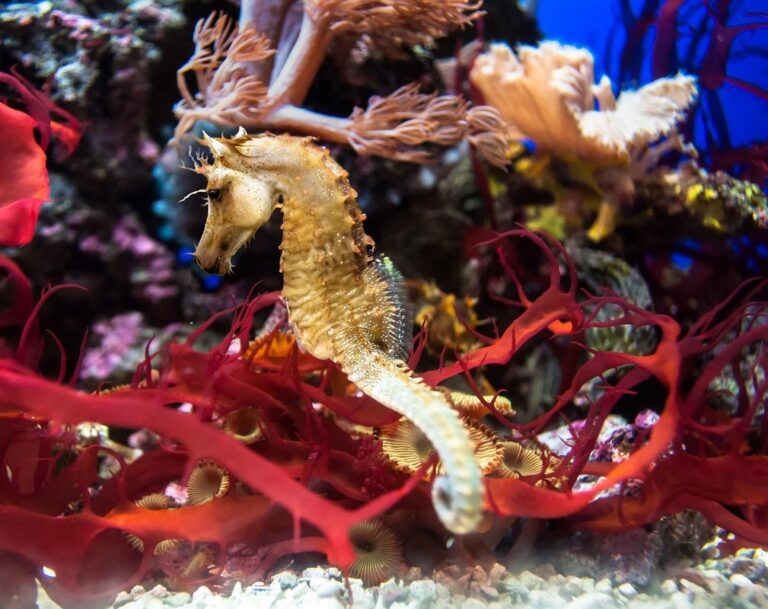
A seahorse’s body shape is instantly recognizable, but it’s surprising how often key features are misinterpreted in drawings. To get the proportions and details right, you need to focus on several essential characteristics. First, note that a seahorse’s head is positioned at the top of its long, slender body, with the neck extending slightly downwards. This distinctive pose sets them apart from other fish.
Pay close attention to the tail – it’s not just a simple extension of the body but an S-shaped appendage that’s crucial for balance and maneuverability in the water. The tail should be depicted as flexible, with a subtle curve that allows for smooth movement.
The torso and abdomen are also important features to get right. A seahorse’s body is typically divided into three distinct sections: head, thorax, and prehensile tail. When drawing the torso, think of it as being roughly cylindrical in shape, with the abdominal region tapering slightly towards the base of the tail.
When representing these key features, accuracy is crucial. A small mistake can throw off the entire balance of your drawing.
Studying Reference Images
When studying reference images for drawing seahorses, it’s essential to find reliable sources that accurately depict their anatomy. Start by searching online for high-quality photographs and illustrations from reputable sources such as marine biology websites, aquariums, or scientific journals. Some excellent resources include the National Geographic website, the World Register of Marine Species, and the Seahorse Conservation Society. Offline, visit local aquariums or marine museums to observe seahorses up close and take note of their unique characteristics.
When reviewing reference images, pay attention to the seahorse’s overall shape, including its elongated body, curled tail, and distinctive head. Note the angle at which the snout is pointing and the position of the dorsal fin. It’s also crucial to examine the texture and pattern of the scales, as well as the coloration and shading on the body.
To use reference images effectively, try to find multiple views of the seahorse from different angles. This will help you understand how its various components fit together and how it appears in motion. You can then combine these observations with your own measurements and proportions to create a more accurate drawing.
Mastering Proportions and Measurement
To draw a seahorse accurately, it’s essential that you grasp the proportions of its unique body shape, which is key to capturing its elegant curves. Now, let’s break down these proportions step by step.
Measuring the Body Length
Measuring the body length of a seahorse accurately is crucial to creating balanced and proportionate drawings. To do so, you can use the proportions method or measuring tools like a ruler or calipers. The body length typically extends from the tip of the snout to the end of the tail, excluding the dorsal fin.
When using proportions, note that the head makes up about one-fifth of the total body length, while the tail accounts for roughly two-thirds. This means if your seahorse’s body length is 10 units, the head would be approximately 2 units and the tail around 6-7 units long. However, these ratios can vary slightly depending on the species and pose.
To measure accurately, ensure you’re counting the entire snout, including the mouth and nasal tube, as part of the head. You can also use a measuring tool to double-check your proportions. A commonly used measurement is the length from the tip of the snout to the base of the dorsal fin, which helps establish the body’s overall length.
Keep in mind that different seahorse species have varying body lengths and shapes. Familiarize yourself with reference images to better understand these differences and adjust your measurements accordingly.
Establishing the Correct Head Placement
When drawing a seahorse, accurately placing the head relative to the body is crucial. Unlike many other marine animals, seahorses have an upright posture, with their heads positioned at a 45-degree angle to their bodies. This unique orientation can be tricky to capture, but understanding it will help you achieve a more realistic representation.
Start by measuring the length of your seahorse’s body from snout to tail, using a ruler or other drawing tool. Then, draw a vertical line through the midpoint of this measurement. This line should run roughly along the center axis of your seahorse’s body. To establish the head placement, imagine an invisible triangle connecting the top of the head to the tip of the dorsal fin and the base of the pectoral fins. The point where these two lines intersect is usually around one-quarter of the way down from the top of the head.
To ensure accuracy, refer to reference images or observe a real seahorse (if possible) to get a sense of how its head interacts with its body. Pay attention to the angle of the neck and the position of the eyes, which are typically positioned at about one-third of the way down from the top of the head.
Sketching the Body and Tail
Next, we’ll focus on sketching the body of your seahorse, as well as its distinctive tail, which is a crucial part of its overall shape. Get ready to bring these elements to life on paper!
Capturing the S-shaped Tail
When sketching the s-shaped tail of a seahorse, it’s essential to capture its distinctive curvature and relationship to the body. Observe how the tail curves downward and backward from the base of the body, forming an ‘S’ shape. Note that the tail is usually longer than the body, typically extending up to 2-3 times in length.
To accurately depict this curve, draw a gentle, flowing line from the base of the body to the tip of the tail. Make sure to maintain a consistent width and tapering as you move downward, giving the illusion of a flexible, streamlined shape. Pay attention to the way the tail meets the body – it should be smooth and seamless, without any abrupt angles or kinks.
Consider using reference images to study the proportions and curvature of the s-shaped tail in different seahorse species. You can also practice sketching the tail in isolation before combining it with the rest of the body. By focusing on these key elements, you’ll be able to capture the unique characteristic that sets the seahorse apart from other marine creatures.
Shaping the Torso and Abdomen
When shaping the torso and abdomen of your seahorse, remember to emphasize their smooth curves. Start by drawing a gentle, rounded shape for the torso, making sure it’s roughly half the length of the head. The abdominal region should be slightly narrower than the torso, with a subtle tapering towards the tail.
Imagine the seahorse as an elongated egg shape, with the torso and abdomen forming the rounded middle section. Use soft, flowing lines to suggest the curves of the body, rather than sharp angles or defined edges. Think about how the seahorse would look in profile: its body should appear compact and streamlined, with no visible definition between the torso and abdomen.
As you refine your drawing, pay attention to proportion. The torso and abdomen should be roughly equal in width, with a slight emphasis on the torso. Avoid making them too rounded or bulbous – seahorses are not typically plump creatures. By maintaining smooth curves and paying attention to proportion, you’ll create a convincing and visually appealing torso and abdominal region for your seahorse.
Adding Details and Texture
Now that you have a basic seahorse shape, let’s add some personality with distinctive details like ridges, spots, and soft water effects.
Incorporating Scales and Dermal Fins
When drawing a seahorse’s scales and dermal fins, it’s essential to capture their intricate texture and pattern. To start, consider the shape and arrangement of the scales on different parts of the body. The scales on the back are typically larger and more rounded than those on the belly, which are smaller and more pointed. Pay attention to how they overlap and fit together, creating a seamless appearance.
To add texture, use short, curved strokes with your pencil or pen to suggest the shape of each scale. Vary the pressure and density of these strokes to create visual interest and depth. For dermal fins, focus on the delicate webbing between the rays. Use gentle, sweeping motions to suggest the curve and tapering of the fin.
When drawing dermal fins, also consider the way they attach to the seahorse’s body. They often appear as small, rounded protrusions along the back or sides. To capture these details accurately, study reference images of real seahorses and note how the scales and dermal fins interact with each other.
Including Eyes, Nostrils, and Other Features
When adding details and texture to your seahorse drawing, it’s essential to pay attention to smaller but equally important features like eyes, nostrils, and the snout. These elements may seem minor, but they significantly impact the overall appearance and believability of your artwork.
Start by sketching the eyes as small circular shapes, taking care to place them about one-quarter of the way down from the top of the head. Ensure that the right eye is slightly higher than the left to maintain the seahorse’s unique asymmetry. The nostrils are usually positioned just below the eyes and can be depicted as small slits or openings.
The snout, which is the triangular protrusion at the front of the head, should be gently rounded and curved upward. This subtle detail helps define the seahorse’s facial expression and adds depth to its appearance. When drawing these features, remember that they are relatively small compared to the rest of the body, so use a gentle touch with your pencil or pen.
As you refine your drawing, pay attention to the proportions and placement of these details in relation to one another. This will help create a more convincing and lifelike representation of the seahorse’s head and facial structure.
Rendering Water and Surrounding Environment
Now that you have a beautiful seahorse, let’s focus on rendering its watery surroundings, from gentle waves to lush seaweed. This will bring your underwater scene to life!
Depicting Water Movement and Ripples
When depicting water movement around a seahorse, it’s essential to capture the subtle ripples and waves that create a sense of depth and immersion. To achieve this, start by studying reference images of real-life sea horses interacting with their aquatic environment. Note how the water flows around them, creating gentle undulations on the surface.
In your drawing, use soft, curved lines to suggest the movement of the water. You can also employ hatching techniques to imply a sense of turbulence or calmness, depending on the mood you want to convey. To create ripples, draw short, wavy strokes radiating outward from the seahorse’s body.
When rendering waves, focus on capturing their gentle slope and gradual incline. Use a combination of curved and straight lines to suggest the movement of the water. You can also add texture to the surface of the water using small dots or dashes to create a sense of movement and energy. Consider the surrounding environment when depicting water movement – for example, nearby coral reefs or schools of fish may influence the way the water flows around your seahorse.
Incorporating Surrounding Marine Life
When drawing a seahorse, incorporating surrounding marine life can add depth and context to the scene. Consider including elements like seaweed, coral, or schools of small fish to create a sense of habitat. This will also give you opportunities to practice rendering different textures and patterns.
To start, think about what type of environment your seahorse inhabits. Different species live in different ecosystems, from shallow tide pools to deeper ocean waters. Study reference images of seahorses in their natural habitats to get a sense of the surrounding marine life.
Some common elements to include are:
• Seaweed: Long, flowing strands or short, scrubby tufts
• Coral: Branching, colorful formations or smooth, rounded colonies
• Small fish: Schools of small, shimmering fish darting through the water
When placing these elements in your drawing, consider their relationship to the seahorse. How does it interact with its surroundings? Is it hiding among seaweed or swimming near coral? By incorporating surrounding marine life thoughtfully, you can create a more realistic and engaging scene.
Tips for Advanced Techniques
Now that you’ve mastered the basics, it’s time to take your seahorse drawing skills to the next level by learning advanced techniques to add depth and realism. These tips will refine your style and precision.
Experimenting with Color and Mediums
When experimenting with color and mediums, remember that different techniques can greatly enhance the visual appeal of your seahorse drawing. Watercolors are ideal for capturing soft, gradient-like effects on the seahorse’s body, especially when blending colors to achieve a subtle sheen. For instance, you can use a wet-on-wet technique by applying layers of transparent washes to build up gradual color shifts.
Colored pencils offer more control and precision, allowing you to create intricate textures and details. To achieve this level of detail, choose pencils with soft leads (such as 6B or 4H) for delicate work on the seahorse’s face and fins. Consider using a range of warm and cool colors to add depth and dimensionality to your drawing.
When working with either medium, be mindful of color theory basics: analogous, complementary, and triadic color schemes can all be applied to bring vibrancy and balance to your artwork. If you’re new to these mediums, practice experimenting on separate sheets before applying them to your final piece. This will help you get a feel for how the colors interact and how to achieve the desired effects.
Adding Depth and Dimensionality
To add depth and dimensionality to your seahorse drawing, consider experimenting with subtle layering techniques. Start by sketching the main body forms with a soft pencil, allowing you to make gentle corrections without committing to darker lines. Then, use a range of pencils from B to 6H to build up layers of shading, gradually increasing the darkness and depth as you work your way down.
For added dimensionality, try using hatching and cross-hatching techniques to suggest the texture of the seahorse’s skin and the subtle play of light on its body. You can also use a mixture of short and long strokes to create a sense of movement and energy in the drawing.
Another technique is to use atmospheric perspective to create depth by softening the details of objects that are farther away from the viewer. This can be achieved by applying gentle, sweeping strokes with a blending stump or tortillon to merge the edges of distant elements with the surrounding water.
By incorporating these techniques into your drawing, you can create a more visually appealing and engaging piece of art that draws the viewer’s eye into the underwater world.
Frequently Asked Questions
Can I use photographs as direct references for drawing a seahorse?
Yes, photographs can be useful references, but it’s essential to study the anatomy and proportions of a seahorse from multiple angles to ensure accuracy. This will help you capture its unique features and avoid drawing inaccuracies.
How do I know when my drawing is finished? Is there a checklist for completeness?
A common challenge is deciding when a drawing is complete. Focus on capturing the essence of the seahorse’s anatomy, proportions, and details. Check if all essential features are accurately represented, such as the snout, eyes, nostrils, and tail. Use reference images to compare and refine your work.
What if my drawing doesn’t look realistic? How can I improve it?
Realism in a drawing often comes from attention to detail and understanding of the subject’s anatomy. Study the proportions of different parts of the seahorse carefully. Practice drawing from life or using high-quality reference images to improve your skills. It might also help to break down complex subjects into simpler, more manageable components.
Can I use mixed mediums for coloring my seahorse drawing? What are some tips?
Yes, combining mediums can enhance your artwork’s depth and visual interest. Watercolors, colored pencils, or even digital painting software can be great options. When mixing mediums, start with a base layer to establish colors and then gradually build up layers to achieve desired effects. Experiment with blending techniques and color theory to create a realistic seahorse.
Is there an optimal time of day or environment for drawing from life? How does this affect my work?
While not crucial, observing the seahorse in its natural habitat can significantly enhance your understanding of its behavior and anatomy. If possible, observe at different times of day or in various environments to capture unique lighting conditions and behaviors. This real-world observation will help you translate your drawings into more lifelike representations.

