
Making plastic-free grocery shopping a habit can be daunting, but with a few simple changes to your routine, you can significantly reduce your carbon footprint. The average American generates 4.4 pounds of trash per day, with a significant portion of that waste coming from single-use plastics found in grocery stores. From the bags and containers used for produce to the personal care products on store shelves, plastic is ubiquitous in our supermarkets. However, by making a few intentional choices, you can cut back on your plastic use and develop more sustainable shopping habits. This guide will walk you through practical tips for switching to reusable bags, water bottles, and personal care products, helping you make plastic-free grocery shopping a consistent part of your routine and significantly reducing your environmental impact by the time you finish reading.
Understanding the Problem
Let’s face it, plastic waste is a major issue in our grocery shopping habits. In this section, we’ll explore the common problems that lead to excessive packaging and what causes it to become such an overwhelming concern.
The Impact of Single-Use Plastics
Single-use plastics are a pervasive problem in grocery shopping, causing environmental degradation and health issues. When you bring home plastic bags, water bottles, and other single-use items, they contribute to the staggering 8 million tons of plastic waste that enter our oceans annually. This pollution harms marine life, contaminates the food chain, and even affects human health through microplastic ingestion.
The production process for single-use plastics also has a significant environmental impact. The extraction and processing of fossil fuels, which are often used to manufacture plastics, lead to greenhouse gas emissions and habitat destruction. Furthermore, the disposal of these plastics typically involves incineration or landfilling, releasing toxic chemicals into the air and water.
In grocery shopping specifically, single-use plastics are often used for packaging fresh produce, meats, and dairy products. However, many of these items can be easily purchased without plastic packaging. For example, opting for loose fruits and vegetables instead of pre-packaged options can significantly reduce plastic waste. By making conscious choices about the plastics you use in grocery shopping, you can help mitigate this environmental harm and create a more sustainable future.
Statistics on Plastic Waste
The world produces over 300 million tons of plastic waste annually, with a significant portion coming from single-use items. According to the United Nations, about 8 million tons of plastic waste enter the oceans every year, harming marine life and contaminating the food chain. To put this into perspective, if current trends continue, there will be more plastic than fish in the ocean by 2050.
The production rate of plastics has increased dramatically over the past few decades. In 2019, global plastic production reached a record high of 368 million metric tons. However, only about 9% of this waste is recycled, while the remaining 91% ends up in landfills or as litter.
When it comes to plastic consumption, the average person generates around 4-5 pounds of trash per day, with a significant portion being single-use plastics. Reducing your reliance on these items can have a substantial impact on overall waste production. Consider alternatives like reusable bags and containers for grocery shopping, which can significantly reduce your contribution to plastic waste.
Here are some key statistics to keep in mind:
- The top 10 countries responsible for plastic waste are China, the United States, Indonesia, Thailand, Vietnam, Philippines, Brazil, Mexico, Egypt, and Russia.
- Single-use plastics make up about 40% of all plastic waste generated worldwide.
Assessing Your Current Grocery Habits
To start reducing plastic waste, it’s essential to understand your current grocery shopping habits and identify areas for improvement. Take stock of how you shop now, from store choices to product purchases.
Identifying Single-Use Plastics in Your Diet
When shopping for groceries, it’s easy to overlook single-use plastics that often accompany our food. Start by checking the packaging of fresh produce and meats. Many fruits and vegetables come wrapped in plastic film or bags, while meat and dairy products are often packaged with plastic wrapping or containers. These plastics may seem minor, but they add up quickly.
Other common offenders include water bottles, coffee cups, and take-out containers made from single-use plastics like polypropylene and polystyrene. You can also find microbeads in personal care products, such as face wash and toothpaste, which often escape wastewater treatment plants and enter the ocean.
To identify these plastics in your diet, pay attention to the packaging during your next grocery run. Check the material of containers and bags, and look for certifications like “biodegradable” or “compostable.” Some products, like yogurt or hummus, may come in cartons made from plant-based materials like cornstarch or sugarcane.
When you spot these plastics, consider alternatives like buying loose produce or opting for reusable containers. You can also choose products with minimal packaging or those sold in bulk.
Calculating Your Carbon Footprint
Calculating your carbon footprint can be a straightforward process, especially when it comes to grocery shopping. You’ll need to estimate the amount of greenhouse gas emissions associated with the production, transportation, and storage of the food you buy. One way to do this is by using an online carbon calculator, such as those provided by organizations like the Carbon Trust or the US Environmental Protection Agency.
These calculators typically ask for information about your diet, including the types and quantities of food you consume. You can estimate these amounts based on your average weekly grocery shop or by tracking your food waste over a month. The calculator will then provide an estimated carbon footprint in units such as kilograms of CO2 equivalent per year.
For example, if you regularly buy milk from a local dairy farm, but also import tropical fruits from abroad, the calculator may show that your diet accounts for approximately 10-15% more emissions than someone who only buys locally sourced produce. This information can help you identify areas where you can make adjustments to reduce your carbon footprint and move towards plastic-free grocery shopping.
Choosing Plastic-Free Alternatives
Replacing plastic packaging is easier than you think, and finding alternatives is a great place to start your journey towards zero-waste grocery shopping. From refillable containers to eco-friendly wraps, let’s explore some game-changing options together!
Reusable Bags and Containers
When shopping for reusable bags and containers, consider materials like cotton, canvas, silicone, and stainless steel. These options are often durable, washable, and can withstand regular use. Reusable produce bags made from mesh or breathable materials are also effective at keeping fruits and vegetables clean without producing waste.
Reusable containers offer several benefits, including reducing the likelihood of contamination and preserving food freshness. Many stores now sell reusable containers specifically designed for storing snacks or leftovers in the fridge. Look for products with lids to prevent leakage and keep contents fresh.
You can find reusable bags and containers at various retailers, both online and in-store. Thrift shops, second-hand stores, and local markets often carry a selection of gently used reusable bags and containers that can be cleaned and reused. Online marketplaces like Amazon also offer a wide range of options from different brands. Additionally, many grocery stores now sell their own brand of reusable bags and containers, making it easy to find what you need while shopping for groceries.
Water Bottles and Coffee Cups
When it comes to replacing disposable water bottles and coffee cups, the options are plentiful. Glass is a popular choice for its non-toxic nature and recyclable properties. Brands like S’well and Hydro Flask offer stylish and durable glass water bottles that can withstand daily use. Another option is stainless steel – look for brands with double-walled insulation to keep drinks hot or cold for hours.
For coffee cups, consider switching to a stainless steel or ceramic mug. Companies like KeepCup and Klean Kanteen offer a range of designs and sizes to fit your needs. Ceramic mugs are also an eco-friendly option, made from natural materials and often featuring minimalist designs. When shopping for plastic-free water bottles and coffee cups, be sure to check the manufacturer’s claims about their products’ durability and recyclability.
When choosing between glass or stainless steel options, consider the type of use you’ll give your new containers. Glass is ideal for everyday drinking, but may not be suitable for travel due to its weight and fragility. Stainless steel, on the other hand, is a great choice for travel, as it’s lightweight and can withstand rough handling.
Personal Care Products and Packaging
When it comes to personal care products, packaging is a significant contributor to plastic waste. Most personal care items come wrapped in layers of plastic, including shampoo bottles, conditioner containers, and even sanitary products. These single-use plastics can’t be recycled and often end up in landfills or oceans.
To choose plastic-free alternatives for your personal care needs, opt for bars over bottles. Look for brands that offer solid shampoos, conditioners, and soaps. Some popular options include Lush’s solid shampoo and conditioner, as well as Andalou Naturals’ fruit stem cell revitalize shampoo bar. When shopping for sanitary products, consider switching to reusable cloth pads or period underwear.
When it comes to packaging specifically, check the ingredient list for any unnecessary additives that require extra packaging. Some brands are now offering refill options for their personal care products, allowing you to purchase the product without the single-use plastic container. Always choose products with minimal or biodegradable packaging. For example, some toothpaste is sold in cardboard tubes instead of traditional plastic tubes.
Planning Your Plastic-Free Grocery Shop
When it comes to plastic-free grocery shopping, planning is key. To make your shopping trip a success, let’s start by creating a list of essentials to stock in your pantry and fridge.
Meal Planning and Shopping Lists
To reduce food waste and plastic usage, effective meal planning and shopping lists are crucial. Start by assessing your family’s dietary needs and preferences to plan meals around staples you already have at home. Consider a “zero-waste” pantry approach, where you focus on buying only what you need for the week.
When creating shopping lists, prioritize items that can be purchased in bulk or with minimal packaging. Look for stores that offer unpackaged produce or grains, and opt for items sold in glass or cardboard containers instead of plastic. Be mindful of perishable items and plan meals accordingly to avoid expired or spoiled food.
For example, if you buy a large bag of carrots, plan meals that use multiple carrots throughout the week, such as salads, stir-fries, and snacks. This approach will not only reduce waste but also help you save money by avoiding last-minute takeout or expensive impulse buys. To make meal planning more efficient, consider using a digital calendar or app to schedule meals and generate shopping lists.
Store Selection and Layout
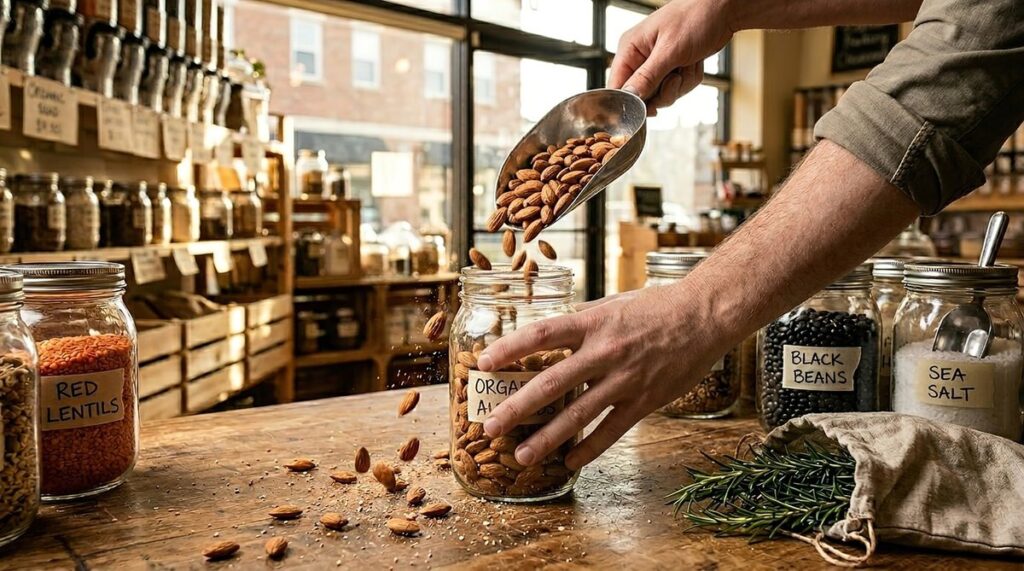
When selecting stores for your plastic-free grocery shop, consider those that prioritize sustainability and have a strong commitment to reducing single-use plastics. Look for stores that offer bulk bins, refill stations, and package-free options. For example, some stores now offer “naked” or “package-free” sections where you can buy items like nuts, grains, and dried fruits without excess packaging.
Once you’ve chosen your store, familiarize yourself with its layout to optimize your shopping trip. Take note of the location of bulk bins, refill stations, and other plastic-reducing features. Some stores may have a designated area for reusable containers or bags, so be sure to take advantage of these spaces. You can also try rearranging your shopping list to visit the most eco-friendly sections first.
When navigating store layouts, keep an eye out for areas with high foot traffic, as these are often where impulse buys and single-use plastics tend to accumulate. Consider avoiding these areas or using them as a last resort. Finally, don’t be afraid to ask store staff about their sustainability initiatives or what options they offer for reducing waste. This can help you make informed decisions and provide valuable feedback to the store.
Implementing Changes in Your Daily Life
Now that you’ve made the switch to plastic-free grocery shopping, let’s talk about how to implement these changes into your daily routine effectively. This involves making a few simple adjustments to your habits and mindset.
Overcoming Common Obstacles
When transitioning to plastic-free grocery shopping, you may encounter several common obstacles. One of the most significant challenges is cost. Many people assume that going plastic-free requires a significant investment in reusable bags and containers, but this isn’t always the case. You can start by switching to affordable alternatives like cloth napkins or using old jars for storage.
Convenience is another obstacle you may face. It’s true that shopping with reusable bags and water bottles can be more time-consuming than grabbing single-use plastics on the go. However, many stores now offer discounts or rewards programs for customers who bring their own containers. You can also consider meal planning to reduce food waste and minimize the need for frequent trips to the store.
Social pressure is another challenge you may encounter when adopting a plastic-free lifestyle. Friends and family members might question your decision to ditch single-use plastics, but it’s essential to remember that small changes add up over time. You don’t have to make drastic changes overnight; start by introducing one or two new habits at a time.
Building a Supportive Community
Joining a community of like-minded individuals can be a powerful motivator for maintaining a plastic-free lifestyle. Online forums and social media groups dedicated to sustainable living are readily available and offer a wealth of resources, advice, and support.
Some popular online platforms to explore include Facebook groups focused on zero-waste living, Reddit’s r/plasticfree community, and local online forums for environmental activism. You can also search for blogs or YouTube channels with content specific to your interests and goals.
In addition to online resources, consider attending local events or joining a community garden in your area. These settings provide opportunities to connect with others who share your values and passions. Local co-ops, zero-waste stores, and environmental organizations may also offer workshops, lectures, or volunteer opportunities that can help you build relationships with people committed to sustainable living.
When engaging with online communities, be sure to contribute thoughtfully and respectfully, sharing your own experiences and insights when relevant. This not only helps others but also keeps you accountable and motivated in your own journey towards plastic-free grocery shopping.
Long-Term Strategies for Sustainable Change
For lasting change, you’ll want to focus on developing habits and routines that reduce plastic waste in your daily grocery shopping. We’ll explore effective long-term strategies to make sustainable choices stick.
Monitoring Progress and Adjusting Habits
To maintain a plastic-free lifestyle, it’s crucial to regularly assess and adjust your habits. Tracking progress is key to identifying areas where you can improve and making targeted changes. Start by monitoring your usage of reusable bags and containers, water bottles, and coffee cups. You can do this by setting reminders on your phone or placing a note near your entryway to remind you to bring your reusable bag each time you leave the house.
As you settle into your new habits, pay attention to any challenges that arise. For instance, if you find yourself repeatedly forgetting your reusable water bottle, consider investing in one with a built-in reminder system or finding a more convenient storage spot for it. Similarly, if you notice that certain stores are consistently lacking in plastic-free options, adjust your shopping list and route accordingly.
Regularly reviewing your progress also helps to maintain motivation and prevent burnout. Schedule quarterly check-ins with yourself to reflect on what’s working and what areas need improvement. Consider setting realistic targets for reducing single-use plastics in specific categories – for example, aiming to use reusable bags 80% of the time or switching to plastic-free cleaning products within a month.
Encouraging Others to Join You
When you’ve made significant progress in reducing single-use plastics in your grocery shopping routine, it’s natural to want to share your knowledge with others and encourage them to join you. One of the most effective ways to do this is by leading by example and involving family members or friends who live with you.
Start by having open conversations about why you’re making these changes and how they’ve positively impacted your life. Be specific about the benefits you’ve noticed, such as reduced waste and cost savings. You can also involve them in meal planning and shopping, so they feel invested in the process. This not only educates them but also makes them more likely to adopt similar habits.
If you’re part of a larger community or social network, consider hosting a plastic-free grocery shopping workshop or sharing your experiences on social media. Use this opportunity to provide tips and resources for others who may be interested in making similar changes. By doing so, you’ll not only be encouraging others but also contributing to the growth of a more sustainable food culture.
Frequently Asked Questions
What if I forget my reusable bags at home when I need to make an emergency grocery run?
Yes, it’s okay to use disposable bags occasionally. However, try to keep a backup set in your car or consider keeping some lightweight, compact reusable bags specifically for emergencies.
How do I deal with social pressure from family and friends who don’t understand my decision to switch to plastic-free grocery shopping?
It can be tough to navigate social situations when you’re making significant changes. Consider sharing resources with them or gently explaining the benefits of reducing single-use plastics. Focus on your own progress and don’t feel pressured to convince others.
Can I still use certain types of personal care products, like face wash or shampoo, if they come in plastic bottles?
Yes, but look for brands that offer refill options or eco-friendly packaging. Consider buying in bulk or decanting products into reusable containers. Some stores also offer product sampling or trial sizes to help you test new products without the full plastic packaging.
What if I have mobility issues or can’t carry heavy groceries – are there any solutions for people with disabilities?
Yes, many stores now offer online shopping with delivery or curbside pickup options. Consider using a reusable bag service or asking a friend for assistance when possible. Some communities also have organizations that provide support and resources for people with disabilities.
How do I know if the “eco-friendly” products I’m buying are actually making a significant impact on reducing plastic waste?
Look for certifications like B Corp or 1% for the Planet, which indicate companies committed to sustainability. Research the product’s lifecycle – from production to disposal – and check reviews from other customers who’ve used the product long-term. Consider buying in bulk or supporting local businesses that prioritize environmental responsibility.

