
Narrative poetry has captivated readers for centuries with its unique blend of storytelling and lyrical language. This ancient art form, which weaves together verse and prose to convey a narrative, is often overlooked in modern times, but it’s a powerful tool for exploring the human experience. Whether you’re a seasoned poet or just starting out, understanding the craft of narrative poetry can help you tap into its rich potential.
Narrative poems are more than just poems that tell stories – they’re a distinct form of storytelling that uses verse to convey emotion and meaning. By mastering the key elements of narrative poetry, such as pacing, imagery, and character development, you’ll be able to craft compelling stories in verse that resonate with readers. In this article, we’ll explore the history and techniques of narrative poetry, providing practical tips and resources for writing your own narrative poems. By the end of it, you’ll know how to weave a captivating story in verse, complete with characters, plot, and emotional depth.
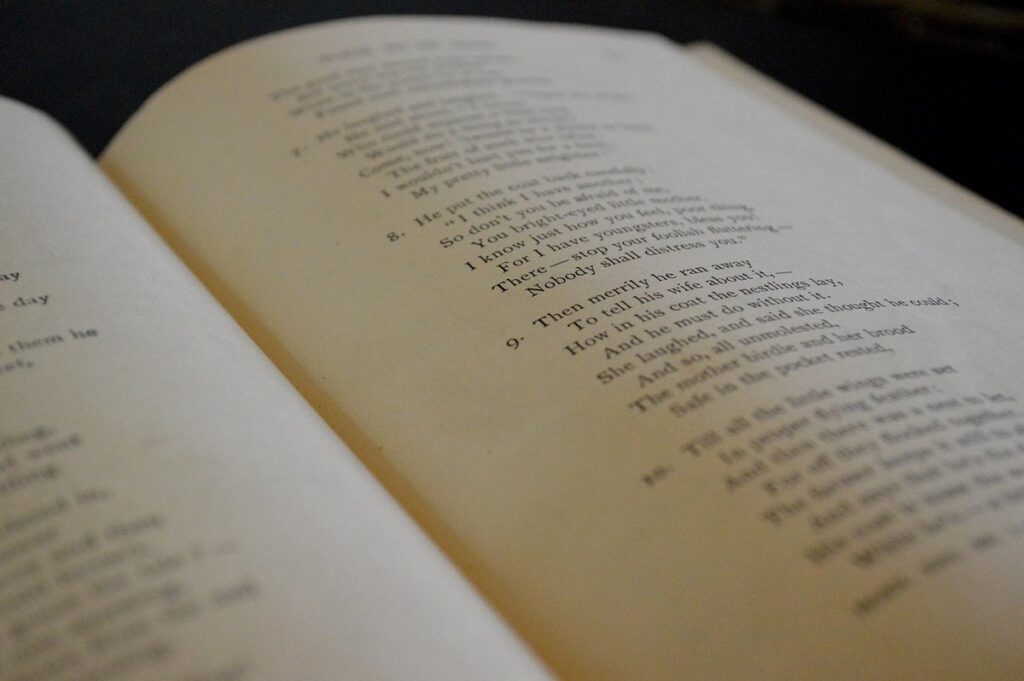
What is Narrative Poetry?
Narrative poetry tells stories through verse, weaving together language and imagery to create a unique reading experience for you. Let’s explore what makes narrative poetry distinct from other forms of poetry.
Defining Narrative Poetry: An Overview
Narrative poetry is a unique and expressive form of storytelling that has captivated readers for centuries. At its core, narrative poetry tells a story with a clear beginning, middle, and end, often with a central plot, characters, and setting. This can be seen in the works of Homer’s epic poems, such as “The Iliad” and “The Odyssey”, which recount the stories of ancient Greek heroes.
A key characteristic of narrative poetry is its use of language to convey action, emotion, and description. Narrative poets often employ techniques like imagery, symbolism, and figurative language to bring their stories to life. The poet’s choice of words, tone, and structure can all contribute to the overall mood and atmosphere of the poem.
When reading or writing narrative poetry, it’s essential to consider the story being told. What is the central conflict or theme? How do the characters evolve throughout the narrative? By paying attention to these elements, readers can gain a deeper understanding of the poet’s craft and appreciate the artistry that goes into creating a compelling narrative poem.
Effective narrative poetry requires a delicate balance between storytelling and poetic technique.
Types of Narrative Poems
Narrative poetry encompasses a diverse range of forms, each with its unique characteristics. Ballads, for instance, are narrative poems that tell stories in verse, often with a folkloric or legendary theme. They typically follow a consistent rhyme and meter pattern, which adds to their musicality. The ballad form is well-suited for storytelling, allowing poets to convey complex emotions and events through simple yet effective language.
Epic poems, on the other hand, are lengthy narrative poems that aim to capture heroic deeds or legendary events. They often feature elaborate language, rich imagery, and a formal structure. Examples of epic poems include Homer’s Iliad and Odyssey, which have had a profound influence on Western literature. Free verse narratives, meanwhile, abandon traditional forms in favor of a more fluid, experimental approach. This allows poets to explore non-linear storytelling and unconventional narrative structures.
In addition to these forms, there are also lyrical narratives and verse novels, each with its own distinct features. Lyric narratives often focus on personal experiences or emotions, while verse novels can be thought of as extended poems that tell a single story over multiple sections.
History of Narrative Poetry
Narrative poetry has a rich and varied history, spanning thousands of years and traversing cultures from ancient Greece to modern-day literature. Let’s explore some of the key milestones in this poetic tradition.
Ancient Roots: Homer and Virgil
In ancient Greece, Homer’s epic poems The Iliad and The Odyssey set the stage for narrative poetry. These foundational works explored the human condition through storytelling, with complex characters, plot twists, and themes that continue to resonate today. Homer’s masterful use of language, imagery, and symbolism created a rich tapestry that influenced generations of poets.
The Romans followed in Homer’s footsteps, with Virgil’s The Aeneid serving as a defining work of narrative poetry. This epic poem drew on Roman mythology and history to tell the story of Aeneas’ journey from Troy to Italy. Virgil’s use of detailed descriptions of landscapes, battle scenes, and character interactions demonstrated his commitment to crafting immersive narratives.
The impact of Homer and Virgil on the development of narrative poetry cannot be overstated. Their emphasis on storytelling, characterization, and thematic depth established the genre’s core elements. Poets from ancient Greece and Rome onwards have built upon these foundations, experimenting with new forms, styles, and themes while maintaining a connection to their predecessors’ work.
Medieval and Renaissance Periods
Medieval poets like Geoffrey Chaucer, author of The Canterbury Tales, carried on the tradition of narrative poetry. His work is notable for its diverse cast of characters and its exploration of themes such as morality, class, and social hierarchy. In contrast to classical narrative poems, which often focused on heroic deeds, Chaucer’s works emphasize everyday life. Edmund Spenser, who wrote The Faerie Queene, also drew upon medieval themes but infused his work with Renaissance ideals.
During the Renaissance, John Milton’s Paradise Lost became a landmark of English literature. Its sweeping narrative explores theological and philosophical questions through elaborate descriptions of heaven, hell, and the Fall of Man. This poem exemplifies how Renaissance poets pushed the boundaries of narrative poetry by experimenting with form, language, and style. To write in this tradition, focus on crafting vivid scenes that reveal character and explore themes. Use clear, expressive language to convey complex ideas, as Milton did so effectively.
Key Elements of Narrative Poetry
At its core, narrative poetry excels when it masterfully weaves together rich imagery and engaging storylines to transport readers on a vivid journey. Let’s examine the essential building blocks that make this magic happen.
Plot Development: The Engine of Storytelling
Plot development is the engine driving narrative poetry forward. It sets the pace for the reader’s experience, creating tension and release as events unfold. A well-crafted plot typically follows a clear structure: introduction, rising action, climax, falling action, and resolution.
In narrative poetry, poets use plot to convey themes and emotions in a way that feels organic and authentic. By carefully structuring their stories, poets can create a sense of emotional resonance with the reader. For example, Homer’s The Odyssey uses its plot to explore the themes of homecoming and redemption, while also conveying the emotional toll of Odysseus’ journey.
Pacing is another crucial aspect of plot development in narrative poetry. Poets must balance action and description to keep the reader engaged. A tightly controlled pace can create a sense of urgency, drawing the reader into the story. Conversely, too much detail or slow pacing can bog down the narrative.
In terms of resolution, poets often use this opportunity to tie up loose ends and reinforce the themes established earlier in the poem. This can be achieved through a variety of means, including character development, symbolism, and imagery. By mastering plot development, poets can craft narratives that captivate and resonate with readers on multiple levels.
Characterization: Bringing People to Life
Narrative poets employ a range of techniques to create believable characters. One key method is through dialogue, which reveals character traits and relationships. When done effectively, dialogue can convey subtleties of emotion and personality that would be difficult to express otherwise.
For example, Shakespeare’s use of iambic pentameter in Hamlet creates a sense of introspection and emotional depth in the titular character. This internal monologue allows readers to access Hamlet’s inner turmoil, making him a more relatable and complex figure.
Description is another technique used to bring characters to life. Poets may employ vivid imagery to paint a picture of their characters’ appearance, surroundings, or actions. This not only helps readers visualize the scene but also conveys character traits and emotions through sensory details.
Introspection, as seen in the example above, allows poets to delve into their characters’ thoughts and feelings. By doing so, they create multidimensional figures that resonate with readers on a deeper level.
Techniques for Crafting Narrative Poetry
As you seek to master the art of narrative poetry, let’s focus on some essential techniques that will help you craft engaging and immersive stories. This includes experimenting with non-linear structures and varying narrative voice.
Imagery and Symbolism
Imagery and symbolism are essential tools for a narrative poet. They allow the reader to immerse themselves in the story and experience it on a deeper level. Imagery creates vivid pictures in the mind, while symbolism conveys complex ideas through objects or actions.
For example, in Homer’s “The Odyssey,” Odysseus’ journey is marked by the symbol of the lotus-eaters. These mythical creatures tempt him with food that erases his memories, illustrating his desire to escape his troubles and return home. The image of the lotus itself represents the siren song of forgetfulness.
In Virgil’s “The Aeneid,” the character Dido is associated with the symbol of the golden bough. This sacred branch serves as a metaphor for her own love and sacrifice, highlighting her role as a tragic figure in the narrative.
When using imagery and symbolism effectively, poets can convey rich themes and ideas without explicitly stating them. This encourages readers to engage more actively with the poem, drawing their own connections and meanings from the language and images presented.
Language and Tone: Setting the Mood
Poets use language and tone to establish the mood and atmosphere of their narratives by carefully selecting words, rhythms, and syntax. Dialect, for instance, can evoke a sense of place or culture. Consider how William Wordsworth’s “The Prelude” employs regional English to convey the poet’s connection to the natural world.
Syntax also plays a crucial role in shaping the narrative’s mood. Poets often employ enjambment, caesura, and other line breaks to control the pace at which the reader absorbs information. This deliberate manipulation of syntax can create a sense of urgency or calm, depending on the poet’s intentions.
Other literary devices, such as alliteration and assonance, contribute to the narrative’s atmosphere by creating an auditory experience that complements the visual one. For example, Edgar Allan Poe’s “The Raven” uses repetition and rhyme to build tension and suspense.
When crafting your own narrative poem, experiment with different language choices and tone to achieve the desired mood. Pay attention to how dialect, syntax, and other literary devices work together to create a specific atmosphere.
Famous Examples of Narrative Poetry
One of the best ways to understand narrative poetry is by examining examples from renowned poets, whose works continue to captivate readers and inspire new generations. Let’s take a closer look at some famous narrative poems that have stood the test of time.
Epic Poems: The Iliad and The Odyssey
Homer’s The Iliad and The Odyssey are two of the most enduring epic poems in literature. They are structured as ancient Greek hexameter verse, consisting of 24 books each, which follow a linear narrative. The Iliad tells the story of the Trojan War, focusing on the wrath of Achilles, while The Odyssey recounts Odysseus’ journey home after the war.
The characters in both poems are multidimensional and complex, with distinct personalities and motivations. Achilles is portrayed as a proud and vengeful hero, whereas Odysseus is depicted as cunning and resourceful. These characterizations serve to illustrate key themes of honor, fate, and the human condition. The Iliad explores the consequences of unchecked emotions and pride, while The Odyssey examines the challenges of perseverance and determination.
One notable aspect of both poems is their use of motifs and symbolism. For instance, the Trojan Horse in The Iliad serves as a powerful symbol of deception and clever strategy. Similarly, Odysseus’ encounter with the Sirens in The Odyssey represents the allure of temptation and the importance of self-control. Understanding these structural, character-based, and thematic elements can help poets craft their own narrative poems, leveraging the timeless wisdom of Homer’s masterpieces.
Ballads and Folk Poetry
Ballads and folk poetry have been a cornerstone of narrative poetry across cultures and traditions. A ballad is typically a short poem that tells a story, often with a strong rhythmic pattern and musical quality. It usually has four-line stanzas, known as quatrains, with an ABAB rhyme scheme. The narrative in a ballad is often simple, focusing on a central event or character.
Examples of famous ballads include “The Ballad of Reading Gaol” by Oscar Wilde, which recounts the story of two prisoners who share a cell and reflect on their lives, and “The Ballad of Tam Lin,” a Scottish folk poem about a man’s transformation from mortal to supernatural being. Similarly, in African American oral traditions, the blues ballads, such as Robert Johnson’s “Cross Road Blues,” use storytelling to convey the struggles and hardships faced by individuals.
These examples illustrate how ballads tap into the collective memory of a culture, often drawing on mythological or historical events. In crafting your own narrative poem, you can explore the richness of folk poetry by incorporating elements like repetition, rhyme schemes, and musical language.
Writing Your Own Narrative Poem
Now that you’ve learned the basics of narrative poetry, it’s time to try your hand at writing one yourself. We’ll guide you through crafting a compelling narrative poem from start to finish.
Tips for Aspiring Writers
When writing a narrative poem, aspiring writers often face the daunting task of choosing a theme. A good starting point is to explore personal experiences and emotions. Ask yourself what you’re passionate about or what has had a significant impact on your life. This can help you tap into authentic feelings and create a rich, relatable story.
Developing characters is another crucial aspect of narrative poetry. Give them distinct voices, motivations, and backstories to make them feel real and multidimensional. Consider their relationships with one another and how they interact within the poem’s world. For example, Shakespeare’s Romeo and Juliet is a classic tale of star-crossed lovers, where two families’ hatred fuels the tragic outcome.
Experimenting with language and form can also elevate your narrative poem. Don’t be afraid to play with syntax, meter, and imagery to create a unique tone and atmosphere. Read widely and pay attention to how other poets use language to convey meaning and emotion. For instance, try writing in different forms like sonnets or blank verse to challenge yourself and find what suits your story best.
When experimenting, remember that there’s no one “right” way to write a narrative poem. It’s about finding the voice and style that resonates with you and your audience.
Resources for Further Study
If you’re eager to dive deeper into the world of narrative poetry, there are numerous resources available to guide you. For a more comprehensive understanding of the genre’s technical aspects, consider reading Edward Hirsch’s “A Poet’s Glossary” and Mary Oliver’s “A Poetry Handbook”. Both books provide insightful explanations on various poetic devices, including imagery and symbolism.
Online courses can also be an excellent way to hone your skills in writing narrative poetry. The Coursera course “Introduction to Poetry” by the University of Pennsylvania explores the fundamental elements of poetry, while the edX course “The Art of Poetry” by Wesleyan University delves into the craft of poem-writing. Additionally, the Poetry Foundation’s online resources offer a wealth of information on poetic techniques and forms.
For more hands-on experience, consider participating in workshops or writing groups focused specifically on narrative poetry. The Writers’ Workshop at the University of Iowa is renowned for its programs in creative writing, including poetry. You can also look into local writing communities or join online forums dedicated to poetry writing.
Conclusion: The Power of Narrative Poetry
As we wrap up our exploration of narrative poetry, let’s take a moment to reflect on its enduring power and impact. How can you harness its emotional resonance in your own writing?
Reflections on the Genre
Narrative poetry has proven to be a timeless and versatile literary form, weaving together elements of storytelling, language, and imagination. Through its exploration of human experience, emotions, and relationships, narrative poetry offers readers a unique and intimate connection with the world around them.
One of the key points covered in this article is the importance of plot development as the engine of storytelling. Effective narrative poems not only engage readers but also provide a framework for exploring complex themes and ideas. The use of characterization brings people to life, making it easier for readers to become invested in their stories.
The history of narrative poetry spans centuries, with ancient roots in Homer’s epics and continued influence throughout the medieval and Renaissance periods. Its evolution is marked by notable works such as Virgil’s Aeneid, Beowulf, and Sir Gawain and the Green Knight. Even contemporary poets continue to draw upon these traditions while pushing the boundaries of the genre.
As we’ve explored the key elements of narrative poetry, its techniques for crafting imagery and symbolism, and famous examples of epic poems and ballads, it’s clear that this form has a significant impact on readers. Whether through the retelling of myths or the exploration of everyday life, narrative poetry offers a unique perspective on the world.
For aspiring writers, understanding these elements is crucial in crafting their own narrative poems. It requires a deep knowledge of language, tone, and plot development, as well as an ability to balance complexity with accessibility. By studying the works of master poets and experimenting with different styles, readers can develop their skills and create compelling narratives that resonate with audiences.
Ultimately, the enduring appeal of narrative poetry lies in its capacity to engage readers on multiple levels – intellectually, emotionally, and imaginatively. Its significance as a literary form is undeniable, offering a powerful means of expression, connection, and understanding.
Frequently Asked Questions
Can I use narrative poetry to tell non-traditional stories?
Yes, narrative poetry can be used to retell historical events, mythological tales, or even personal experiences in a unique and creative way. Many poets have successfully experimented with non-traditional narratives, incorporating elements of magical realism or blending different cultures’ traditions.
How do I balance plot development with lyrical language in my narrative poem?
When crafting your narrative poem, focus on establishing a strong narrative voice that balances action, description, and emotional resonance. Experiment with different sentence structures and imagery to create a sense of flow and musicality, but be mindful of not sacrificing the story’s coherence for overly elaborate language.
What if I’m struggling to develop characters in my narrative poem – should I stick to traditional archetypes?
No, you don’t have to rely on traditional archetypes. Narrative poetry allows for a wide range of character development, from fully realized individuals with complex motivations to symbolic or abstract figures. Experiment with different approaches to characterization, such as using dialogue, description, and introspection, to bring your characters to life.
How can I use narrative poetry to explore contemporary issues?
Narrative poetry is an excellent medium for addressing social justice issues, personal struggles, or cultural experiences. When tackling these topics, be mindful of the audience’s perspective and consider how your poem might resonate with readers from diverse backgrounds. Use specific details, imagery, and language that evokes the emotional intensity of the issue you’re exploring.
Can I use free verse to tell a narrative story – won’t it lack structure?
Free verse can indeed offer an exciting way to experiment with narrative storytelling, as long as you maintain a clear sense of pacing and tension. Consider using white space, enjambment, or caesura to create a sense of flow and rhythm that complements the story’s emotional arc.

