
Sketching trees with leaves can be a daunting task, especially for beginners. You’ve probably tried to capture the intricate details of branches and foliage on paper only to end up with an unrecognizable mess. But with practice and a solid understanding of tree structure, you’ll be well on your way to creating realistic sketches that do justice to nature’s beauty. To start, it’s essential to grasp how trees grow and support their leaves, including the placement of major branches, trunk formation, and leaf arrangement. By collecting reference materials, practicing perspective, and mastering basic shading techniques, you can refine your skills and create detailed, lifelike sketches that bring the outdoors into your drawings. This guide will walk you through the process step-by-step, enabling you to sketch trees with leaves like a pro by the end of it.
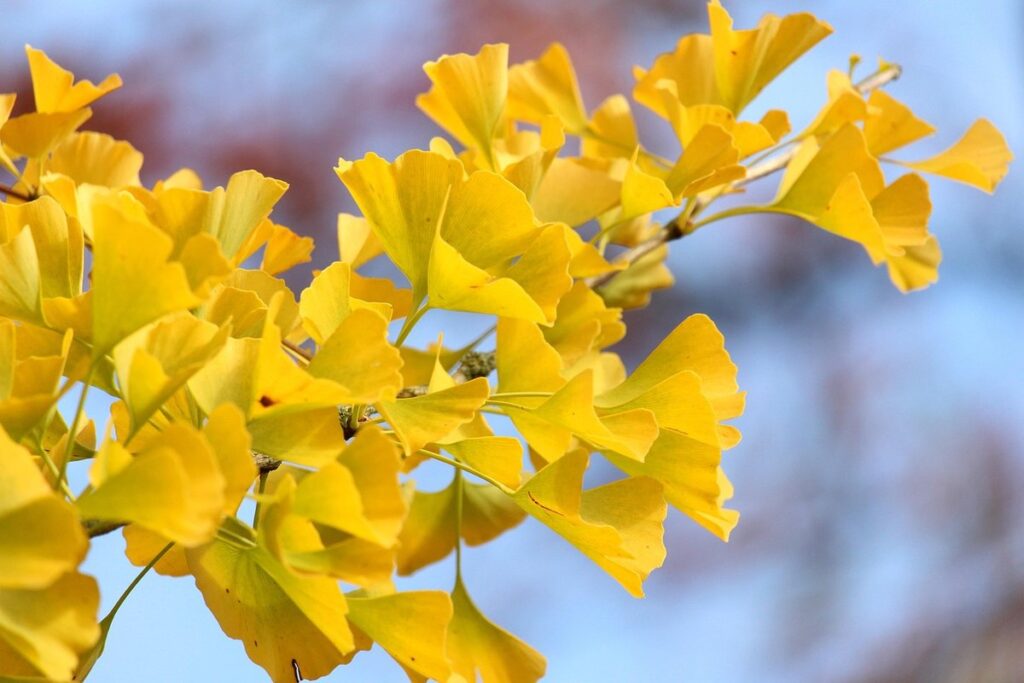
Understanding the Basics of Tree Structure
To sketch a realistic tree with leaves, you need to understand how branches, trunks, and roots are arranged in its structure. Let’s start by breaking down these basic components.
Recognizing Tree Types and Forms
Trees fall into three main categories based on their leaf characteristics and growth patterns: deciduous, evergreen, and coniferous. Deciduous trees shed their leaves annually, with species like oak and maple being common examples. Evergreen trees retain their leaves year-round, such as pine, spruce, and fir. Coniferous trees are a subset of evergreens, characterized by needle-like or scale-like leaves.
To recognize these types when sketching, look for characteristic leaf shapes and growth patterns. Deciduous trees often have broad, flat leaves with prominent veins, while conifers typically display needles in clusters or tufts. Evergreen trees can exhibit a range from tiny, waxy leaves to large, leathery ones. When observing in nature, pay attention to how leaves attach to the branch – deciduous leaves usually have a petiole (stem), whereas conifers often grow directly from the bark.
When sketching, don’t worry too much about accurately identifying species; focus on capturing the overall form and characteristic features of each tree type. This will help you establish a solid foundation for adding realistic details later in your sketch.
Observing Leaf Arrangement and Patterns
Leaves are typically arranged on branches in one of four main patterns: opposite, alternate, whorled, and spiral. Opposite leaves are paired on either side of a branch, with the stem attaching directly to the node where two branches meet. Alternate leaves, on the other hand, grow singly along the length of a branch, alternating sides as they go. Whorled leaves cluster together at a single point, forming a whorl around the stem. Spiral patterns, also known as phyllotaxis, involve overlapping leaves that twist and turn along the branch.
Understanding these basic leaf arrangements is crucial for accurately depicting tree foliage in your sketches. Observe how different types of trees exhibit unique leaf patterns – for example, oak trees often display opposite or alternate leaves, while willows typically have spiral patterns. Note the size and shape of individual leaves as well: are they large and lobed like those on a maple, or small and needle-like on a pine? Take note of how these variations affect the overall appearance of the tree’s foliage. By carefully observing and recording these details, you can create more realistic and engaging sketches that capture the intricate beauty of tree leaves.
Understanding Basic Branches and Limbs
A tree’s branches serve as the framework for its leaves, providing structural support and facilitating photosynthesis. The main types of branches are primary, secondary, and tertiary.
Primary branches, also known as trunk branches or main limbs, grow directly from the trunk and are typically thicker than secondary branches. They often produce larger leaves or clusters of smaller leaves. Understanding the positioning and angle of primary branches is crucial in capturing the overall shape and structure of a tree.
Secondary branches, or lateral branches, branch off from primary branches at a 90-degree angle. These smaller branches support smaller leaves or foliage and help distribute the weight of the tree’s canopy more evenly. Secondary branches often grow in pairs on either side of the primary branch, creating a symmetrical pattern.
Tertiary branches, or small twigs, are the smallest and most delicate type of branch. They typically emerge from secondary branches and carry the smallest leaves or foliage. Tertiary branches add detail and texture to a tree’s overall shape, making them essential for realistic sketching.
Gathering Reference Materials and Observations
Now that you have a clear idea of what trees look like, it’s time to gather reference materials to study their unique features up close. Take note of different leaf shapes, sizes, and arrangements on various tree species.
Collecting Photos and Real-Life Examples
When collecting reference materials for sketching trees with leaves, you should look for photographs and real-life examples that showcase the intricate details of tree foliage. Take note of how light filters through the leaves, creating dappled shadows on the ground below. Observe the shapes and arrangements of branches, noting how they support the weight of the leafy canopy.
On a nature walk or gardening excursion, pay attention to the textures and patterns on individual leaves. Look for veins that resemble roads, stems that resemble stalks of celery, and stipules that resemble tiny, pointed petals. Note the colors, from deep emerald greens to vibrant yellows and oranges, and how they change with the seasons.
When observing trees in person, take note of their overall shape and form, including how they respond to wind, rain, or other environmental factors. Consider the climate and region you’re sketching from, as this will influence the types of leaves and branches that grow on your trees. Take photos or make quick sketches to capture these details, using a camera with macro settings or a smartphone app to enhance your observations.
Studying Leaf Texture and Patterns
When studying leaf texture and patterns, it’s essential to understand the different types that exist. Smooth leaves have a glossy appearance and no notable edges or ridges. Lobed leaves, on the other hand, have deep indentations between their segments. Serrated leaves feature jagged teeth along their margins.
Veination patterns are another crucial aspect of leaf texture. Some leaves display prominent veins that resemble a network of roads. These are typically found on leaves with smooth textures. Other leaves may have more subtle veination or no visible veins at all.
Stipules, small appendages where the petiole meets the stem, can also provide insight into a tree’s characteristics. Some trees produce stipules that resemble tiny scales or spines. Others have none at all.
To effectively capture leaf texture and patterns in your sketches, observe these features closely when studying reference materials. Take note of how veination intersects with edges or stipules. Also, pay attention to the overall appearance: is it glossy or matte? Noticing such details will help you create a more accurate representation of leaves in your drawings.
Common examples include oak trees (often featuring lobed leaves) and maple trees (typically displaying smooth leaves).
Considering Climate and Environmental Factors
Climate and environmental conditions significantly impact tree growth, leaf development, and overall structure. When sketching trees, it’s essential to consider how these factors have shaped the tree you’re observing. For instance, a tree growing in a dry climate may develop deeper roots and a more compact canopy to conserve water. On the other hand, a tree in a humid environment might produce larger leaves with wider veins to maximize photosynthesis.
Soil quality also plays a crucial role in tree growth. Nutrient-poor soil can stunt leaf development or cause them to become smaller than usual. In contrast, trees growing in nutrient-rich soil may produce more vibrant foliage. Be aware that trees adapted to poor soil conditions might develop unique characteristics like smaller leaves or a more sprawling canopy.
Observe the surrounding environment as well. Trees near coastlines often have adapted to salt-laden winds and moisture, resulting in thicker bark and coarser leaves. In areas with frequent strong winds, trees may grow more compactly or develop flexible branches to withstand gusts. When sketching, take note of these adaptations and incorporate them into your drawing to create a more realistic representation of the tree’s environment.
Sketching the Basic Shape and Form
To get started, let’s focus on sketching the basic shape of our tree, which will provide a solid foundation for adding leaves later. A simple trunk and branch structure is all you need to begin with.
Establishing the Tree’s Center Mass
When placing the center mass of the tree on the paper, consider the overall shape and proportions. Start by lightly sketching a rough outline of the tree’s canopy, keeping in mind its height, width, and any distinctive features like branches or knots. This will give you an idea of where the trunk should sit.
The center mass is typically located at the base of the main trunk, roughly at chest level. For a deciduous tree, imagine a vertical line from the top of the canopy to the ground; this is usually where the center mass resides. Consider the tree’s overall balance and symmetry – if it has a large branch on one side, the center mass might be slightly offset.
To find the center mass in a more complex tree shape, try sketching a rough outline of the trunk from top to bottom. This will help you visualize the main axis and locate the spot where the trunk tapers into smaller branches. Use a soft pencil or erasable marker for this step – it’s easier to adjust than ink.
Blocking in Main Branches and Limbs
When blocking in main branches and limbs, it’s essential to create smooth curves that reflect the natural growth patterns of trees. To achieve balanced proportions, observe how the trunk tapers into larger branches and then smaller ones. Notice how these branches often split at an angle, rather than running parallel to each other.
Start by lightly sketching the major branches, using gentle, flowing lines. Pay attention to the way they radiate from the trunk, creating a sense of movement and energy. Avoid making lines too perfect or uniform – natural branches have character and imperfections that make them visually appealing.
Use simple shapes, like ovals or teardrops, to help you gauge proportions and balance. Imagine these shapes as building blocks for your branches, allowing you to experiment with different configurations until you find one that feels authentic. As a general rule, larger branches should be roughly 1-2 times the width of smaller ones.
Consider the types of trees you’re drawing – conifers tend to have more symmetrical branch patterns, while deciduous trees often display more dramatic angles and curves. By observing and responding to these differences, you’ll develop a greater sense of confidence in your sketching abilities.
Refining Leaf Arrangement and Placement
When placing leaves on branches, consider the density of foliage. A few sparse leaves can create a sense of airiness and openness, while a dense cluster of leaves can add weight and texture to the branch. Study photographs or observe real-life examples to get a sense of how leaf arrangement varies between different tree species.
The direction and angle of leaves on branches also affect the overall appearance of the tree. Leaves that grow parallel to the branch create a smooth, streamlined look, while those growing at an angle can add visual interest and depth. Consider the texture of the leaves as well – smooth leaves like those found on maple trees will catch light differently than lobed or serrated leaves.
To refine your leaf arrangement, experiment with different combinations of density, direction, and texture. You might try sketching a few sparse leaves at the end of a long branch, or grouping them more densely near the trunk. Pay attention to how these variations affect the overall shape and form of the tree, and adjust accordingly.
Adding Details and Texture
Now that we’ve established the basics of sketching tree shapes, it’s time to add some life to your drawings by incorporating the intricate details of leaves. This is where your sketches will truly come alive!
Sketching Leaf Shapes and Edges
To capture the essence of a tree’s foliage, start by sketching basic leaf shapes. Begin with simple forms like ovals, teardrops, and rounded triangles. These will serve as the foundation for more intricate leaves later on. For example, consider drawing an oak leaf – its lobes are typically symmetrical and curved, while those of a maple leaf tend to be more pointed.
Next, pay attention to leaf edges. Some trees have leaves with smooth margins (like the linden), while others feature serrated or wavy edges (such as the willow). Practice drawing both types to get a sense of their distinct characteristics.
When it comes to texture, don’t just rely on visual assumptions – observe how light interacts with different leaf surfaces. Some leaves appear dull and matte, while others shine with a subtle sheen. To convey this in your sketch, try using various line weights and hatching techniques.
Incorporating Veination Patterns and Stipules
To accurately render veination patterns and stipules, examine the leaf closely for distinctive features such as networked veins, prominent midribs, or small appendages. Note how these details interact with surrounding foliage, informing decisions about line weight and texture. Varying line weights can convey depth and emphasis: thicker lines for prominent veins, finer lines for less pronounced ones.
For instance, some leaves exhibit a clear central vein flanked by parallel side veins; in such cases, a slightly heavier midrib may be accompanied by lighter strokes for the subsidiary veins. Conversely, leaves with numerous tiny veins often benefit from a consistent light touch to suggest intricate network patterns.
Stipules – small, leaf-like structures at the base of petioles or twigs – can add a delicate, almost filigree-like quality to your drawings. To capture their appearance, pay attention to size, shape, and texture: are they small and rounded, or larger and more jagged? Use gentle hatching or cross-hatching to suggest their soft, fragile look.
Experiment with different line weights and textures on both paper and digital media to achieve the desired effect.
Adding Branch Details and Bark Texture
When adding branch details and bark texture to your tree sketch, focus on capturing the intricate patterns and characteristics of each feature. Start by observing the way twigs and small branches intersect with larger limbs. Note how they often form a more complex network of lines and shapes, rather than simply following straight or curved paths. This complexity is especially evident in deciduous trees, where the changing seasons cause branches to swell or shrink.
To convey this texture, use short, expressive strokes to suggest the contours of individual twigs and knots. Vary the line weight and quality to imply depth and dimensionality. For example, thicker lines can be used for trunk sections, while finer lines are better suited for smaller branches and twigs. When depicting bark, pay attention to its texture and pattern. Look for characteristics like ridges, grooves, or scaly patches, which can add a wealth of detail and visual interest.
Some essential features to observe in branch details include knots, where a branch is connected to the trunk; swellings, where branches meet at an angle; and small twigs, which often grow from larger branches. By incorporating these elements, you can create a more realistic and engaging tree sketch that invites the viewer’s eye to explore its intricate patterns.
Refining the Sketch with Perspective and Shading
Now that you have a solid foundation of tree shapes, it’s time to add some depth and dimension by refining your sketch with perspective and shading. This will help bring your tree to life.
Understanding Perspective and Depth
When creating depth and perspective in a tree sketch, you can use various techniques to achieve a more realistic representation. One-point perspective is often used for straightforward, symmetrical views of trees, where one vanishing point is established at eye level or slightly below. This method helps create a sense of distance by converging parallel lines toward the single vanishing point.
Two-point perspective, on the other hand, involves establishing two vanishing points, one above and one below the horizon line, to capture more complex views of trees with multiple branches and layers. For example, when sketching a tree with a prominent trunk and canopy, you might use two-point perspective to convey the sense of depth between the trunk and the leaves.
Atmospheric perspective is also essential for creating depth in a tree sketch. This technique takes into account how colors and details fade as they recede into the distance due to atmospheric conditions. By using lighter colors and softer lines for distant branches and foliage, you can create a sense of depth without relying solely on perspective techniques.
Adding Shading and Atmospheric Effects
When adding shading and atmospheric effects to your tree sketch, consider how light interacts with its various components. Observe the direction and intensity of sunlight on the leaves, branches, and trunk. Notice how shadows fall between and beneath these elements, creating a sense of depth and dimension.
To capture realistic shadow effects, use a range of values from dark to light. For example, darker shadows can be achieved by layering subtle lines or hatching marks, while lighter areas might require gentle stippling or soft blending. Consider the leaf’s texture and how it affects the way light interacts with its surface. Some leaves have smooth surfaces that reflect light, while others have more irregular textures that absorb or distort it.
Pay attention to atmospheric effects such as fog, mist, or haze, which can soften or obscure details in your sketch. Use gentle blending techniques or soft brushes to convey these effects. If you’re working with a specific climate or environment, think about how the atmosphere might influence the way light interacts with your tree. For instance, a hazy day might make shadows appear softer and more diffuse.
When layering shading and atmospheric effects, start with the darkest areas first and gradually build up to lighter values. This approach helps maintain contrast and prevent your sketch from becoming too muddy or confusing.
Finalizing Touches and Details
Add delicate lines to suggest the subtle curves of individual leaves. Refine the placement of buds and flower clusters, if present, by studying their typical positions on the stem. For more realism, consider including slight variations in leaf size and shape, often due to factors like sunlight exposure or nutrient availability.
To add depth and dimension, revisit your shading techniques from earlier steps. Apply gentle gradients to suggest leaf thickness and texture, using a range of values from light to dark. Be mindful of the overall balance between light and shadow, as this will greatly impact the tree’s sense of volume and presence on the page.
In terms of specific details, pay attention to areas like the base of the trunk and main branches, where leaves often overlap or crowd together. Use a small brush or fine-tip pen to capture these intricate patterns, which can add significant visual interest to your sketch.
Putting it All Together: Practice and Improvement
Now that you’ve learned the basics of sketching tree shapes and adding leaves, let’s focus on putting everything together into a cohesive piece. With practice, your skills will improve dramatically!
Practicing with Different Tree Types
Experimenting with different tree types is essential to mastering the art of sketching trees with leaves. Each species has its unique characteristics, and observing these differences will help you develop a more nuanced understanding of how leaves grow on various branches.
Start by choosing two or three tree types that interest you – for example, a deciduous oak, an evergreen fir, and a willow. Study their leaf arrangements, taking note of the way they branch out from the trunk and the patterns they create in the canopy above. Observe how different species use space and grow in response to environmental factors.
As you sketch each tree type, pay attention to specific details such as leaf shape, size, and texture. Notice how some trees have broad, flat leaves while others have needle-like or thread-like foliage. Consider the types of branches that support these leaves – are they sturdy and thick, or slender and flexible?
To get even more out of this exercise, try drawing your chosen tree species in different contexts: in a park on a sunny day, next to a body of water, or at dusk when the light is soft. This will help you develop an appreciation for how trees interact with their surroundings and respond to varying conditions.
Analyzing and Improving Your Work
When analyzing and improving your sketches of trees with leaves, start by looking for areas where you can refine your understanding of tree structure. Review your reference materials to ensure you’re accurately depicting leaf arrangement patterns and branch placement. Ask yourself how effectively you’ve conveyed the sense of movement and energy in your drawing – are the branches too static or too wild? Consider whether your leaf shapes and edges capture the right level of detail.
For self-assessment, make a checklist of key elements to review: branching patterns, leaf texture and veination, and overall balance. Evaluate each sketch against this criteria, noting areas where you excel and those that need improvement. Share your work with fellow artists or online communities for constructive criticism – be open to feedback on specific details like branch thickness or leaf placement.
When receiving feedback, focus on the specifics rather than getting defensive about your style. Use this opportunity to learn from others’ perspectives and gain a deeper understanding of tree anatomy. Remember that improvement comes from consistent practice and attention to detail, not just one breakthrough session. As you review and refine your sketches, keep in mind what specific skills or knowledge gaps are holding you back – and address those areas directly through targeted practice exercises.
Frequently Asked Questions
Can I use digital tools to sketch trees with leaves?
Yes, many artists successfully use digital drawing software to practice and improve their skills. However, it’s essential to understand that the fundamentals of sketching remain the same, regardless of the medium used.
How do I handle irregular leaf shapes or unique tree forms in my sketches?
When faced with unusual leaf shapes or tree forms, study reference materials extensively to capture their essence. Focus on observing and rendering the subtleties of texture, pattern, and detail that make these subjects distinct. Consider breaking down complex structures into simpler components for easier sketching.
Can I use photographs as direct references for every aspect of my sketches?
While photographs can serve as valuable references for overall structure and leaf arrangement, they may not always accurately depict the subtleties of texture, veination patterns, or stipules due to limitations in camera capture. Balance reference material usage with observation skills and artistic interpretation.
What if I’m struggling to get the proportions right on my sketches?
Proportion challenges often arise from misunderstanding the basic forms of trees or neglecting to observe the center mass correctly. Review your understanding of tree structure, focusing on establishing a strong base for your sketch, and practice measuring proportions with careful observation.
Is it normal for my first attempts at shading and perspective to look unrealistic?
Yes, capturing realistic light and shadow effects can be tricky, especially when you’re starting out. Don’t be discouraged by initial failures; instead, focus on understanding the principles of one-point, two-point, and atmospheric perspective and practice applying these techniques in your sketches.

