
Starting an art sketchbook can be intimidating, especially when you’re stuck for ideas. You’ve probably seen beautiful examples of mixed media projects online, but struggled to replicate them in your own practice. Art sketchbooks are a great way to experiment with different techniques and styles without worrying about creating a “perfect” piece of art. By filling pages with simple exercises, prompts, and advanced mixed media projects, you can boost your creativity and improve your drawing skills.
In this article, we’ll explore inspiring art sketchbook ideas that cater to artists at all levels. From simple warm-up exercises to more complex projects incorporating various materials and techniques, we’ll provide you with a wealth of creative inspiration to get your imagination flowing. By the end of this guide, you’ll have a clear understanding of how to create engaging mixed media artworks and confidently explore new art sketchbook ideas in your own practice.
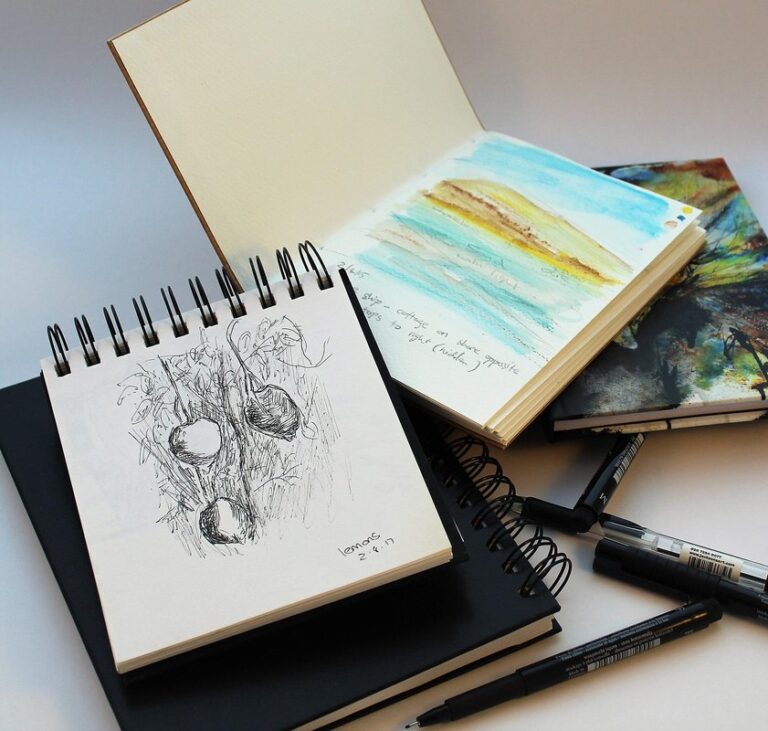
Getting Started with Art Sketchbooks
If you’re new to art sketchbooking, getting started can be both exciting and intimidating. Let’s begin by exploring the basics of setting up your first art sketchbook.
Understanding the Basics of Art Sketchbooks
An art sketchbook serves as a tool for creative expression and experimentation. Its primary purpose is to provide an accessible space for artists to explore various mediums, techniques, and ideas without fear of making mistakes. Art sketchbooks come in different types, including spiral-bound, sewn, and mixed media varieties.
Spiral-bound sketchbooks are convenient for artists who prefer to work horizontally, as the pages can be easily turned. Sewn sketchbooks, on the other hand, allow for more flexibility in page layout and offer a premium feel due to their stitched binding. Mixed media sketchbooks combine different materials, such as paper types and weights, to cater to various artistic needs.
Key features of art sketchbooks include high-quality paper, often acid-free and lignin-free, which ensures that artwork remains vibrant over time. Other essential features include durable covers, varying page sizes, and a suitable binding system. When selecting an art sketchbook, consider the type of medium you’ll be working with – watercolor or ink, for instance – and choose a book with paper specifically designed to handle those materials.
Choosing the Right Art Sketchbook for You
When selecting an art sketchbook, consider the paper quality as a top priority. Look for papers with a high cotton content (around 80-100%) and a smooth finish to ensure minimal bleeding and feathering from water-based media. The ideal paper weight is also crucial; heavier weights like 140 or 160 gsm are better suited for expressive drawing, while lighter weights work well for sketching.
Size and binding type are other important factors to consider. Larger sketchbooks (A2 or A3) provide ample space for detailed drawings, but may be cumbersome to carry. Smaller ones (A5 or 6×9 inches) are more portable, making them ideal for on-the-go sketching. Choose a binding that suits your style – spiral-bound books allow for easy page turning, while sewn bindings provide a more professional finish.
Set a budget and stick to it: art sketchbooks can range from affordable (under $10) to premium (over $50). Know what you’re willing to spend and look for sketchbooks within that price range. Additionally, consider the number of pages and whether they are blank or grid-lined. Ultimately, choose a sketchbook that aligns with your artistic style and needs – don’t be afraid to try out a few before committing to one.
Warm-Up Exercises and Prompts
Start with simple warm-up exercises, such as gesture drawing and contour drawing, to loosen up your hand and get ready for more creative explorations. These basic prompts will help spark new ideas in your sketchbook.
Simple Drawing Prompts for Beginners
To get started with drawing, try simple prompts like capturing everyday objects using basic shapes. For instance, draw a cup as a circle with a handle attached to one side. This exercise helps you focus on proportions and simplicity. Alternatively, practice gesture drawings by rapidly sketching the overall pose of people or animals without worrying about details.
Draw objects from memory rather than directly observing them. This will help loosen up your drawing style and encourage creative liberties. For example, try drawing a chair without looking at it, focusing on its general shape and proportions. You can also practice drawing simple scenes like a street corner or an interior room using basic shapes and lines.
When working with values (light and dark), start by creating a simple still life setup with a few objects in different lighting conditions. Practice capturing the range of values from light to dark using various shading techniques, such as hatching and cross-hatching. This will help you develop your understanding of how light affects form and structure.
Beginners can also try drawing from photographs or printed images to practice their skills without relying on direct observation.
Advanced Drawing Techniques and Prompts
To take your art sketchbooks to the next level, try incorporating advanced drawing techniques and prompts. Experiment with mixed media by combining watercolor and ink washes for a unique texture and visual interest. For example, use a brush pen to create bold lines, then layer transparent watercolors over them to achieve a sense of depth.
Create intricate patterns using hatching and cross-hatching techniques, or explore the expressive qualities of gestural drawing. Consider creating abstract compositions by applying texture with modeling paste or heavy body acrylics. These can add an interesting dimension to your artwork, especially when paired with loose brushstrokes or bold lines.
When working with abstract forms, think about using a range of values and contrast to create visual tension. This might involve incorporating areas of high contrast with darker shadows or highlights against lighter backgrounds. Alternatively, play with color theory by experimenting with analogous or complementary color schemes to add depth and emotion to your artwork. Remember, the key to mastering advanced techniques lies in practice and experimentation – don’t be afraid to take risks and push beyond your comfort zone.
Nature-Inspired Art Sketchbook Ideas
Bring the outdoors into your art sketchbook by capturing the intricate patterns and vibrant colors found in nature, from leaves to flowers and beyond. Let’s explore some beautiful ideas to get you started!
Landscapes: Capturing Light and Shadow
When sketching landscapes, capturing the play of light and shadow can elevate your artwork from a simple representation to a compelling scene. To convey atmosphere and mood through value and color, start by observing how light affects the landscape. Notice where shadows fall, and consider using a range of values to depict the contrast between light and dark areas.
Use soft pencils like 2B or 4B for shading, as they allow for subtle transitions between values. Pay attention to the direction of light sources and use hatching techniques to suggest depth and dimensionality. Warm colors tend to evoke feelings of comfort and serenity, while cool colors can create a sense of calmness.
To convey atmosphere, focus on capturing the mood of the scene rather than precise details. Use expressive brushstrokes or loose gestural drawings to capture the play of light and shadow. For example, use a wet-on-wet technique with watercolors to blend colors and achieve soft, misty effects that evoke an ethereal atmosphere.
When sketching landscapes, remember that it’s not about replicating reality but capturing its essence. Experiment with different techniques to find what works best for you and your style.
Still Life from Nature: Sketched with Ease
Set up a still life arrangement using natural elements like flowers or branches, and you’ll have a unique subject to sketch. Gather items from your garden or nearby park – consider a bouquet of wildflowers, a few sprigs of fresh rosemary, or a small branch with interesting bark patterns.
Observe the textures, shapes, and colors of these elements. Notice how the petals of the flowers curve inwards, while the stems provide a sturdy base. The leaves on the branches might be delicate and feathery, or thick and leathery. Pay attention to the way light interacts with your still life arrangement – does it create deep shadows or highlight intricate details?
To render these subjects accurately, focus on capturing their intricate details. Use a range of line weights to convey texture: thin lines for delicate petals, thicker ones for robust branches. Experiment with different shading techniques to capture the play of light and shadow. If you’re sketching indoors, consider using a window or softbox to illuminate your still life arrangement.
Pop Culture and Whimsy in Art Sketchbooks
Pop culture references, quirky quotes, and whimsical doodles add a playful twist to art sketchbook pages. Think movie characters, memes, and favorite books come alive in creative journaling.
Fan Art and Geeky Illustrations
Incorporating fan art and geeky illustrations into your art sketchbook can be a fun way to pay homage to beloved characters and worlds. Consider exploring popular franchises like comics, anime, or movies – think Marvel, Star Wars, or Studio Ghibli. To get started, look for inspiration in official artwork, concept designs, or even cosplay images.
When creating fan art, it’s essential to balance personal creativity with respect for the original source material. This means understanding the tone and style of the franchise you’re drawing from and avoiding plagiarism. Instead, use your own interpretation and imagination to reimagine characters, scenes, or objects in a way that feels unique to you.
For example, you might draw a favorite character from a popular manga series but add your own twist by changing their outfit or environment. Alternatively, you could create an entirely new scene inspired by the franchise’s universe, using its visual language as a starting point for your art. By doing so, you’ll not only pay homage to the original creators but also bring your own creative vision to life in your sketchbook.
Whimsical Creatures and Fantasy Worlds
Let your imagination soar as you create fantastical creatures and entire worlds within the pages of your art sketchbook. Develop unique characters by experimenting with various mediums and styles. Try combining traditional media like pencils, ink, and watercolors with digital tools for a fresh look.
To bring your whimsical creations to life, think about their habitats, habits, and personalities. Consider what environment they inhabit – is it lush and vibrant or dark and foreboding? What materials would they use in their everyday lives? How do they interact with one another?
For example, you could depict a majestic dragon perched atop a mountain range, its scales shimmering in the sunlight. Alternatively, imagine an underwater city where creatures like mermaids and selkies reside.
When drawing fantastical landscapes, think about how to convey depth and dimensionality. Use layering techniques with paint or colored pencils to create a sense of atmosphere and texture. You could also incorporate collage elements, such as paper cutouts or fabric scraps, to add visual interest.
Remember that there are no rules in the world of fantasy – so don’t be afraid to let your imagination run wild! Experiment with different mediums and techniques to bring your fantastical creations to life.
Portraits and Figurative Art in Sketchbooks
When exploring figurative art, sketching portraits can be a fantastic way to capture the essence of your subject. From realistic likenesses to expressive interpretations, we’ll look at some inspiring examples to get you started.
Capturing the Human Form: Gesture Drawing
Gesture drawing is a fundamental skill for capturing the human form in art. It involves quickly sketching the overall pose and movement of a subject, often using simple shapes and lines to convey energy and movement. To get started with gesture drawing, try setting a timer for 10-15 minutes and rapidly sketching the overall pose of your subject without worrying too much about details.
Focus on capturing the main gestures of the body, such as the direction of the shoulders, hips, and legs. Use simple shapes to help you achieve this – for example, an oval for the head, a rectangle for the torso, or a series of curved lines to suggest the movement of the arms. Remember that gesture drawing is about capturing the essence of the pose rather than rendering every detail accurately.
Practice makes perfect, so try gesturing from life whenever possible. Observe how different poses can be broken down into simple shapes and movements. You might also find it helpful to practice gesturing from photographs or videos – just be sure to focus on capturing the overall energy and movement of the subject rather than getting bogged down in details.
Portraiture: Emphasizing Facial Expression and Character
Portraiture is a captivating genre in art sketchbooks, allowing artists to explore and capture the essence of human expression. When focusing on facial expression and character, it’s essential to consider the medium used. Charcoal, for instance, can create expressive and emotive portraits with varying degrees of subtlety.
Ink, particularly when paired with a fine-tip pen, enables precise lines that emphasize individual features. This contrast between delicate and bold strokes helps convey depth and personality in a subject’s face. Another option is watercolor, which can produce soft, blended textures that capture the subtleties of human emotion.
To achieve effective portraiture in your sketchbook, pay close attention to proportions, anatomy, and expression. Study the curves of the nose, the shape of the eyes, and the overall structure of the face. Practice drawing simple facial expressions, gradually building up to more complex ones. Experiment with different mediums and techniques to find what works best for you.
Some key considerations when capturing character in a portrait include:
• The tilt of the head and shoulders
• The direction and intensity of eye contact
• The curvature of the lips and mouth
Mixed Media Art Sketchbook Ideas
Combine paint, collage, and drawing techniques to create visually striking pages in your mixed media art sketchbook. Experiment with textures and materials for a truly unique piece of art.
Incorporating Collage and Textures
Incorporating collage elements and textures into your art sketchbook is a great way to add depth and interest to your artwork. You can use various materials such as paper, fabric, or found objects to create unique textures and effects. For example, you could glue small pieces of tissue paper onto a page to create a soft, textured background.
To blend different mediums, try combining paint with collage elements. Use a wet medium like watercolor or acrylic to apply paint to your paper, then add dry collage elements on top. This will create interesting interactions between the two materials. You can also use a gel medium or decoupage glue to attach heavier textures like fabric or paper.
When working with found objects, think about how they can be used as is or transformed through paint, ink, or other mediums. For instance, you could paint a small rock or piece of wood to match your artwork’s color palette. Consider using a range of materials from paper scraps and cardboard tubes to buttons and lace. Experimenting with different textures and combinations will help you develop your unique style and voice in your art sketchbook.
Digital Integration: Blending Traditional with Modern Tools
Many artists are now experimenting with combining traditional media with digital tools in their art sketchbooks. For instance, painter and illustrator, Alyssa Winans, incorporates scanned drawings into her mixed-media pieces, while photographer and artist, Gregory Crewdson, uses Photoshop to enhance his photographs and add them to his sketchbook collages.
To incorporate software or apps into your artistic practice, you can start by scanning or photographing your traditional work and then manipulating it digitally. You could also try using digital drawing tools like Procreate or Adobe Illustrator Draw to create new artwork that complements your physical sketches. Some artists even use their smartphones to sketch directly on the screen, which can be a fun way to experiment with different techniques.
When combining digital and traditional media, remember that you don’t have to stick to just one medium – feel free to switch between them as often as you like. You could start with a traditional drawing or painting, then scan it and add digital elements in the form of text or shapes. Alternatively, you could begin with a digital sketch and then add physical materials like paint or collage elements.
Conclusion and Final Tips
Now that you’ve filled your sketchbook with inspiring ideas, let’s summarize the key takeaways and share some final tips to keep your creativity flowing.
Reflecting on Your Art Journey
As you close your art sketchbook, take a moment to reflect on the journey you’ve undertaken. Celebrate the moments of joy and creative breakthroughs – perhaps there was a particularly challenging piece that pushed you outside your comfort zone or an inspiring discovery that sparked new ideas. Acknowledge the obstacles you faced, too: maybe the blank page seemed daunting at times, or maybe self-doubt crept in.
Consider how you can maintain this momentum as you continue to explore art sketchbooks. Set aside dedicated time for creative practice each week – even 15-20 minutes a day can make a significant difference. Identify what worked well for you during this project: was it the structured prompts, or perhaps the freedom to experiment with different media? Use these insights to inform your future artistic endeavors.
As you look back on your completed art sketchbook, remember that every piece is a stepping stone towards growth and mastery. Don’t be too hard on yourself if some pages didn’t quite meet your expectations – it’s the process, not perfection, that matters most.
Encouragement to Continue Exploring Art Sketchbooks
Your art sketchbooks are not just a collection of pages – they’re a journey of self-expression and growth. As you flip through them, remember the moments of frustration and triumph, the discoveries and surprises that kept you engaged. It’s okay to revisit old ideas or try new techniques; in fact, it’s often where the most exciting breakthroughs happen.
Consider this: your art sketchbooks are a window into your creative process, a visual diary that can inspire others as much as it inspires you. Don’t be afraid to share your work with friends, family, or online communities – not only will you get valuable feedback, but you’ll also connect with like-minded individuals who appreciate the value of making art.
For future projects, think about exploring new mediums or styles, incorporating collage, or even experimenting with digital tools in your sketchbooks. The possibilities are endless, and it’s up to you to decide where to take them. By continuing to explore and create in your art sketchbooks, you’ll stay motivated, inspired, and constantly learning – a true artist’s mindset.
Frequently Asked Questions
What if I’m stuck and don’t know what to draw next in my art sketchbook?
When faced with creative block, try changing your environment or switching between mediums. For example, move from pencils to watercolors or work on a different project for a while before returning to your current piece. This can help stimulate new ideas and get you back on track.
How do I incorporate digital tools into my traditional art sketchbook in a way that feels natural?
Yes, it’s definitely possible to integrate digital elements seamlessly with traditional media. Experiment with using software or apps to enhance your sketches or create digital layers. For instance, use a drawing app to add detailed textures or color layers, then refine them with physical mediums. This fusion can lead to unique and captivating art.
Can I mix different techniques from various sections of the article in one sketchbook?
Absolutely! One of the best things about art sketchbooks is that you can experiment freely without worrying about mistakes. Feel free to combine techniques from different sections or even try something entirely new. Remember, your art sketchbook journey is all about exploration and growth.
What if I’m not comfortable drawing people – are there still plenty of options for portraits in my art sketchbook?
Yes! While capturing the human form can be intimidating, it’s not the only option for exploring portraiture. Focus on facial expressions, character studies, or even fictional characters. You can also use your own imagination to create fantastical creatures and environments that don’t involve drawing people directly.
How do I make sure my art sketchbook stays organized, especially if I’m using a lot of different mediums?
To keep your art sketchbook organized, consider dedicating specific sections for different mediums or techniques. Use tabs, stickers, or even washi tape to separate projects and ensure that you can easily find what you’re looking for. This will help prevent clutter and allow you to focus on creating rather than searching through your work.

