
Making delicious homemade sauerkraut is easier than you think, but selecting the right cabbage for fermentation can be a challenge. Most people turn to store-bought sauerkraut, but with a little practice, you can create your own mouthwatering batches at home. Choosing the right head of cabbage is key – its density and firmness will directly impact the success of your fermented dish. With a step-by-step guide on preparing cabbage for fermentation and troubleshooting common issues, this recipe will walk you through every detail necessary to achieve a perfect balance of flavors and textures in your homemade sauerkraut. By following these simple instructions, you’ll learn how to create a delicious and healthy condiment that complements any meal – and by the end of this guide, you’ll be able to confidently ferment cabbage at home to produce your own flavorful sauerkraut.
Choosing the Right Cabbage
When selecting a cabbage for sauerkraut, consider the flavor and texture you’re aiming for: crunchiness or softness. For most recipes, choose dense, firm heads.
Selecting the Best Variety for Fermentation
When it comes to fermenting cabbage, selecting the right variety is crucial for achieving optimal results. Savoy and Green cabbages are popular choices due to their firm texture and minimal moisture content, which makes them ideal for fermentation. These varieties have a tighter cell structure that allows for better lactic acid production, contributing to the characteristic tanginess of sauerkraut.
On the other hand, some cabbage varieties might not be suitable for fermentation. For instance, Napa cabbages tend to have a looser texture and higher moisture content, which can lead to mold growth and an unpleasant flavor. Similarly, Red cabbages may not ferment as evenly due to their thinner leaves and softer stems.
In general, look for cabbage varieties with dense, crisp heads and minimal leaf curling. These characteristics will help ensure that your sauerkraut ferments properly and develops the desired flavor profile. When shopping for cabbage, ask your local farmer or grocery store about the specific variety they are selling and its suitability for fermentation.
Factors to Consider When Picking Cabbage Heads
When selecting fresh cabbage heads for sauerkraut-making, several key characteristics come into play. First and foremost, you want to choose cabbages with firm, compact leaves that are free from signs of wilting or yellowing. A vibrant green color is also essential, as this indicates the presence of chlorophyll, which helps preserve the cabbage during fermentation.
In terms of size, medium to large heads tend to be preferred for sauerkraut-making, as they provide a good balance between yield and ease of handling. Heads that are too small may not produce enough shredded material, while excessively large ones can be unwieldy to work with.
Avoid cabbages with visible signs of damage or disease, such as holes, tears, or soft spots. These areas can harbor bacteria and other contaminants that might compromise the fermentation process. Furthermore, choose cabbages grown in well-draining soil and exposed to moderate temperatures, as these will have developed a stronger flavor profile and texture. By selecting high-quality cabbage heads, you’ll set your sauerkraut up for success from the very beginning.
Preparing Cabbage for Fermentation
Before we start fermenting, it’s essential to prepare your cabbage properly by shredding and salting it to remove excess moisture. This step sets the stage for a perfectly tangy sauerkraut.
Cleaning and Shredding the Cabbage
To prepare cabbage for fermentation, it’s essential to clean and shred the leaves thoroughly. Begin by inspecting each head of cabbage for any damaged or bruised areas. Remove any leaves with visible signs of rot or mold, as these can harbor bacteria that might contaminate the entire batch.
Next, wash the cabbage under cold running water to remove dirt, debris, and any remaining impurities. A gentle scrubbing with a vegetable brush can help dislodge stubborn particles. Pat the cabbage dry with paper towels to prevent excess moisture from affecting fermentation.
For shredding, use a mandoline or sharp knife to cut the cabbage into thin strips. You can also chop the leaves into smaller pieces if you prefer a coarser texture. Aim for uniform shreds to ensure even distribution of lactic acid during fermentation. When chopping, remove any thick stems or cores that may cause uneven texture or compromise the ferment’s consistency.
Keep in mind that the cleaning and shredding process should be done just before assembling the sauerkraut recipe. This helps maintain the cabbage’s crisp texture and prevents sogginess from setting in.
Salting the Cabbage: The Importance of Lacto-Fermentation
Salt plays a crucial role in lacto-fermentation, serving as a vital tool for creating an environment where beneficial bacteria can thrive. By applying salt to the cabbage, you’re establishing a selective barrier that excludes pathogens and allows beneficial microorganisms to dominate. This process is essential for preventing spoilage and ensuring the fermentation proceeds safely.
The most common issue with inadequate salting is off-flavors caused by unwanted bacteria growth. Typically, this results in an unpleasantly sour or bitter taste. To avoid this, it’s recommended to use a brine solution that contains at least 2-3% salt by weight. This can be achieved by mixing 1-2 tablespoons of kosher or sea salt with every 5 pounds of cabbage.
When salting the cabbage, be sure to massage the mixture thoroughly to ensure even distribution and prevention of any dry pockets where pathogens might hide. A well-salted brine allows beneficial lactic acid bacteria (LAB) to multiply rapidly, producing lactic acid that preserves the fermented product and creates its characteristic tangy flavor.
Creating a Fermenting Environment
To ferment cabbage successfully, you’ll need to create an environment that’s conducive to lactic acid production and allows for healthy bacterial growth. This requires careful attention to temperature and humidity levels.
Understanding pH Levels and Their Impact on Fermentation
Maintaining a suitable pH level is crucial during fermentation, as it directly affects the growth of lactic acid bacteria. These beneficial microbes thrive in an acidic environment with a pH range between 3.5 and 4.5. If the pH is too high, lactic acid bacteria struggle to grow, leading to poor fermentation or even spoilage.
To put this into perspective, consider a sauerkraut recipe that starts at a pH of around 6.0. This is too alkaline for optimal growth of lactic acid bacteria, which can lead to off-flavors and an unpleasant texture. If left unchecked, the resulting sauerkraut may become contaminated with unwanted bacteria or mold.
When preparing your cabbage ferment, make sure to maintain a pH between 3.5 and 4.5 by monitoring its acidity regularly. You can use pH test strips or a digital pH meter for accurate readings. Some commercial products even contain added acidity regulators like citric acid, but these are not necessary if you’re using the right recipe and following proper fermentation techniques.
Equipment and Containers Needed for Fermentation
To successfully ferment cabbage, you’ll need a few pieces of equipment and containers. First, you’ll require a crock specifically designed for fermentation, such as a ceramic or stoneware vessel with a lid. These vessels are typically wide-mouthed to allow easy access for pressing down the contents. You can also use food-grade plastic containers, like a large glass jar with a wide mouth.
In addition to your crock or container, you’ll need weights to keep the cabbage submerged under its own juices and prevent mold growth. Common options include a fermentation weight, a plate, or even a heavy stone. The key is to choose something that’s clean, non-reactive, and can be easily cleaned.
You’ll also need storage containers for your finished sauerkraut. Glass jars with tight-fitting lids are ideal, as they’re easy to clean and won’t impart any flavors to the fermented cabbage. Make sure these jars are stored in a cool, dark place, such as a pantry or cupboard, away from direct sunlight and heat sources.
The Fermenting Process
Now that we’ve covered the basics, let’s move on to the fun part: watching your cabbage transform into tangy, crunchy sauerkraut. We’ll walk you through each stage of the fermenting process next.
Weighing Down the Cabbage: The Role of Weights in Fermentation
To ensure the cabbage remains submerged under its own juices during fermentation, you’ll need to weigh it down. This step is crucial as it prevents mold from growing on the surface and encourages even pickling of the juice. You can use stones or other weights specifically designed for fermentation.
A typical stone weighs around 1-2 pounds (0.5-1 kg), but you may need multiple depending on the size of your cabbage batch. For a standard-sized head, two to three stones should be sufficient. Arrange them in a way that evenly distributes their weight across the surface, ensuring the cabbage stays submerged.
It’s essential not to press too hard, as this can cause the juices to become trapped and lead to over-acidification. A general rule of thumb is to leave about an inch (2.5 cm) between the top of the cabbage and the weights. This allows for adequate space for gas production during fermentation while keeping the vegetables submerged.
Monitoring Temperature and Fermentation Time
Fermentation thrives in a temperature range between 10-20°C (50-68°F). This narrow window is crucial for maintaining the balance of lactic acid production and preventing unwanted bacterial growth. To monitor temperature, use a thermometer specifically designed for measuring low temperatures. Place it near the surface of the cabbage mass, ensuring it’s not touching any containers or other objects that might influence readings.
Fermentation time varies depending on factors like temperature, salt concentration, and initial pH levels. A general rule of thumb is to allow 3-6 weeks at 10°C (50°F), with a maximum of 5 days per degree Celsius above this range. For example, if your fermentation takes place at 15°C (59°F), aim for a minimum of 2 weeks and a maximum of 4 weeks.
During the fermentation process, you’ll notice visible signs such as bubbles rising to the surface, a tangy aroma, or a slight expansion in container size. Take note of these indicators and plan your next steps accordingly. Always err on the side of caution: if in doubt, it’s better to wait a few more days than risk contamination.
Troubleshooting Common Issues
Occasionally, sauerkraut ferments can go awry, resulting in unpleasant odors, moldy textures, or unbalanced flavors. This troubleshooting guide will help you identify and rectify common issues that arise during the fermentation process.
Identifying Signs of Over-Fermentation or Under-Fermentation
During fermentation, sauerkraut can become over-acidified or under-acidified. Over-acidification is indicated by an extremely sour smell and a slimy texture. This can be caused by the presence of contaminants like bacteria from dirty equipment or excessive salt levels. Under-acidification, on the other hand, results in a sauerkraut that tastes bland and doesn’t have the expected crunch.
To correct over-acidification, remove the affected portion and start again with fresh cabbage. Ensure all equipment is sanitized before use. If you suspect excessive salt is to blame, reduce the amount used in future batches. Under-acidification requires more attention to temperature and time. Check that your fermentation environment remains between 64°F and 75°F (18°C to 24°C), as temperatures above or below this range can slow down fermentation.
Monitoring the sauerkraut’s color and texture is crucial. A properly fermented batch should have a pinkish hue and firm, crunchy texture. If it appears too pale or soft, check your salt levels and fermentation time. Regularly tasting the sauerkraut will also help you catch any issues early on.
Addressing Mold or Contamination During Fermentation
Detecting mold or contamination early on is crucial to salvage the fermentation process. Check for white patches, slimy texture, or a strong unpleasant odor on the surface of the sauerkraut. These are warning signs that something has gone wrong. If you notice any of these indicators, immediately inspect the underlying layers and take corrective action.
Remove affected areas with clean utensils to prevent cross-contamination. Discard the spoiled portion completely – it’s better to err on the side of caution than risk affecting the entire batch. Transfer the remaining sauerkraut to a new container, making sure to cover it with its own juices or brine. This will help maintain an anaerobic environment and support healthy fermentation.
Regularly inspect your ferment during the first few days, when mold and contamination are most likely to occur. Keep the container submerged in its own liquid to prevent exposure to air. After a week or two, if you still notice some imperfections, it’s not necessarily a failure – fermentation can be unpredictable. Consider that a small minority of batches will inevitably experience minor setbacks; with careful monitoring and prompt action, these issues can often be rectified.
Enjoying Your Homemade Sauerkraut
Now that you have a tangy batch of homemade sauerkraut, it’s time to enjoy it and get creative with recipes. From topping burgers to adding crunch to salads.
Tips for Storage and Serving
When stored properly, fermented sauerkraut can last for months. Transfer it to a clean glass jar with a tight-fitting lid, leaving about 1 inch of space at the top. Store it in the refrigerator to slow down fermentation. Check on it every week or two to ensure that mold isn’t growing.
Sauerkraut is incredibly versatile and can be used in a variety of recipes beyond the traditional sandwich topping. Try adding it to soups, stews, or casseroles for an extra boost of flavor. It’s also delicious sautéed with garlic as a side dish or used as a pizza topping.
When serving sauerkraut, consider its texture and temperature. If it’s too crunchy, you can let it sit at room temperature for a few hours to soften slightly. For a creamier consistency, mix in some grated carrot or beet. Sauerkraut pairs particularly well with smoked meats like sausage or bacon.
If you’re looking for new ways to use sauerkraut, experiment with different flavor combinations. Add some caraway seeds for a traditional German taste, or try pairing it with kimchi’s spicy kick. Don’t be afraid to get creative and adapt sauerkraut to your favorite dishes.
Frequently Asked Questions
Can I use a food processor to shred the cabbage?
Yes, using a food processor can be a time-saving method for shredding the cabbage. However, make sure to remove any damaged leaves or stems before processing to avoid contaminating the rest of the cabbage.
What if my fermentation container doesn’t have a lid? How do I keep out dust and other contaminants?
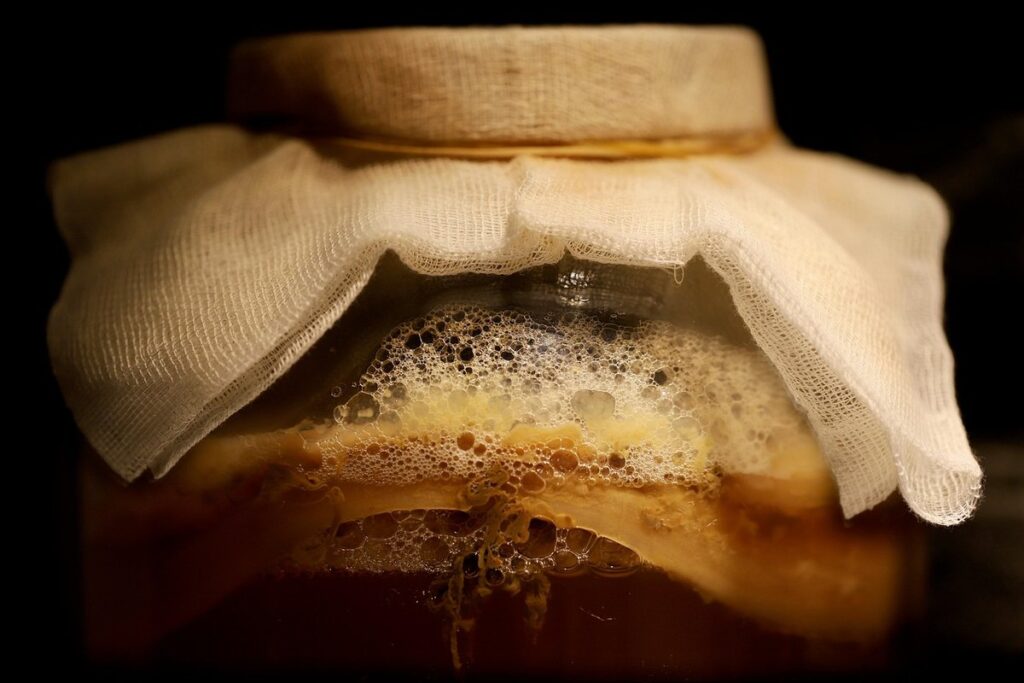
To prevent contamination when using an uncovered container, you can cover it with cheesecloth or a mesh screen. This will allow air to circulate while keeping dust and other particles out. Make sure to secure the cloth or screen with twine or rubber bands.
How long does it take for sauerkraut to become fully fermented? Can I speed up the process?
Fermentation time can vary depending on factors such as temperature, salt content, and desired level of sourness. Generally, it takes anywhere from 4-6 weeks for sauerkraut to become fully fermented at room temperature (around 20°C/68°F). You can’t speed up the fermentation process, but you can slow it down by storing the container in a cooler environment.
What if I notice mold or yeast growth on my fermenting cabbage? Is it still safe to eat?
No, if you notice mold or yeast growth on your fermenting cabbage, it’s best to discard the batch. Mold and yeast can produce toxins that are harmful to consume. To prevent this in the future, make sure to use clean equipment, maintain a suitable pH level, and monitor temperature and fermentation time closely.
Can I use different types of vegetables or fruits for sauerkraut besides cabbage? What’s the ideal vegetable-to-salt ratio?
While cabbage is traditional for sauerkraut, you can experiment with other vegetables like carrots, beets, or even apples. However, keep in mind that each vegetable will have a unique flavor profile and texture. The ideal vegetable-to-salt ratio remains around 5% salt content (by weight), but you may need to adjust this depending on the specific vegetable used.

