
Watercolor painting can be a beautiful yet intimidating medium, especially when faced with a blank canvas. Many artists struggle to overcome creative blocks or know where to start, resulting in frustration and disappointment. If you’re one of them, it’s time to discover inspiring watercolor painting prompts that will help you break through these barriers. These prompts serve as a catalyst for creativity, allowing you to explore new ideas and techniques without feeling overwhelmed. With the right guidance, you can improve your skills, capture stunning artworks with ease, and enjoy the process of creating. In this article, we’ll share practical watercolor painting prompts and expert tips on how to use them effectively, helping you to overcome creative blocks, enhance your artistic abilities, and produce breathtaking watercolor pieces that reflect your unique vision. By the end of this article, you’ll have a solid understanding of how to incorporate these inspiring prompts into your practice, allowing you to create with confidence.
Understanding Watercolor Painting Basics
Mastering the basics of watercolor painting is crucial for creating stunning pieces, so let’s start by covering the fundamental techniques and principles that will set you up for success.
Essential Materials and Techniques
To get started with watercolor painting, you’ll need a few essential materials. Begin with high-quality watercolor paper, which is designed to handle multiple layers of wet paint without buckling or warping. Look for papers labeled as “hot press” or “cold press,” depending on the texture you prefer – hot press produces a smooth finish, while cold press has a subtle tooth.
Choose brushes made from natural fibers like sable, squirrel, or mongoose, which hold and release pigment well. Synthetic brushes are also a good option, but they may not produce as rich a range of colors. A basic set should include round, flat, and detail brushes in various sizes.
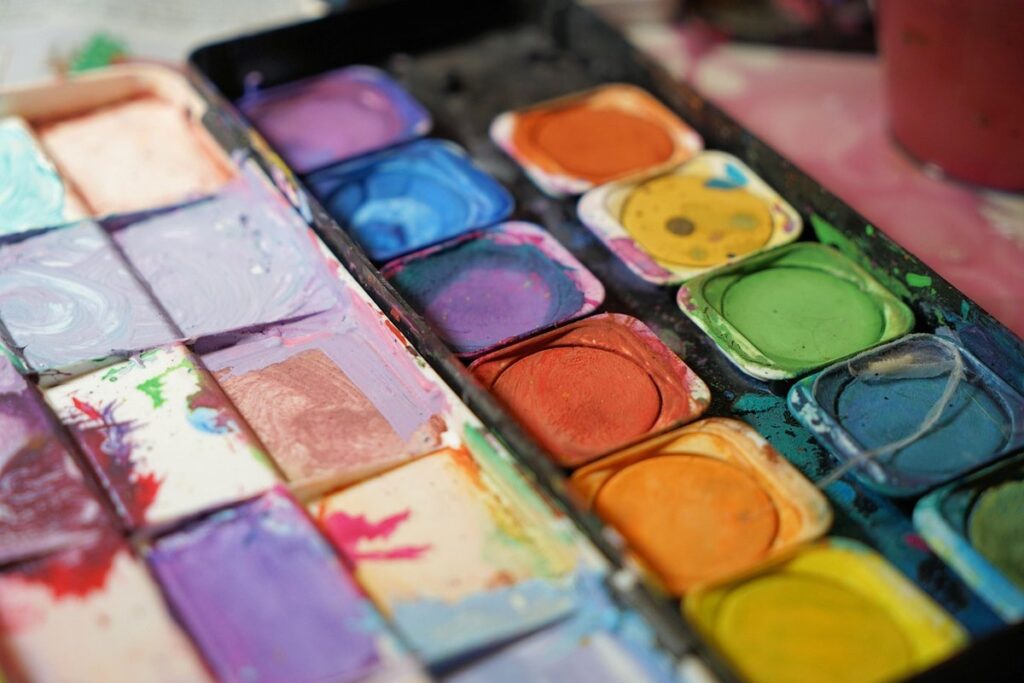
Watercolor paints come in two main types: pan paints and tube paints. Pan paints are convenient for travel or working on location, while tube paints offer more versatility and allow for mixing different hues. Start with a limited palette of primary colors (red, yellow, blue) and black, as these can be mixed to create a wide range of tones.
Techniques like wet-on-wet, where paint is applied to wet paper, and glazing, which involves layering transparent washes, are fundamental to watercolor painting. Wet-on-dry, applying paint to dry paper, allows for more control over the final result.
Basic Color Theory for Watercolors
When working with watercolors, understanding color theory is essential for creating harmonious and balanced pieces. Watercolor paint is translucent, meaning it allows underlying layers to show through, which can greatly impact the final color appearance.
Primary colors – red, yellow, and blue – are the building blocks of all other colors. In watercolor painting, these colors can be mixed to create secondary colors: orange (red + yellow), green (blue + yellow), and violet (blue + red). Warm colors like red, orange, and yellow tend to evoke a sense of energy and warmth, while cool colors like blue, green, and violet create a calming effect.
When mixing colors in watercolor painting, it’s crucial to remember that the pigment load is low compared to other mediums. This means that colors may not be as vibrant or intense as they would be in oil or acrylic paint. To achieve rich, saturated colors, you can use more pigment-loaded brands or mix colors that are closer to their pure hue.
To get started with basic color theory in watercolor painting, familiarize yourself with the color wheel and practice mixing primary and secondary colors. You can also experiment with creating a limited palette by combining only three primary colors. This will help you develop an understanding of how colors interact and complement each other on paper.
Developing Your Observation Skills
Developing strong observation skills is essential for capturing the subtleties of light and color on paper, which is why we’re focusing on this crucial skill next. To help you improve your observational abilities.
Study Nature and Its Details
When studying nature and its details, artists can improve their observation skills by paying attention to shapes, textures, and colors. Start by observing a single object, such as a leaf or a rock, and try to break it down into its basic components. For instance, note the curved shape of the leaf’s edge or the way the light reflects off its waxy surface.
To capture the essence of a subject through watercolor painting, look for patterns and repetition in nature. Observe how the shapes and textures of leaves overlap or how the branches of trees intersect. These patterns can be used to create visually appealing compositions that evoke the spirit of the natural world.
Take a walk outside and observe the colors around you. Note the way the light affects different surfaces, such as the blue shadows on greenery or the warm glow on sandy soil. When translating these observations into watercolor paintings, use color blocking and subtle blending to capture the nuanced play of light and shadow. By studying nature’s details and patterns, artists can develop a keen eye for observation and create more convincing and evocative watercolor paintings.
Capturing Light and Shadow
Capturing light and shadow effectively is a crucial aspect of watercolor painting. When done correctly, it can add depth, volume, and emotion to your artwork. Start by observing the way light falls on your subject – note the soft edges, subtle transitions, and strong shadows.
To render soft light, use wet-on-wet techniques or layered washes with gentle brushstrokes. You can also experiment with glazing over a previously dry layer to achieve a smooth, hazy effect. For example, try creating a misty morning scene by applying layers of transparent blue and gray.
Strong shadows provide contrast and help define the subject’s form. To capture these areas, use drybrush or thick brushstrokes to apply paint directly from the tube. Pay attention to the edges and contours of your subject – where light meets shadow is often where the most interesting details reside.
When transitioning between values, pay close attention to the subtle nuances in tone and texture. Use a range of brushstrokes and washes to create smooth, gradual shifts from light to dark. Practice rendering these transitions on simple still life compositions or everyday objects before moving on to more complex subjects.
Watercolor Painting Prompts for Beginners
If you’re new to watercolor painting, starting with simple prompts can help you build confidence and develop your skills. Let’s begin with some gentle exercises tailored just for beginners.
Simple Still Life Compositions
To create simple still life compositions for beginners, start by gathering a few everyday objects with varying textures and colors. A vase, a book, and a small bowl are ideal choices. Arrange them on a table or shelf, experimenting with different heights and angles to create visual interest.
Focus on the relationships between these objects, such as the way light reflects off their surfaces or how they interact with each other in space. Take note of the negative space around and between the objects, as this can add depth and balance to your composition.
Next, set up your still life by placing a sheet of watercolor paper on an easel or board. Use a pencil to lightly sketch the main shapes and proportions of the objects. This will serve as a guide for your painting without committing you to precise lines.
When painting, begin with basic washes to establish the overall color palette and values. Gradually build up layers, using gentle brushstrokes to capture the subtleties of texture and form. By following these steps, you can create simple still life compositions that allow you to practice your watercolor skills while exploring your creativity.
Everyday Objects as Inspiration
When it comes to finding inspiration for watercolor paintings, everyday objects can be a treasure trove of creative possibilities. Start by gathering items from around your home, such as a vase, book, or fruit bowl. Observe the shapes, colors, and textures of these objects – do they have smooth curves or sharp edges? Are there bold patterns or subtle nuances?
To render these everyday objects convincingly, focus on capturing their essence rather than trying to replicate them exactly. Use simple brushstrokes and a limited color palette to emphasize their basic forms and textures. For example, you might use soft washes to capture the gentle curves of a vase or bold strokes to convey the intricate patterns on a book’s cover.
To take your watercolor paintings to the next level, try experimenting with unusual objects as inspiration. This could be a vintage clock, a piece of jewelry, or even a household appliance. By observing and rendering these everyday items in a creative way, you’ll develop your skills and cultivate a unique perspective that will serve you well in all aspects of watercolor painting.
Advanced Watercolor Painting Prompts
To take your watercolor skills to the next level, we’ll explore advanced painting prompts that challenge you to think creatively and push beyond traditional techniques. Get ready for inspiration!
Landscapes and Cityscapes
Challenge yourself with complex compositions by exploring famous watercolor paintings of landscapes and cityscapes. Take inspiration from J.M.W. Turner’s “Norham Castle on the River Tweed” or John Singer Sargent’s “Venice, Grand Canal”. These works showcase the artist’s ability to capture the play of light on water and the intricate details of urban architecture.
To experiment with similar techniques, try painting a bustling city street scene at dawn or dusk. Focus on capturing the long shadows cast by buildings and the vibrant colors of streetlights. Alternatively, paint a serene lake scene with a few sailboats gliding across the water. Emphasize the soft, feathery brushstrokes that create depth and texture in the painting.
When tackling these complex compositions, remember to break them down into manageable sections. Divide your paper into rectangles or use a grid to help you place buildings and trees accurately. Experiment with different wash techniques to capture the softness of mist or the brightness of sunlight reflecting off water. By studying famous examples and practicing these advanced techniques, you’ll be well on your way to creating stunning landscapes and cityscapes in watercolor.
Abstract Watercolors
When working with abstract watercolors, you’re not trying to recreate a realistic scene. Instead, you’re focusing on capturing emotions and moods through color and texture. This approach allows for greater freedom and experimentation.
To create expressive abstract watercolors, start by choosing colors that evoke a particular feeling or atmosphere. Consider using bold, vibrant hues or softer pastels, depending on the mood you want to convey. Experiment with layering and blending different colors to achieve unique textures and effects.
Pay attention to the physical properties of your paint as well. Thicker paints can create rough, impasto textures, while thinner paints can produce smooth, even surfaces. You can also use household items like sponges or cloth to add texture and interest to your work.
In terms of composition, abstract watercolors often benefit from loose, gestural brushstrokes and minimal planning. Don’t be afraid to let your paint flow freely across the paper – this is where some of the most interesting textures and patterns emerge. By embracing the unpredictability of abstract watercolor painting, you can create pieces that are truly one-of-a-kind.
Using Prompts to Overcome Creative Blocks
When creative blocks strike, it can be hard to know where to start – but the right prompt can get those juices flowing again and unlock a fresh perspective.
Exercises for Warm-Up Sessions
When facing a creative block, it’s essential to get those paintbrushes moving again. Here are some exercises designed specifically for warm-up sessions:
Start with simple gesture drawings: Set a timer for 5-10 minutes and quickly sketch the overall shape of a still life composition or a landscape. Focus on capturing the main forms and negative spaces rather than details.
Next, do some rapid color studies: Choose a few colors from your palette and paint small swatches on a separate sheet of paper. Experiment with different combinations and gradients to loosen up your color mixing skills.
Try painting from memory: Close your eyes or look away from the still life setup, and paint what you remember of its shape, color, and composition. This exercise helps train your brain to recall visual information without relying on direct observation.
Another exercise is to create a series of loose brushstrokes: Paint 5-10 quick strokes with different brushes and techniques, focusing on capturing texture and movement rather than creating a finished piece.
Tips for Staying Motivated
Setting realistic goals is crucial for staying motivated in watercolor painting. You can achieve this by breaking down larger projects into smaller tasks and setting specific deadlines for completion. For instance, if you’re working on a complex landscape, break it down into individual components like sky, trees, and foreground. This approach will help you focus on one aspect at a time and make steady progress.
Tracking your progress is also essential for maintaining motivation. Keep a journal or sketchbook to record your work-in-progress, note the techniques used, and track changes from one iteration to another. This visual record will allow you to see how far you’ve come and identify areas that need improvement.
Celebrate small achievements along the way by giving yourself time to reflect on what worked well and what didn’t. Acknowledge each milestone reached, no matter how minor it may seem. For example, if you successfully captured a delicate branch in your painting, take pride in that accomplishment. By acknowledging these small victories, you’ll stay motivated to continue pushing forward.
Regularly review your goals, adjust them as needed, and explore new techniques to avoid stagnation.
Watercolor Painting Prompts for Specific Skills
Want to improve specific watercolor painting skills, such as texture and color blending? This next set of prompts is tailored to help you master those techniques.
Brushstrokes and Textures
Mastering brushstrokes and textures is essential for creating dynamic watercolor paintings. To achieve varied and expressive strokes, try the “drybrush” technique: drag a nearly dry brush across the paper to create rough, textured marks. This works particularly well with thick paint or using a palette knife to apply color.
For smooth, blended strokes, experiment with wet-on-wet techniques. Dip your brush in clean water and then pick up pigment from your paint container – this will allow you to merge colors seamlessly on the page. To capture detailed textures, practice layering: start with a thin wash and gradually build up layers of transparent color.
Some key texture sources to study include tree bark, rough stone, or woven fabric. Practice capturing these intricate patterns using a range of brushstrokes – from delicate hatching lines to broad, expressive strokes.
Composition and Layout
When balancing elements in a watercolor composition, consider the visual weight of each feature. A large, bold object can overwhelm the space, while delicate details might get lost. Use a smaller brush to block in larger areas first, then add finer strokes for more intricate details. This approach helps maintain balance and prevents clutter.
Negative space is just as essential as the subjects themselves. Leave some areas unpainted to create visual breathing room and allow the viewer’s eye to move freely through the composition. A well-placed patch of white or a subtle gradient can greatly enhance the overall effect.
To create visually appealing compositions, experiment with different layouts and arrangements. Consider the rule of thirds: divide your paper into thirds both horizontally and vertically, placing important elements along these lines or at their intersections. This simple technique helps guide the viewer’s eye through the composition and creates more dynamic tension.
When working with watercolors, keep in mind that the medium is inherently unpredictable – happy accidents can often lead to beautiful results. Don’t be afraid to let your brushstrokes be loose and expressive, as this can add a unique energy to your composition.
Frequently Asked Questions
Can I use watercolor painting prompts to improve my skills in other mediums as well?
Yes. While the article focuses on watercolor painting, the techniques and principles discussed can be applied to other mediums such as acrylic or oil painting. The key is to understand how color mixing, brushstrokes, and composition work in your chosen medium.
How often should I practice using watercolor painting prompts to see consistent improvement?
Consistency is key when it comes to improving your skills. We recommend setting aside a specific time each week for watercolor practice, even if it’s just 15-20 minutes a day. This will help you develop muscle memory and get comfortable with the techniques and materials.
What if I’m struggling to observe details in nature? How can I overcome this challenge?
Observe details in nature by taking your time and focusing on one aspect at a time. For example, start by observing the shapes of leaves or branches before moving on to their textures and colors. You can also try sketching what you see to help solidify your observations.
Can I use watercolor painting prompts to create abstract art?
Yes. Watercolor painting is a versatile medium that can be used to create a wide range of artworks, including abstract pieces. By experimenting with different brushstrokes, color combinations, and techniques, you can create expressive and emotive abstract paintings that capture moods and emotions.
How do I know when my watercolor painting is finished? What are some signs it’s time to stop?
Your watercolor painting is finished when you feel satisfied with the composition, balance of colors, and overall visual impact. Signs that your piece is done include a sense of completion or resolution, no further changes needed to improve it, and an overall feeling of pride in what you’ve created.

