When sketching out your ideas, do you find yourself struggling to get the proportions right? Measuring twice, drawing once is a common phrase, but in reality, getting the measurements and proportions correct on the first try can be tricky. This is especially true when working with complex or intricate subjects, where even a small miscalculation can throw off the entire composition.
You’re not alone – many artists and designers face challenges when it comes to sketching proportions, from deciding which measurement tools to use, to figuring out how to balance different elements within the composition. In this guide, we’ll cover the essential techniques for creating balanced sketches with accurate measurements and proportions. We’ll also tackle some common challenges you may encounter along the way, providing practical advice and expert tips to help you achieve more confident and polished work by the end of this article.
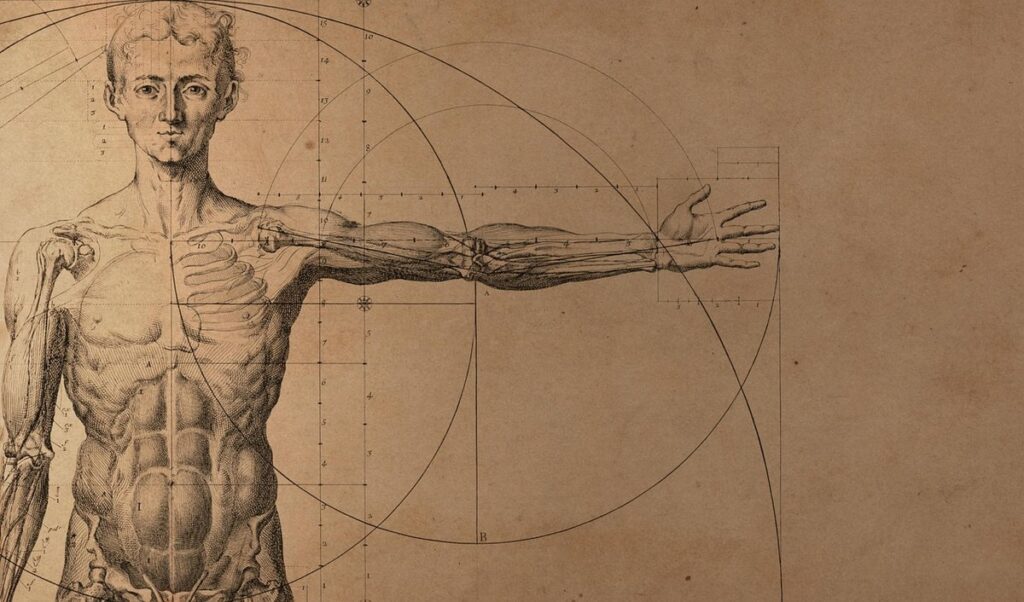
Understanding Proportion Basics
Proportions are a fundamental aspect of creating accurate and believable sketches, so let’s start by covering the basic principles that will form the foundation of your skills. This foundational knowledge is essential for achieving realistic proportions in your work.
Defining Proportion in Art and Design
Proportion is a fundamental concept in art and design, referring to the way elements relate to each other in terms of size, scale, and ratio. In sketching, proportion plays a crucial role in creating realistic representations of subjects. A strong understanding of proportion allows artists to convey the essence of their subject matter, from the majestic proportions of ancient architecture to the delicate balance of floral arrangements.
In art history, proportion is often associated with classical Greek and Roman ideals, where the Golden Ratio (φ) was used as a guide for creating harmonious compositions. This 1:1.618 ratio is still widely applied today in various forms of design. When sketching, applying this ratio can help create visually appealing and balanced compositions.
When working on your own sketches, consider how proportion affects the overall mood and atmosphere of your work. For example, a grand, sweeping gesture might require more attention to scale and proportion than a delicate, intricate detail. By understanding and applying proportion principles, you’ll be able to capture the essence of your subjects with greater accuracy and depth.
Types of Proportions Used in Sketching
Geometric proportions involve using mathematical ratios to create balanced and harmonious compositions. This type of proportion is often used in sketches to create a sense of order and stability. Geometric proportions can be applied to various aspects of a sketch, including the placement of elements, the relationships between shapes, and even the overall composition.
Anthropometric proportions, on the other hand, are based on the measurements of the human body. This type of proportion is essential for drawing the figure accurately and is often used in art classes to teach students how to draw the human form. By understanding anthropometric proportions, artists can create more realistic and lifelike sketches.
Proportional systems, such as the Golden Ratio, also play a crucial role in creating balanced compositions. The Golden Ratio, approximately 1:1.618, is an irrational number that has been observed in many natural patterns and is often used to create visually appealing designs. By applying proportional systems, artists can create sketches that are not only aesthetically pleasing but also convey a sense of balance and harmony.
Measuring and Drawing Techniques
To accurately depict proportions, you’ll need to learn effective measuring and drawing techniques that ensure your sketches are both precise and aesthetically pleasing. We’ll cover the essential methods for achieving this balance.
Basic Measurement Tools and Techniques
When using basic measurement tools, it’s essential to understand their limitations and applications. Rulers are a fundamental tool for measuring length, width, and height. They come in various types, including imperial and metric versions, so ensure you have the correct one for your project.
To measure accurately with a ruler, place the edge of the object or line along the 0 mark on the ruler, ensuring it’s aligned with the edge of the paper or drawing surface. Then, read off the measurement at the opposite edge of the object or line. For example, if you’re measuring a line that spans from the 3-inch to the 5-inch mark on your ruler, the total length is 2 inches.
Protractors are used to measure angles, which is crucial in drawing and sketching. When using a protractor, ensure it’s placed on the paper or drawing surface with its edge aligned with one of the lines being measured. The angle can then be read off directly from the scale. Grids are another essential tool for measuring proportions accurately. By dividing your paper into squares or rectangles, you can easily compare and measure lengths, widths, and heights in relation to each other.
Drawing Techniques for Proportional Accuracy
When drawing freehand, it’s essential to use techniques that ensure proportional accuracy. One method is using symmetry lines, which involve lightly sketching a line down the center of your paper to serve as a guide. This helps you divide your subject into left and right halves, making it easier to maintain even proportions.
Another technique is using proportion points, also known as ‘dividers.’ These are usually small marks placed along the edge of your drawing area to represent specific measurement ratios (e.g., 1:2 or 3:5). By referencing these marks, you can ensure that your subject’s features align with their correct proportions. For example, if you’re drawing a face, placing proportion points for the eyes, nose, and mouth helps maintain consistent facial measurements.
It’s also crucial to use a ruler or other straightedge when measuring and dividing your paper, especially when working on large-scale drawings. By accurately establishing reference lines and measurement points, you can create a solid foundation for your proportions and avoid costly corrections later in the drawing process.
Establishing Proportion in Sketches
Achieving accurate proportions is a crucial aspect of sketching, and establishing correct measurements will greatly impact the overall quality of your drawings. Let’s explore some practical tips for achieving better proportion control in your sketches.
Creating a Proportional Layout
When creating a proportional layout for your sketches, it’s essential to consider both the subject matter and composition. Start by analyzing the main elements of your scene: the proportions of the objects, the relationships between them, and how they contribute to the overall visual balance. For example, in a landscape painting, the ratio of sky to land is crucial – too much or too little can disrupt the sense of scale.
To establish a proportional layout, begin by defining the boundaries of your composition using simple shapes like rectangles or circles. Then, use these shapes as a guide to place and size your subject matter elements. Pay attention to the relationships between objects: do they form harmonious triangles, balanced diagonals, or visually appealing patterns? Consider the proportions of individual elements as well – for instance, if you’re drawing a person, ensure their body parts are in proportion to each other.
Ultimately, achieving a proportional layout requires balancing visual tension and harmony. Experiment with different arrangements until you find one that effectively communicates your artistic vision while maintaining balance and clarity.
Maintaining Proportion During Refinement
When refining sketches, it’s easy to get carried away with details and lose sight of proportion. To avoid this, regularly refer back to your reference image or measurement guidelines. Use a ruler or measuring tool to double-check the relationships between key elements, such as the proportions of body parts or architectural features.
For example, when sketching the human figure, ensure that the width of the shoulders is roughly equal to the head’s width, and the distance from the top of the head to the chin is about one-third to one-quarter of the total head height. Similarly, in architectural sketches, verify that door and window openings are proportionally consistent with the rest of the structure.
Another technique is to focus on refining smaller sections or details before moving on to larger areas. This approach helps maintain overall proportion by ensuring each part is correctly sized relative to others. When sketching a vehicle, for instance, start by accurately depicting the wheels, then move on to the body and finally add finer details like trim and emblems. By maintaining proportion during refinement stages, you’ll end up with more believable and accurate sketches that meet your project’s requirements.
Common Challenges and Solutions
Many artists face common pitfalls when mastering sketch proportions, from inconsistent measurements to inaccurate scaling. Let’s explore some of these challenges and practical solutions to overcome them.
Common Mistakes in Sketch Proportions
When attempting to maintain proportion in sketches, many artists make common mistakes that can be easily corrected. One of the most frequent errors is overemphasizing facial features, particularly the eyes and mouth. This can result in an unbalanced composition where the face dominates the entire sketch.
To avoid this mistake, artists should focus on measuring the head’s proportions relative to its width. A typical adult head is roughly one-eighth the height of the entire figure. Measuring the head from ear to ear will help establish a solid foundation for the facial features.
Another common error is neglecting the placement of the shoulders in relation to the head and torso. When the shoulders are positioned too far forward or backward, it can disrupt the overall proportion of the sketch. To correct this, artists should pay attention to the vertical axis of the figure, ensuring that the shoulders align with the top of the hips.
By being mindful of these common mistakes, artists can improve their understanding of proportion and create more balanced sketches.
Troubleshooting Techniques for Proportion Issues
Measuring errors can creep into sketches when using uncalibrated tools or inaccurate scales. To correct these mistakes, reassess the measurements and recreate the affected areas with precision. If an error has been carried over from previous sketching sessions, it’s essential to start over with a clean slate.
When dealing with incorrect perspective, revisit the vanishing points and recalculate the lines that converge at those points. This ensures a coherent and accurate depiction of depth and distance. Perspective errors can also stem from using the wrong viewing angle or failing to adjust proportions for different distances from the subject.
Common issues arise when sketching complex scenes or subjects with multiple planes, such as architecture or vehicles. In these cases, break down the composition into simpler shapes and reestablish vanishing points for each component. This method helps maintain proportion accuracy and prevents the sketch from becoming distorted due to conflicting perspectives.
Advanced Proportion Techniques
To truly master sketch proportions, you’ll need to explore more complex techniques that involve combining multiple measurements and using reference points. Let’s take a closer look at these advanced methods.
Using Proportion as a Design Tool
When it comes to creating visually appealing compositions and balance, proportion plays a crucial role. By applying proportion as a design tool, you can create harmonious relationships between elements within your sketch. One way to do this is by using the rule of thirds, where you divide your composition into thirds both horizontally and vertically. Placing important elements along these lines or at their intersections creates balance and visual interest.
Another technique is to use proportional scaling. By adjusting the size of elements relative to each other, you can create a sense of hierarchy and emphasize key features. For example, in a landscape sketch, you might make the mountains larger than the trees to convey their importance. Conversely, making smaller objects, like rocks or shrubs, helps maintain balance by preventing visual clutter.
Proportion is also essential when working with perspective. By accurately depicting size relationships between elements, you can create a convincing illusion of depth. Pay attention to how objects in your sketch recede into the distance, using proportion to guide your placement and sizing. This will help draw the viewer’s eye through the composition and enhance overall impact.
Applying Proportion in Various Art Styles
Proportion plays a crucial role in various art styles, from realism to caricature and cartooning. In realistic drawing, proportion is essential for capturing subtlety and nuance. Artists must carefully balance facial features, body proportions, and clothing folds to create a believable and accurate representation of the subject.
In contrast, caricature relies on exaggerated proportions to convey personality and emotion. Cartoonists use distortion techniques to amplify facial features, making it easier to recognize characters. However, this approach requires a deep understanding of human anatomy to avoid becoming comical or unrecognizable.
Cartooning also employs proportion manipulation to create visually appealing compositions. Artists often simplify body proportions and focus on expressive poses and facial expressions. For instance, Mickey Mouse’s iconic design relies on simplified limbs and exaggerated ears, making him instantly recognizable.
Ultimately, mastering proportion in different art styles demands an understanding of the medium and its specific requirements. By studying the work of experienced artists and experimenting with various techniques, you can develop your skills and apply proportion effectively in any style or genre.
Final Touches: Review and Refine
Now that you’ve mastered the basics of sketch proportions, it’s time to take your skills to the next level by refining your work. This is where attention to detail really makes a difference in achieving precise drawings.
Reviewing and Refining Your Sketch
Carefully examine your sketch to ensure that the proportions are accurate. Start by checking the overall balance and harmony of the drawing. Consider whether the placement of features such as the eyes, nose, and mouth is correct. Make sure the facial proportions align with the Golden Ratio (approximately 1.618) or use a proportion guide.
Next, check the relative sizes of different body parts, paying attention to the shoulders, chest, waist, hips, thighs, calves, and feet. Ensure that these proportions are consistent and accurate. For example, if your model’s shoulder width is about one-third their height, verify that this measurement applies throughout the drawing.
Also, review your sketches for consistency in terms of gesture lines, posing, and anatomical accuracy. Look at multiple reference images to ensure you’re capturing the subtleties of your subject’s features. Consider sketching from observation or memory, rather than relying solely on tracing or copying.
Putting Proportion into Practice
As you conclude this comprehensive guide to mastering sketch proportions, it’s time to put theory into practice. Your newfound understanding of proportion can elevate your sketches from amateurish attempts to professional-grade artwork. But how do you apply these principles to your future endeavors? The key lies in making proportion a habit.
Make it a point to revisit your reference materials and re-examine the proportions of subjects that interest you. Practice, practice, practice – don’t be afraid to experiment with different ratios and scales. Pay attention to your surroundings: observe the proportions of buildings, statues, or even everyday objects. Take note of how these elements are balanced in a composition.
Develop an observational habit by dedicating time each week to sketching from life. Observe people’s anatomy, facial features, and body language. This will help you internalize proportion concepts and develop a keen eye for detail. By committing to regular practice and making proportion a part of your creative process, you’ll be able to apply these principles seamlessly in your future sketches.
Frequently Asked Questions
Can I use proportional sketching techniques for digital art as well?
Yes. The principles of proportion discussed in this guide can be applied to both traditional and digital mediums. The measurement tools and techniques mentioned can also be adapted for digital drawing software, allowing you to achieve accurate proportions in your digital artwork.
What if I’m creating a fantasy or sci-fi piece with non-realistic body proportions?
When working on imaginative pieces with non-realistic proportions, focus on maintaining consistency within the world’s rules. Define the ideal proportions for your characters and stick to them throughout the piece. This will help create a cohesive look and feel.
How can I ensure accurate measurements when using reference images?
To guarantee accurate measurements from reference images, use a ruler or measuring tool specifically designed for digital drawing. Measure multiple times to confirm accuracy, and double-check your proportions by creating a grid on top of the image.
Can proportion be used as a design tool in composition, rather than just measurement?
Yes. Proportion can significantly impact the balance and harmony of a composition. Experiment with different arrangements of elements within your sketch to create visually appealing compositions that engage the viewer’s eye.
What if I’m drawing from life or memory, without reference images – how do I maintain proportion then?
When drawing from life or memory, focus on capturing the overall proportions and relationships between body parts rather than individual measurements. Use your observation skills to gauge the subject’s proportions, and adjust as necessary based on subtle visual cues.