Getting started with pottery can be intimidating, especially if you’re new to working with clay. You might find yourself overwhelmed by the variety of clays available or unsure where to begin when it comes to shaping and molding your first piece. Simple pottery ideas are just that – straightforward and easy to follow, allowing you to focus on developing your skills rather than getting bogged down in complexity.
In this guide, we’ll take a step-by-step approach to learning the basics of pottery, from selecting the right clay to mastering the wheel-throwing technique. You’ll learn how to create functional pieces like bowls and cups, as well as decorative items that add a personal touch to any space. By the end of this article, you’ll have a solid foundation in simple pottery techniques, allowing you to get started on your own creative journey today!
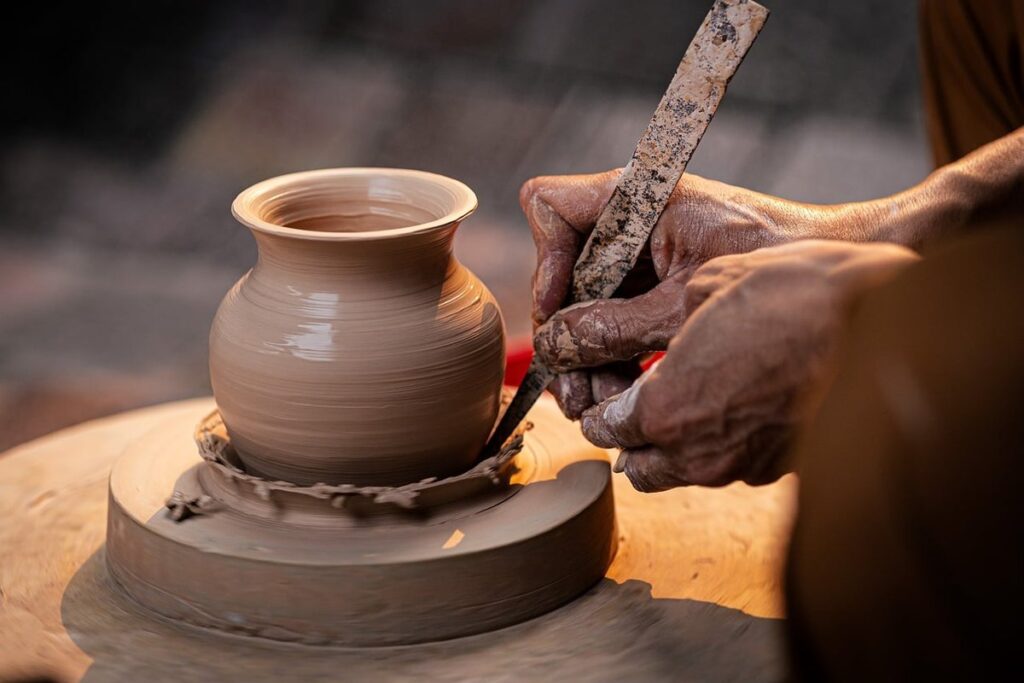
Choosing the Right Clay and Tools
To get started with pottery, you’ll want to choose the right clay for your project, considering factors like type, texture, and durability. Let’s talk about popular clays and tools to suit different skill levels.
Understanding Different Types of Clay
Earthenware clay is a popular choice for beginners due to its ease of use and forgiving nature. It’s often used for decorative pieces like planters and sculptures because it can be easily carved, molded, or textured. Earthenware also has a warm, earthy tone that works well with natural designs.
Stoneware clay, on the other hand, is denser and more durable than earthenware. It’s ideal for functional items like cups, bowls, and plates because it’s resistant to water and can withstand high temperatures. Stoneware clay requires more skill to work with than earthenware, but its smooth surface finish makes it a great choice for those who want a professional-looking result.
Porcelain clay is the most challenging type of clay to work with due to its low plasticity and high shrinkage rate. However, its translucent quality and delicate appearance make it perfect for creating intricate designs and fine details. Porcelain projects often require more time and patience, but they can add an extra layer of sophistication to a piece.
When selecting a clay type, consider the project’s purpose and your skill level. For example, if you’re new to pottery, earthenware is a great starting point for decorative pieces or small functional items. As you gain experience, you can experiment with stoneware and porcelain clays.
Essential Pottery Tools for Beginners
To get started with pottery making, you’ll need a basic set of tools. These can be divided into hand-building tools, wheel-throwing tools, and basic shaping tools.
For hand-building, you’ll want to start with a few wedging tools like a wire cutter, metal rib, and wooden modeling tool. A metal rib is used for smoothing out the clay and creating sharp edges, while a wooden modeling tool is gentler and better suited for creating detailed textures. A wire cutter will help you cut away excess clay.
When working on the potter’s wheel, you’ll need tools like a wooden or plastic trimming tool to remove excess clay from the foot ring, and metal trimming tools to refine the shape. You may also want a metal loop tool for smoothing out the interior of your vessel.
Basic shaping tools include a metal or wooden sponge tool for creating texture and patterns, and a metal or plastic needle tool for piercing small holes or creating fine details. A basic set of pottery tools will vary in price depending on the brand and quality, but you can find starter sets online or at craft stores for under $50.
Hand-Building Techniques for Simple Shapes
To create simple pottery shapes, you’ll need to master hand-building techniques such as pinching and coiling, which form the foundation of this versatile craft. Let’s get started with the basics!
Creating Basic Forms with Slabs
Creating a simple bowl from clay slabs involves cutting uniform slabs from a larger sheet of clay. The ideal thickness for these slabs is around 1-2 inches, depending on the desired wall thickness and overall form of the vessel. A consistent thickness will make it easier to shape and assemble the pieces.
To begin, cut several identical slabs using a wire cutter or a slab cutter. You can then use a small amount of slip to attach these slabs together, starting with the base of the bowl. Make sure each joint is secure before adding more layers, working your way up to the rim.
It’s helpful to have multiple pieces cut and ready to go before beginning assembly. This will allow you to work efficiently and make adjustments as needed without having to wait for additional slabs to dry or be prepared.
For a simple plate or box, similar techniques can be applied. Cut uniform slabs and assemble them using slip, making sure each joint is secure.
Building Vessels Using Coiling and Pinching
Coiling is a fundamental technique for building vessels in pottery. It involves rolling out clay into long ropes, which are then coiled upon each other to form the vessel’s walls. You can start by wedging a portion of clay to achieve consistency and pliability. Next, divide the clay into manageable sections, about 1-2 inches thick. Roll each section into a rope-like shape, typically around 6-8 inches long. Place one coil on top of another, slightly overlapping them as you go. Use your fingers or a tool to gently press the coils together, ensuring even thickness and stability.
As you build up the walls, use a wire tool or your thumbs to create a symmetrical form. You can also experiment with different coil patterns, such as nested or stacked coils. To add strength and support, pinch a small indentation at the base of each coil before adding the next one. This technique helps prevent the vessel from toppling over.
Pinching techniques are essential for shaping functional pieces, like cups or bowls. Hold a small amount of clay between your thumb and index finger, applying gentle pressure to create a small depression in the center. Gradually widen the depression by rotating your hand and applying more pressure. This basic pinching technique can be used to create various forms and shapes.
Simple Pottery Projects on a Budget
You don’t need to break the bank to create beautiful pottery pieces, as simple projects can be made with minimal investment. We’ll explore some budget-friendly ideas to get you started.
Creating Decorative Tiles and Ornaments
Creating decorative tiles and ornaments can be a fun and creative way to add a personal touch to your home without breaking the bank. You can start by collecting small pieces of clay scraps from previous projects or purchasing a bag of air-dry clay specifically designed for decorative purposes. To create decorative tiles, you can use a rolling pin to flatten the clay into desired shapes or use a cookie cutter to cut out intricate designs.
For ornaments, try using a toothpick or skewer to draw patterns on small pieces of clay before baking them in a home oven. You can also use a small wooden mallet to create textured effects. To add color and interest, you can apply underglaze pencils or even paint with acrylics once the pieces are dry.
To make your decorative tiles more durable, consider applying a clear coat of varnish after they’re dry. This will protect them from moisture and make them easier to clean. For ornaments, you can attach a small loop of wire or string to hang them on the tree or in a window. By experimenting with different shapes, patterns, and materials, you can create unique decorative pieces that reflect your personal style.
Functional Items Like Mugs and Bowls
When hand-building functional items like mugs and bowls, it’s essential to start with a sturdy base. Begin by creating a flat disc of clay using a slab roller or by rolling out a ball of clay on a surface dusted with cornmeal. For a mug, aim for a diameter of about 6-7 inches (15-18 cm) and a height of 4-5 inches (10-13 cm). To create the shape, use a combination of coiling and pinching techniques to build up the sides and add a handle.
To make a bowl, start with a larger disc of clay, about 8-9 inches (20-23 cm) in diameter. Use a gentle pulling motion to create the curve of the bowl, and then use your fingers or a rib tool to refine the shape and smooth out any bumps. For both mugs and bowls, make sure to leave enough space at the top for the lip to be formed.
Some key tips to keep in mind when creating functional items like mugs and bowls include:
- Using a consistent thickness of clay
- Leaving room for shrinkage during firing
- Avoiding overly complex designs that can compromise structural integrity
Getting Started with the Pottery Wheel
First, let’s get you comfortable and confident on a pottery wheel. This next part is all about setting up your workspace and learning the basics of working with clay.
Understanding Basic Wheel Throwing
Centering clay is the foundation of successful wheel-throwing. It requires gentle but firm pressure to establish a stable center, allowing you to control the vessel’s form. To achieve this, start by placing a small amount of clay on the potter’s wheel and applying gentle pressure with your hands or a wooden rib. As the wheel spins, use your thumbs to guide the clay upwards, keeping it centered.
Once the vessel is formed, focus on opening the foot ring. This can be done using a metal rib or a similar tool, working from the base of the vessel up towards the foot. Be careful not to create an uneven edge or a too-wide foot ring, which can compromise the form’s stability.
Creating symmetrical forms is essential for wheel-throwing beginners. One way to achieve this is by creating a ” pinch point” – a small indentation at the center of the vessel that helps guide your hands and tools as you shape it. This technique is particularly useful when throwing symmetrical shapes like bowls or cups, allowing you to create uniform profiles and edges.
Simple Shapes to Try on the Potter’s Wheel
When working on a potter’s wheel for the first time, it can be intimidating to create something beautiful and functional. However, throwing simple shapes is an excellent way to develop skills and build confidence. Start by creating small bowls with symmetrical bases – this will help you get used to the feel of the clay and the wheel.
Next, move on to cups or small vases. These are great for practicing centering techniques and achieving even walls. Remember that it’s not about producing a perfect cup; focus on developing a consistent shape and smooth edges.
To throw a simple vase, begin by creating a symmetrical base. As you add more clay, use the wheel’s momentum to form the body of the vase. Experiment with different shapes and sizes – don’t be afraid to make mistakes! The key is to keep it simple and have fun.
When working on small shapes like cups or vases, pay attention to foot rings and handles. These can be added later using a trimming tool or left off altogether for a more minimalist look.
Safety Precautions and Best Practices
As you begin working on your pottery projects, it’s essential to follow safety guidelines and best practices to avoid accidents and ensure a smooth creative experience. Familiarize yourself with these crucial precautions before getting started.
Avoiding Common Pottery Mistakes
When working with clay and pottery tools, it’s easy to get carried away and lose track of safety protocols. One common mistake is over-handling wet clay, which can lead to cramps, fatigue, and even injury. To avoid this, take regular breaks to stretch and rest your hands. Use a gentle, firm grip when handling tools, and store them in a secure location to prevent accidental drops.
Another mistake new potters make is not cleaning their tools thoroughly between uses. This can cause clay residue to build up and create uneven surfaces or even contaminate future projects with old clay particles. Set aside time each day to clean your tools with soap and water, and dry them completely before storing.
Proper ventilation in the studio is also crucial. When working with clay, it’s easy to release dust and fumes that can irritate eyes, skin, and lungs. Keep windows open or use a fan to circulate air, and consider investing in a mask for added protection. By being mindful of these common mistakes and taking simple precautions, you’ll be well on your way to creating beautiful pottery while staying safe and healthy.
Basic Studio Setup and Ventilation
Proper ventilation is crucial in a pottery studio as it helps remove fumes and particles from clay, glazes, and chemicals. These fumes can be hazardous to your health, causing respiratory problems, headaches, and eye irritation. When setting up your workspace, ensure good air circulation by keeping windows open, using fans, or investing in an exhaust system specifically designed for pottery studios.
A well-ventilated area also helps prevent moisture buildup, which can lead to mold growth and damage equipment. To maintain a safe workspace, consider the following tips: position your worktable near a window or outside door, use a dust mask when working with materials that release particles, and avoid overloading your studio with too many chemicals or glazes.
Regularly inspect your ventilation system and clean or replace filters as needed. When using new equipment or chemicals, read instructions carefully and take necessary precautions to prevent exposure. Consider investing in a HEPA air purifier to help remove fine particles from the air. By prioritizing proper ventilation and following these guidelines, you can create a safe and healthy environment for your pottery projects.
Frequently Asked Questions
What if I don’t have experience with clay? Can I still make functional pottery?
Yes. While it’s true that some experience helps, the key to making functional pottery is practice and patience. Start by making small items like decorative tiles or ornaments, which require minimal materials and budget. As you gain confidence and skill, move on to more complex projects like mugs and bowls.
How do I know when my handmade pottery is food-safe?
When using earthenware or stoneware clay, make sure your pieces are fired at the correct temperature (usually between 1800°F to 2400°F). A clear glaze should be applied, as it provides an extra layer of protection against bacteria and other contaminants. Check with local ceramic suppliers for specific guidelines on food-safe glazes.
Can I use a pottery wheel if my workspace has limited ventilation?
Yes. While ventilation is crucial in a pottery studio, you can still use a pottery wheel safely by taking precautions like wearing a mask or respirator when working with clay and glaze. Open windows and doors to ensure good airflow. Keep your workspace well-ventilated, especially when using chemicals.
What if I accidentally crack my piece while handling it? Can I fix it?
Yes. Cracked pieces can often be repaired by applying a small amount of slip (liquid clay) to the area and gently pressing the cracked section back into place. Allow the piece to dry slowly, then fire it according to your clay’s recommended temperature.
How do I store my handmade pottery when not in use?
Store your pieces on a level surface, away from direct sunlight and moisture. Wrap each item individually in paper or cloth to prevent chipping or scratching. If you plan to display your work for an extended period, consider using acid-free tissue or archival-quality storage materials to preserve the item’s condition.