
Sketching leaves requires patience and attention to detail, but with practice, you can master the art of capturing their intricate textures, colors, and details on paper. Many artists find that observing the subtle variations in leaf morphology and venation patterns is both calming and meditative. However, accurately rendering these features can be a challenge, especially when it comes to achieving realistic leaf textures. In this comprehensive guide, we’ll cover the essential tools and techniques necessary for leaves sketching, including graphite pencils, blending stumps, and digital drawing programs. You’ll learn how to achieve detailed renderings of leaf veins, edges, and surfaces, as well as advanced methods for capturing nuanced color shifts and subtle layering effects. By the end of this article, you’ll be able to confidently create realistic and engaging leaves sketches that showcase your artistic skill.
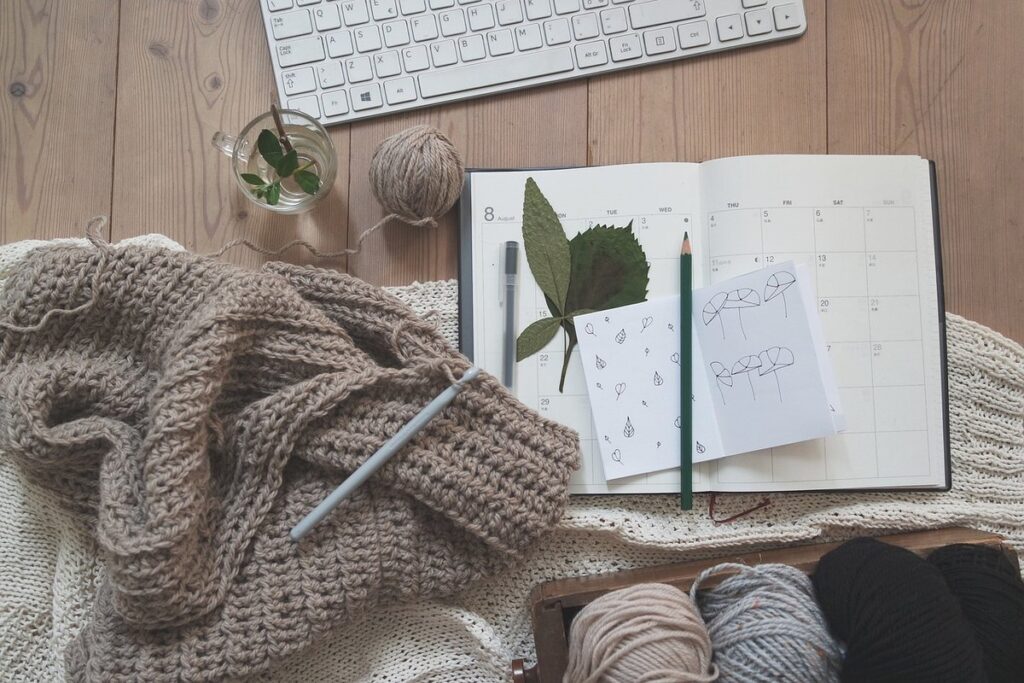
Understanding the Basics of Leaves Sketching
To create a beautiful leaves sketch, it’s essential to understand the basic principles and techniques involved. Let’s start by breaking down the fundamental elements that make up a stunning leaf illustration.
Choosing the Right Tools and Materials
When it comes to leaves sketching, having the right tools and materials can make all the difference. While you might be tempted to use whatever is readily available, investing in high-quality supplies will pay off in the long run.
Start with a good pencil – not just any pencil, but one specifically designed for drawing and sketching. Look for graphite pencils with a range of hardness levels (HB, 2B, 4B, etc.) that allow you to achieve varying line weights and tonal values. A set of colored pencils can also be useful for adding subtle color and depth.
Choose paper that is smooth and durable, such as hot press watercolor paper or cartridge paper. This will help prevent your drawings from buckling or warping under the pressure of pencil marks. An eraser and sharpener are essential tools to have on hand – look for a high-quality kneaded eraser that won’t leave residue behind.
In addition to these basics, consider investing in a few specialized tools like a leaf-shaped stencil or a set of patterned stencils to help you create intricate vein patterns.
Basic Techniques for Leaves Rendering
To create realistic textures and details, you’ll want to master three fundamental techniques: hatching, cross-hatching, and stippling. Hatching involves creating parallel lines that follow the direction of the leaf’s surface texture, often using a range of line weights to suggest depth and dimension.
Cross-hatching builds upon hatching by layering multiple sets of intersecting lines, which creates a more intricate and detailed appearance. The key is to vary the angle and density of the lines to achieve a convincing representation of the leaf’s texture.
Stippling involves creating an image using small dots, which can be used to suggest subtle textures or patterns on the leaf surface. To achieve a realistic effect with stippling, focus on varying the size and spacing of the dots to create a sense of depth and dimensionality.
When applying these techniques, remember that the goal is not to replicate a specific leaf type exactly but to capture its essence and spirit. Experiment with different line weights, textures, and patterns to find the right balance for your sketch.
Observing and Studying Leaf Forms
When observing leaves, it’s essential to notice their unique shapes, sizes, and textures, which can greatly impact your sketching process. Take a closer look at the intricate details of leaf forms and how they vary between species.
Understanding Leaf Anatomy and Structure
Leaf anatomy and structure play a crucial role in accurately rendering leaves in sketches. To begin, it’s essential to understand the arrangement of veins on a leaf. The main veins typically originate from the petiole – the stem that attaches the leaf to the plant – and branch outwards towards the edges of the leaf. This network of veins is responsible for transporting water and nutrients throughout the leaf.
Not all leaves are created equal, however; some species exhibit unique vein patterns or arrangements. For instance, palmate leaves have a radial pattern with multiple veins that radiate from a central point, while cordate leaves feature an asymmetrical arrangement with curved lobes. By studying these variations, artists can better replicate the distinctive features of specific plant species in their sketches.
When observing leaf anatomy, note the position and shape of the petiole, as well as any notable venation patterns or markings. This information will help you accurately render leaves in proportion to each other and the surrounding stems.
Observational Drawing Exercises for Leaves
When observing and drawing leaves, it’s essential to incorporate exercises that hone your observational skills. Begin by studying leaf shapes and sizes in various environments, such as in gardens, forests, or even urban settings. Take note of how leaves adapt to their surroundings, like the way they stretch towards sunlight or grow in clusters for support.
To practice observing leaf textures, collect a variety of leaves from different plants and examine them closely. Pay attention to ridges, veins, and edges – these features can greatly impact the overall appearance of your sketch. You might also try drawing the same leaf multiple times, varying only its texture or size each time.
In addition to individual observations, you can also conduct comparative studies by placing two or more leaves side-by-side for comparison. This exercise helps develop your ability to discern subtle differences in shape, color, and texture. By incorporating these observational exercises into your practice routine, you’ll significantly improve your leaf sketching skills and become more confident in rendering accurate representations of nature’s diversity.
Mastering Leaf Details and Texture
When it comes to capturing leaves on paper, getting the details right is crucial – that’s why we’re diving into the nuances of leaf texture and intricate features next. This section will show you how to observe and render realistic leaf details with ease.
Capturing Vein Patterns and Arrangements
When rendering leaf veins, it’s essential to capture their intricate patterns and arrangements accurately. Start by studying the overall vein structure, noting where main veins branch off into smaller ones. Look for areas where veins intersect or merge, as these points often create subtle visual interest.
To accurately depict vein intersections, observe how they form gentle curves or sharp angles. Some leaves feature prominent midribs that serve as anchor points for branching veins, while others have more delicate, network-like patterns. When capturing these details, focus on conveying the overall flow and direction of veins rather than individual lines.
Pay attention to how vein density changes across a leaf’s surface. Thicker veins often serve as visual anchors, guiding the viewer’s eye through the composition. Smaller, more delicate veins can create a sense of texture and depth. Experiment with varying line weights and densities to convey this information effectively. By accurately rendering these details, you’ll add nuance and realism to your leaf sketches.
Suggesting Leaf Edges and Boundaries
When suggesting leaf edges and boundaries in sketches, it’s essential to convey a sense of softness and subtlety. This can be achieved by creating smooth blends between areas of varying values or texture. A gentle hatching technique can help to suggest the edges of leaves, while avoiding harsh lines that might detract from the overall impression.
To create subtle gradations in leaf edges, try using a range of line weights or different types of pencils. For instance, you could use a soft pencil for the areas where the leaf is curved and blend into harder lines towards the stem. This will give your sketch a sense of depth and dimensionality.
Loose gestures can also be effective in conveying the impression of leaves. Instead of drawing every detail, focus on suggesting the overall shape and form through expressive strokes. A small brush or a fine-tip pen can help you achieve this look by creating delicate, feathery textures that evoke the softness of real leaves.
Rendering Color and Light on Leaves
When rendering color and light on leaves, it’s essential to capture their intricate nuances, from the soft glow of morning dew to the vibrant hues of a sunny afternoon. Let’s explore how to achieve this level of realism in your sketches.
Understanding Color Theory and Leaf Pigmentation
When it comes to capturing the vibrant colors and hues of leaves, understanding color theory is crucial. Chlorophyll, carotenoids, and other pigments play a significant role in determining the final color appearance of leaves. Chlorophyll, for instance, gives plants their green color by reflecting blue and red light while absorbing green light. Carotenoids, on the other hand, are responsible for yellow, orange, and brown hues, often appearing as secondary colors to the dominant green.
To render realistic colors, consider the interplay between these pigments. For example, when chlorophyll breaks down in autumn, carotenoids become visible, resulting in the characteristic yellow and orange hues of fall foliage. Understanding this dynamic can help you achieve more accurate color representation in your sketches. When observing leaves, take note of the dominant pigment: is it green (chlorophyll) or another hue? This will guide your color choices when rendering the leaf.
Some essential pigments to consider include:
- Chlorophyll a and b
- Carotenoids (e.g., beta-carotene, lutein)
- Anthocyanins (responsible for red and purple hues)
- Betalains (found in certain plant families)
By grasping these fundamental principles of leaf pigmentation, you’ll be better equipped to capture the intricate colors and nuances found on leaves.
Capturing Light Effects on Leaves
When capturing light effects on leaves, it’s essential to observe how illumination shifts across the leaf’s surface. Start by identifying areas where direct sunlight hits, creating strong highlights and accents. Notice how these areas tend to be more saturated with color, as pigments are often most concentrated near the veins.
To convey mid-tones, focus on the areas where light filters through or is partially blocked by adjacent leaves or branches. These zones typically exhibit a softer, more muted quality, as if infused with an inner glow. Shadows, on the other hand, can be used to suggest depth and three-dimensionality by creating contrast with surrounding areas.
When rendering subtle color shifts and luminosity, consider employing techniques like glazing or layering to build up nuanced transitions between values. For example, you might apply a thin layer of transparent wash over a base tone to create a sense of softness and luminosity in mid-toned areas.
Advanced Techniques for Realistic Leaf Rendering
To take your leaf rendering skills to the next level, you’ll need to master advanced techniques such as layered shading and texture mapping. This will give your leaves a remarkably realistic look and feel.
Layering and Blending Techniques
To achieve rich textures and subtle color transitions, advanced leaf renderers employ various layering and blending techniques. One such technique is glazing, where multiple thin layers of transparent paint are applied to build up a deep, luminous color. This method requires patience and control, but the results are well worth the effort.
Another technique used in leaf rendering is scumbling, which involves applying a thin layer of opaque paint over a previously painted surface. Scumbling can be used to create subtle texture and softness, or to add contrast and visual interest to a design. By varying the size of the brushstrokes and the amount of pressure applied, artists can achieve unique effects.
Drybrushing is another effective technique for creating textured leaves. This involves dragging a almost-dry brush across the paper to pick up pigment and create soft, wispy strokes. To get started with drybrushing, try using a small, firm brush and a limited range of colors – you’ll be amazed at how quickly it can add depth and interest to your leaf renderings.
For best results with these techniques, remember to work in thin layers and allow each layer to dry before adding the next. This will help prevent muddying or over-saturation of the colors.
Atmospheric Perspective and Depth in Leaves Sketches
When creating leaves sketches, it’s essential to consider atmospheric perspective principles to convey a sense of depth and distance. This technique involves subtly fading colors, softening edges, and reducing detail as the eye recedes into space. To achieve this effect, start by gradually decreasing the brightness and saturation of colors in the background of your sketch, creating a subtle fade towards the horizon.
Pay attention to the way you handle leaf edges, too. As leaves recede into the distance, their edges should become softer and less defined. You can achieve this by using gentle, sweeping lines or softening the edges with a blending stump or tortillon. For larger, more distant foliage, consider simplifying the shape of individual leaves and reducing the level of detail.
Remember that atmospheric perspective is not just about visual distance; it’s also about psychological space. As you create depth in your sketch, think about the emotional distance between the viewer and the subject. A well-executed use of atmospheric perspective can make a composition feel more immersive and engaging. To practice this technique, try creating a series of sketches with increasing levels of atmospheric perspective, from close-up to distant views.
Tips and Tricks for Practicing Leaves Sketching
To help you refine your leaf sketching skills, we’ll share some expert tips on how to create realistic leaves, from capturing texture to mastering proportions.
Overcoming Common Challenges and Mistakes
When practicing leaves sketching, it’s common to struggle with accurately capturing leaf shapes and proportions. One mistake is trying to draw leaves from memory rather than observing them closely. Instead, try to render what you see, paying attention to the subtle variations in shape and size within a single leaf type.
Another challenge is capturing the intricate textures of leaves. To overcome this, focus on conveying the overall pattern and structure of veins, rather than attempting to draw every individual vein. Use gentle lines and soft shading to suggest the texture, rather than trying to render it photorealistically.
Color can also be a tricky aspect to master in leaves sketching. Avoid overthinking color theory and instead focus on observing how colors interact with each other in nature. Notice how warm colors like yellow and orange tend to dominate leaf surfaces, while cool colors like blue and purple are often found in shadows or on the underside of leaves.
Here are some practical tips for handling these challenges:
- Practice rendering different types of leaves under various lighting conditions
- Experiment with different media, such as pencils, charcoal, or ink, to find what works best for you
- Study the work of other leaf sketch artists and take note of their techniques and approaches
Encouraging Experimentation and Creativity
As you continue to hone your leaves sketching skills, it’s essential to encourage experimentation and creativity. This is where the true artistry of leaves sketching comes alive. Rather than sticking to traditional techniques or media, try pushing boundaries by exploring new materials and methods.
Experiment with different paper textures, such as watercolor paper or rough cartridge paper, to see how they affect your leaf renderings. You might also consider using non-traditional tools like sponges or household items to create unique patterns and textures. Don’t be afraid to get messy and try out unconventional techniques – this is where the most interesting results often come from.
When working with different leaf types, remember that each one has its own unique qualities and characteristics. Experiment with capturing these distinct features, such as the intricate vein patterns of a maple leaf or the delicate edges of a fern frond. By embracing the individuality of each leaf type, you’ll add depth and variety to your sketches.
Some specific techniques to try include layering transparent washes over bold lines or using a range of greys to suggest subtle light effects on leaves.
Frequently Asked Questions
How to Choose Between Hatching and Cross-Hatching for Different Leaf Types?
Hatching is ideal for leaves with simple shapes and smooth textures, such as succulent leaves. Cross-hatching works better for leaves with more complex patterns or intricate details like veins and edges.
Can I Use Digital Tools to Sketch Leaves if I’m Not Experienced in Traditional Media?
Yes, digital tools can be a great starting point, especially when you’re still learning about leaf anatomy and structure. Programs like Procreate or Adobe Illustrator offer a range of brushes and tutorials that can help you get started with realistic leaf rendering.
What If My Leaf Sketches Look Too Perfect? How Can I Add Some Character to Them?
To add character to your leaves, try experimenting with loose gestures, expressive lines, and subtle texture variations. You can also study the work of artists who specialize in botanical illustrations for inspiration on capturing unique personalities in their subjects.
When Should I Use Glazing Techniques vs. Drybrushing to Achieve Leaf Texture?
Glazing techniques are suitable for leaves with delicate or transparent textures, as they create a smooth and uniform appearance. Drybrushing works better for thicker, more textured leaves where you want to convey roughness and grittiness.
Can Leaves Sketching Be Done in Any Scale or Format? Are There Limitations to Size?
While traditional leaves sketching is often associated with smaller formats like watercolor or pencil drawings, there’s no strict limitation on size. However, the level of detail and texture you can achieve may vary depending on the chosen format and medium.

