
Drawing regularly is one of the most effective ways to improve your artistic technique. It helps you build muscle memory, develop your observation skills, and fine-tune your creative vision. With a consistent drawing practice schedule tailored to your individual needs and goals, you can unlock new levels of proficiency and confidence in your art-making abilities. Many artists struggle with self-doubt and frustration when they don’t see immediate improvements, but the truth is that steady effort over time yields remarkable results. In this article, we’ll explore how to create a drawing practice schedule that’s tailored to your unique needs, helping you make progress towards achieving your artistic goals, and ultimately building the skills and confidence needed to express yourself effectively through art.
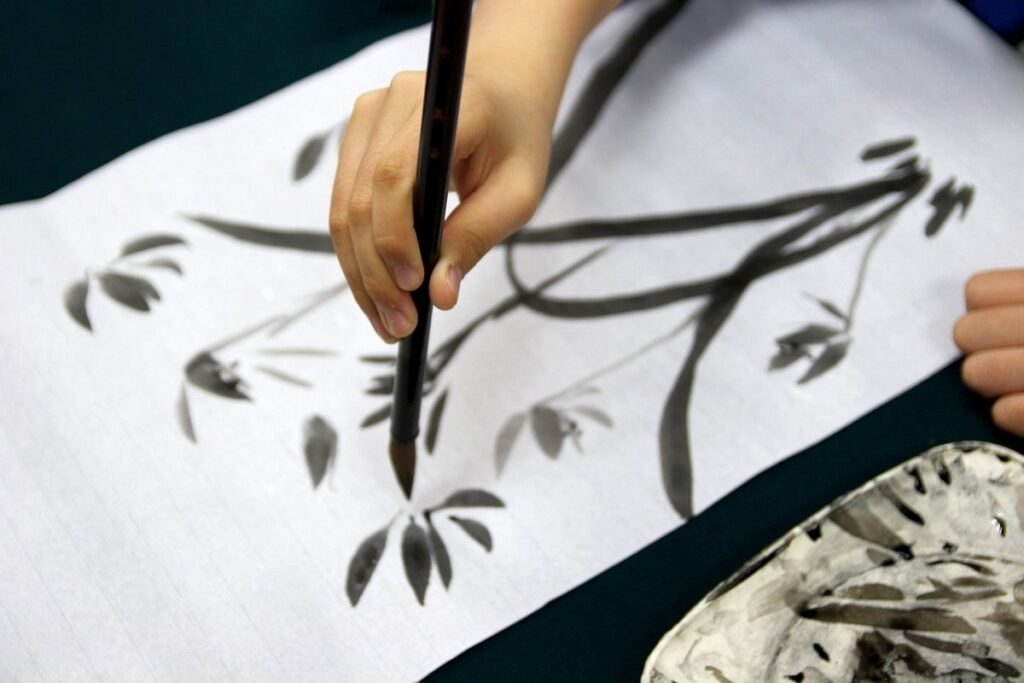
Understanding the Benefits of Regular Drawing Practice
Regular drawing practice is a habit that has numerous benefits for artists and beginners alike, from improved technique to enhanced creativity. By exploring these advantages up close, you’ll better understand why consistent drawing is essential for your artistic growth.
The Role of Repetition in Skill Development
Repetition is a crucial element in mastering any skill, including drawing. Consistent practice allows you to develop muscle memory and improve hand-eye coordination. For instance, practicing simple exercises like hatching or cross-hatching can strengthen your ability to control line quality and create varied textures.
As you repeat these exercises, you’ll begin to notice improvements in your technique. Your lines will become more consistent, and your drawings will exhibit a higher level of detail. To maximize the benefits of repetition, focus on specific areas of improvement, rather than trying to tackle multiple skills at once. Set aside dedicated time for practice each day or week, and stick to it.
To see progress, aim to repeat exercises 5-7 times before moving on to more complex tasks. This will allow you to internalize the movements and develop a sense of automaticity. Additionally, try incorporating repetition into your warm-up routine or as part of a larger study piece. By doing so, you’ll be able to reinforce new skills and build upon them in a meaningful way.
Overcoming Frustration and Building Confidence
Feeling overwhelmed or discouraged by our work is a common obstacle to regular practice. When we’re just starting out, it’s easy to feel like our drawings are terrible and that we’ll never improve. We might compare ourselves to more experienced artists and feel inadequate, which can lead to frustration and a desire to give up.
To build confidence, try focusing on the process rather than the end result. Instead of worrying about creating perfect drawings, focus on enjoying the act of drawing itself. Practice regularly, even if it’s just for a few minutes each day. Consistency is key when developing skills, so don’t be too hard on yourself if you make mistakes.
Another strategy is to set achievable goals and track your progress. Break down larger projects into smaller, manageable tasks, and reward yourself when you complete them. Celebrating small victories can help build momentum and motivation. For example, you might aim to draw a simple still life each day for a week, then gradually increase the complexity of your subjects as you become more confident. By doing so, you’ll see improvement over time and feel more encouraged to continue practicing.
Setting Realistic Goals and Tracking Progress
Setting achievable goals is crucial when it comes to maintaining a consistent drawing practice. A clear goal gives you direction and helps you stay focused on what you want to achieve. Try setting specific, measurable objectives for each practice session or week. For example, “I will spend 30 minutes drawing from observation each day” or “I will complete one still-life study per week.” Make sure these goals are realistic and take into account your schedule, skill level, and available time.
Tracking progress is equally important as setting goals. Regularly reviewing what you’ve accomplished can help you identify areas for improvement and give you a sense of accomplishment. Keep a sketchbook or journal to record your work, noting the date, duration, and any challenges you faced. This log will become an invaluable resource as you track your growth over time.
To make tracking progress even more effective, break down larger goals into smaller, manageable tasks. For instance, if you want to improve your drawing skills in a specific area, create a list of exercises or studies that will help you achieve that goal.
Developing Fundamental Drawing Skills
Developing fundamental drawing skills is essential for any aspiring artist, and it starts with building a strong foundation in basic techniques such as line quality and value.
Understanding Line Quality and Value
When working with lines, it’s essential to consider not only their direction and length but also their value – how light or dark they appear on the page. This is particularly important when creating detailed drawings, as varying line weights can add depth and visual interest. There are several types of lines that artists use to achieve different effects.
Hatching involves drawing closely spaced parallel lines that follow the contours of an object. By adjusting the spacing between these lines, you can create a range of tonal values. Cross-hatching, on the other hand, is achieved by layering hatched lines at different angles. This technique allows for even more nuanced expression of value and texture.
In practice, it’s helpful to start with simple exercises that focus on mastering individual line types. Try drawing a series of parallel lines with varying spacings or practicing cross-hatching techniques using different media. By building your skills in these fundamental areas, you’ll be better equipped to tackle more complex drawings and achieve the desired level of detail and realism.
Mastering Shape and Form Perception
Accurate perception of shapes and forms is fundamental to drawing. When observing a subject, you should notice its overall form and structure before focusing on details. This involves recognizing basic shapes such as spheres, cylinders, and rectangles, which can be used to break down more complex forms.
To improve your shape and form perception, practice rendering simple objects from observation or memory. For example, draw a series of identical spheres, paying attention to their uniformity in size, shape, and proportions. Then, try drawing a cylinder with a fixed height and varying diameters at different points. This exercise helps develop your ability to recognize and replicate basic forms.
When drawing more complex subjects, try breaking them down into simpler shapes. For instance, the human head can be approximated as a series of interconnected spheres and cylinders. By focusing on these underlying forms, you’ll create a more accurate and proportionate representation of the subject.
In addition to observing shapes and forms from direct observation or reference images, practice drawing basic forms from memory, such as spheres, cones, and cubes. This will help develop your ability to recognize and replicate them in different contexts and orientations.
Introduction to Proportion and Perspective
Proportion refers to the relationship between an object’s measurements and those of its surroundings. Establishing accurate proportions is crucial for creating convincing three-dimensional space on a two-dimensional surface. To measure proportions effectively, artists can use methods such as dividing their paper into thirds both horizontally and vertically. This creates a grid that serves as a guide for placing objects in correct proportion.
Vanishing points are another essential tool for achieving realistic perspective. A vanishing point is an imaginary line on the horizon where parallel lines appear to converge. By placing objects on these converging lines, artists can create a sense of depth and distance. Typically, one-point perspective is used for simple compositions, while two- or three-point perspectives are employed for more complex scenes.
When drawing in perspective, artists should focus on capturing the relationships between objects rather than their individual details. This involves observing how forms recede into the background, using atmospheric perspective to enhance depth, and carefully measuring proportions to ensure accuracy. By mastering these basics, beginners can lay a solid foundation for creating realistic three-dimensional space in their drawings.
Applying Drawing Practice to Real-World Projects
Now that you’ve honed your drawing skills through consistent practice, it’s time to apply those techniques to real-world projects and see tangible results. This section will walk you through how to make that transition smoothly.
Transferring Skills to Other Art Forms
When you develop a strong foundation in drawing skills, you can transfer those abilities to other art forms with surprising ease. Techniques like value and line quality become fundamental building blocks for creating convincing textures and patterns in painting or digital art. Shape and form perception translate directly to sculpting or 3D modeling, allowing you to accurately capture the subtleties of an object’s surface.
Translating two-dimensional drawings into three-dimensional creations requires a deeper understanding of proportion and perspective. To achieve this, practice creating series of sketches that gradually build up in scale and complexity. This helps develop your ability to envision objects from multiple angles and distances. As you become more comfortable with these concepts, you can begin experimenting with different mediums and techniques.
For example, if you’ve honed your skills in drawing gesture and movement, you might apply those skills to creating dynamic poses for figurative sculpture or digital animation. Alternatively, by mastering the subtleties of value and contrast, you could bring a new level of depth and dimensionality to your painting or illustration work.
Creating Personalized Study Pieces and Exercises
Creating personalized study pieces and exercises is crucial to making drawing practice a meaningful and effective experience. This approach allows you to tailor your practice sessions to your specific needs and goals, whether it’s mastering a particular technique or improving your observation skills.
To create customized study pieces, start by identifying areas where you need improvement. For example, if you struggle with capturing facial expressions, create a series of studies focusing on different emotions. Use reference images or real-life observations to guide your work.
When designing exercises, consider the following elements: accuracy (does the piece require precise lines or delicate curves?), observation (will it help you improve your ability to capture texture or light and shadow?), and technique (is there a specific skill you’re trying to master?). You can also use photographs, still-life compositions, or even everyday objects as reference points. By creating personalized study pieces and exercises, you’ll be able to pinpoint areas for improvement and track your progress over time. This targeted approach will help you make the most of your drawing practice sessions.
Using Drawing Practice to Enhance Creativity
Regular drawing practice can have a profound impact on an artist’s creativity, even when working on unrelated projects. By engaging in consistent drawing exercises, you can train your mind to think more creatively and approach problems from unique angles. One way to stimulate creativity is through warm-up exercises that loosen up your hand-eye coordination and get your brain into a receptive state.
Try doing quick gestural drawings of the body or simple still-life compositions to get your creative juices flowing. You can also try freestyle drawing, where you set a timer for 10-15 minutes and draw whatever comes to mind without stopping or worrying about perfection. These exercises can help you quiet self-criticism and tap into your subconscious thoughts.
Another technique is to incorporate “what-if” scenarios into your drawings. Ask yourself what would happen if the subject were placed in an unusual environment, or if its proportions were distorted. This can help you think more abstractly and generate innovative ideas. By incorporating these creative warm-ups into your regular drawing practice, you can develop a more versatile and adaptable artistic mindset.
Overcoming Common Challenges and Limitations
Drawing practice can be hindered by self-doubt, lack of inspiration, and feeling overwhelmed by the basics. Let’s tackle these common obstacles together to help you stay motivated and focused on your artistic journey.
Managing Time and Creating a Schedule
Effective time management is crucial when prioritizing drawing practice alongside other responsibilities. Many artists struggle to find dedicated blocks of time for drawing due to work, family, or social commitments. To overcome this challenge, create a schedule that allocates specific timeslots for drawing each day or week.
Begin by tracking your daily activities to identify the most productive periods and minimize distractions. Allocate these prime hours for focused drawing practice. Consider using a planner, calendar, or app to stay organized and ensure consistent scheduling. Be realistic when setting aside time – 15-30 minutes per day can be more beneficial than one or two long sessions per week.
Prioritize quality over quantity by dedicating shorter periods to undistracted drawing practice. This allows you to maintain momentum and make consistent progress without feeling overwhelmed. Regularly review your schedule and adjust as needed to accommodate changing commitments or unexpected interruptions. By establishing a routine, you can cultivate a habit of regular drawing practice that complements other aspects of your life.
Addressing Physical or Cognitive Limitations
When physical or cognitive limitations arise, it can be frustrating to continue practicing drawing. However, there are several strategies to adapt and accommodate these challenges. For artists with visual impairments, tactile drawing methods such as sculpting or 3D printing can provide an alternative creative outlet.
For those with mobility or dexterity issues, using assistive technology like graphic tablets or digital drawing tools may be beneficial. These tools allow for precise control and manipulation of lines and shapes without the need for manual fine motor skills.
It’s also essential to recognize that cognitive limitations, such as ADHD or memory impairments, can impact focus and retention during practice sessions. Breaking down exercises into smaller, manageable chunks and setting timers can help maintain concentration and productivity.
Additionally, many artists with disabilities have developed innovative solutions and workarounds for their specific challenges. For instance, some use mouth-operated devices to draw, while others employ assistive software that converts written instructions into visual cues.
By acknowledging and addressing physical or cognitive limitations, artists can continue to develop their skills and enjoy the benefits of regular drawing practice.
Advanced Techniques and Specialized Applications
As you continue to hone your drawing skills, advanced techniques and specialized applications can help take your art to the next level by exploring new mediums and styles. We’ll share expert advice on mastering these advanced methods.
Using Drawing Practice in Professional Settings
In professional settings like illustration, animation, or graphic design, drawing skills are essential for creating high-quality visual content. To apply drawing practice effectively, consider the specific demands of your profession and tailor your exercises accordingly. For instance, an illustrator working on a children’s book might focus on developing quick sketching skills and experimenting with different line weights.
In animation studios, animators often use reference images to inform their drawings. By incorporating similar exercises into your daily drawing practice, you can improve your ability to accurately draw from life or reference images. This skill is particularly valuable when working on projects that require precise anatomical rendering, such as character design.
Graphic designers may also benefit from developing strong drawing skills, especially when creating visual identities for clients. To illustrate this point, consider the importance of typography and iconography in branding – both of which rely heavily on drawing and illustration skills. By incorporating exercises that challenge your ability to draw lettering or icons accurately, you can enhance your overall design capabilities.
Exploring Specialized Media and Tools
When exploring specialized media and tools for drawing practice, artists and beginners can expand their skill set and explore new creative possibilities. Digital drawing software, such as Procreate or Adobe Draw, offers a wide range of features that allow for precise control over lines, shapes, and colors. For instance, some programs enable the use of layers, allowing for intricate details to be added without disturbing existing work.
Colored pencils, on the other hand, offer a tactile experience that can be particularly useful for capturing subtle color gradations and textures. Brands like Faber-Castell or Prismacolor provide high-quality options with varying degrees of lightfastness and pigment strength. Other unconventional mediums worth considering include pastels, charcoal, and even digital drawing tablets.
Some artists find it helpful to experiment with different media in tandem, such as combining traditional techniques with digital enhancements. Others may prefer a single medium for its unique expressive qualities. Ultimately, the choice of specialized media and tools depends on personal preference, creative goals, and the specific challenges being addressed through practice.
Conclusion and Final Tips
As we wrap up our exploration of the importance of drawing practice, let’s summarize key takeaways and share some final tips to help you continue improving your skills.
Recapitulating Key Takeaways
Consistent drawing practice is essential to achieve artistic mastery. To drive home the importance of regular practice, let’s recapitulate key takeaways from our discussion. Developing fundamental skills like line quality and value, shape and form perception, proportion, and perspective are crucial for artists and beginners alike.
Regular repetition of these skills through consistent practice helps reinforce muscle memory and improves drawing accuracy. Additionally, overcoming frustration and building confidence requires setting realistic goals and tracking progress over time. Creating a schedule to manage time effectively is also vital in maintaining a consistent practice routine.
When transferring skills to other art forms or using drawing practice to enhance creativity, remember that personalized study pieces and exercises can help solidify new techniques. Addressing physical or cognitive limitations through adaptations like using assistive technology or modifying drawing tools can also make practice more accessible.
In professional settings, drawing practice can be applied in various ways, such as creating studies for reference or developing a personal style. Specialized media and tools, like digital drawing programs or traditional mediums with unique characteristics, offer opportunities to experiment and push the boundaries of artistic expression.
To apply these takeaways effectively, consider maintaining a dedicated space for drawing practice, free from distractions. Set aside time each day or week to focus on specific skills or techniques, and review progress regularly. Experimenting with different media and tools can also help keep practice sessions engaging and prevent plateaus.
Frequently Asked Questions
Can I still improve my drawing skills even if I don’t have much time?
Yes, it’s possible to make progress with short and frequent practice sessions. Even 10-15 minutes of focused drawing each day can be more effective than one or two long sessions per week.
How do I know when I’m practicing too much and risking burnout?
Listen to your body and mind. If you’re feeling consistently exhausted, demotivated, or experiencing physical discomfort while practicing, it may be a sign that you need to take breaks or adjust your schedule.
What if I’ve tried drawing exercises before but still can’t seem to improve my skills? Is there something wrong with me?
No, it’s not uncommon for artists to plateau or feel stuck in their progress. Try mixing up your practice routine by exploring new techniques, mediums, or projects, and consider seeking feedback from a mentor or fellow artist.
How do I apply the principles of proportion and perspective to drawing realistic portraits?
To draw realistic portraits, focus on capturing accurate proportions and measurements first, using tools like measuring tapes or grids if necessary. Then, practice rendering subtle facial expressions and details while maintaining these proportions in mind.
Can I use digital drawing software to improve my traditional drawing skills, or is it a separate skill altogether?
Yes, you can use digital drawing software as a complementary tool to enhance your traditional drawing skills. Digital tools like tablets or drawing apps can help you develop muscle memory, experiment with new techniques, and even transfer your work into other mediums for added versatility.

