Your sketchbook is more than just a collection of drawings or doodles. It’s a tool for self-expression, experimentation, and growth. When used thoughtfully, a sketchbook can become a trusted companion on your creative journey, helping you tap into new ideas and explore different techniques. One way to keep your sketchbook fresh and engaging is by incorporating mixed media collages – combining paint, ink, paper, and other materials to create unique textures and effects. You might also consider integrating digital painting into your traditional practice, or using your sketchbook as a space for writing prompts and stream-of-consciousness exercises. In this article, you’ll discover various ways to use your sketchbook as a catalyst for creative growth, from experimenting with new techniques to reflecting on your own thoughts and emotions through art-making. By the end of this post, you’ll be able to incorporate these ideas into your own practice, using your sketchbook as a dynamic tool for self-expression and discovery.
Exploring Different Mediums
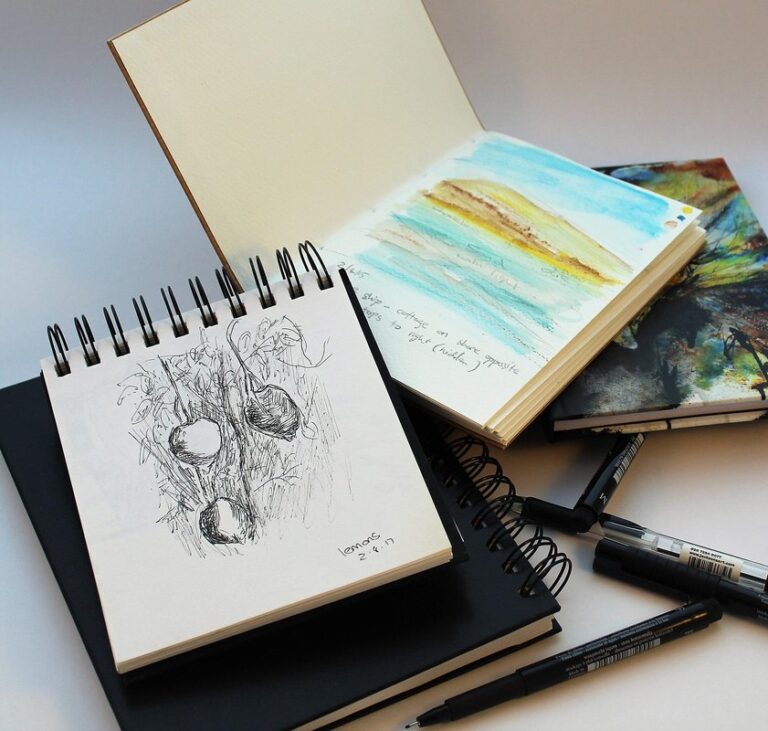
Let’s not limit ourselves to traditional drawing mediums, as you can experiment with various materials and techniques to add texture and depth to your sketches. Consider combining watercolors with ink or pastels for a unique look.
Watercolor and Ink Techniques
When combining watercolor and ink in a sketchbook, it’s essential to understand how these two mediums interact. Watercolor paint is transparent and fluid, while ink is opaque and can be used for bold lines and details. By layering them correctly, you can achieve unique textures and effects.
Start by applying a wash of watercolor paint to the entire page or a specific area. This will create a soft, even base tone. Next, use a fine-tip pen or brush pen to add ink details over the wet paint. The ink will resist the watercolor, creating a beautiful contrast between the two mediums. Experiment with different brushstrokes and techniques to manipulate the ink’s interaction with the paint.
To mix colors effectively, work in small sections and allow each layer to dry before adding more paint or ink. This will prevent muddying the colors and ensure a clear, vibrant outcome. For instance, you can use watercolor to create a soft blue background and then add ink details in a darker shade of blue. The contrast between the two colors will enhance the overall piece.
Here are some key tips for achieving unique textures:
Mixed Media Collage
To create visually striking mixed media collages, start by gathering a variety of materials like paper scraps, fabric swatches, and found objects. Experiment with different textures and colors to add depth to your sketchbook pages. Consider incorporating ephemera such as ticket stubs, postcards, or music sheets for added interest.
When combining disparate elements, think about the emotions and associations each material evokes. For instance, a vintage map might evoke wanderlust, while a piece of lace could represent delicacy. Balance contrasting textures by placing smooth paper against rougher materials like fabric or found objects.
To begin building your collage, use a small amount of adhesive to attach the first element to the sketchbook page. Gradually add more layers, allowing each material to blend with the next. Consider using a few loose threads or fibers as anchors for other elements to create visual tension.
Some possible combinations include pairing a smooth paper background with intricate lace, or overlaying fragments of vintage advertisements on top of abstract ink drawings. When working with mixed media, don’t worry about creating a cohesive narrative – instead, focus on evoking emotions and moods through the arrangement of materials.
Digital Painting Integration
When combining traditional sketchbook work with digital painting, you can take advantage of the flexibility and precision offered by digital tools. To integrate these mediums effectively, start by scanning or photographing your sketches at high resolution. This will allow you to enhance and edit them digitally without losing any of their original texture or character.
Next, choose a suitable software for editing your scanned sketches. Programs like Adobe Photoshop and Clip Studio Paint are popular choices among artists due to their versatility and user-friendly interfaces. Familiarize yourself with the basic tools and features in these programs to get started.
Consider experimenting with layering techniques, where you can separate different elements of your sketch into individual layers. This enables you to make selective edits without affecting the entire image. You could also explore adjusting colors, contrast, or brightness levels to enhance your original work. Some artists even use digital painting software as a means to create new and unique compositions based on their traditional sketches.
When editing digitally, remember that less is often more. Aim for subtle enhancements rather than drastic changes to maintain the integrity of your original piece.
Thematic Sketchbooks
Thematic sketchbooks offer a unique way to explore various themes and ideas, from nature-inspired scenes to abstract expressions of color and emotion. Let’s take a closer look at some inspiring examples.
Seasonal Themes
To create a thematic sketchbook centered around seasonal changes, consider dividing your book into four sections, each representing a season. Start by setting aside one section for spring, capturing its essence through gentle watercolors or soft pencil marks. Depict blooming flowers, new leaves, and the subtle light of early morning.
For summer, shift to warmer colors and more vibrant textures. Incorporate collage elements, like printed paper or fabric, to evoke the feeling of sunshine and long days. Autumn brings a focus on rich tones and intricate patterns, often inspired by nature’s cyclical decay. Use layering techniques to create depth in your autumnal sketches.
In contrast, winter is a time for simplicity and restraint. Employ monochromatic color schemes and bold lines to convey the season’s quiet stillness. Consider dedicating one page to each month, allowing you to track seasonal progression throughout the year. This thematic approach will help you tap into the emotional resonance of each season, ensuring your sketchbook remains a meaningful reflection of your artistic journey.
Travel Journaling
When traveling, it’s easy to get caught up in taking photos and documenting every moment on social media. However, incorporating sketchbook journaling into your travel routine can add a unique perspective to your experiences. By including observations, sketches, and ephemera from different destinations, you can create a rich and personal record of your travels.
Start by dedicating specific pages or sections of your sketchbook to each destination. This could be as simple as noting the date, location, and weather conditions for each entry. You might also include ticket stubs, postcards, or other small mementos that serve as reminders of your time in each place.
To make your travel journaling more engaging, try incorporating sketches of the local architecture, landscapes, or wildlife. These can be loose drawings or more detailed renderings, depending on your skill level and preference. The act of observing and recording what you see can help you appreciate the unique character of each location and slow down your pace while traveling.
Consider bringing a small stash of ephemera-themed stickers, washi tape, or other embellishments to add visual interest to your journal pages. You might also include notes about local customs, languages, or cultural practices that struck you as particularly interesting or surprising.
Personal Icons and Symbols
In a sketchbook focused on personal icons and symbols, you can explore the visual language of your creative vision. This involves creating a visual lexicon of motifs and icons that reflect your personality or artistic goals. Start by brainstorming a list of symbols, images, or objects that hold significance for you – they could be abstract concepts like freedom or love, or more concrete objects like vintage cameras or antique clocks.
Consider the colors, textures, and forms associated with these symbols and how you can represent them in your sketches. For example, if you’re drawn to the ocean, you might use blue hues, wavy lines, and organic shapes to evoke a sense of movement and depth. As you work through this process, pay attention to what emerges as a recurring theme or pattern – this could be an interesting way to explore your subconscious mind and tap into your creative potential.
Some artists choose to create a visual dictionary by sketching each symbol in isolation before incorporating them into more complex compositions. Others prefer to let their symbols evolve organically through the drawing process.
Sketchbook Prompts and Exercises
Let’s turn blank pages into creative opportunities with practical exercises that help you loosen up and get your imagination flowing. These prompts will get you started on a variety of fun projects.
Warm-Up Exercises
When starting a new sketchbook page or session, it’s essential to warm up your drawing muscles. This helps loosen up your hand and gets you into a creative flow state. One effective exercise is gesture drawing: quickly sketch the overall pose of a subject without worrying about details. Set a timer for 1-2 minutes and draw the entire figure in bold lines. Don’t focus on proportions or accuracy; just capture the essence.
Next, try contouring. Draw the outline of an object or person without looking at your paper. Instead, focus on the shape and edges of what you’re drawing. This exercise helps develop your observation skills and can be done with any subject, from simple objects to complex scenes.
Blind contouring takes it a step further: draw the outline without looking at your hand or paper at all. This forces you to trust your instincts and intuition, resulting in loose, expressive lines that often capture more of the subject’s essence than precise drawings.
Exploring Expressive Lines
Expressive lines can transform a sketch from mundane to emotionally resonant. Varying line weight and texture creates visual interest and conveys energy. To achieve this, try using different tools or materials for drawing. For instance, use a fine-tip pen for delicate details and a thicker marker for bold strokes. You can also experiment with gestural lines by allowing your hand to move freely without worrying about precision.
Another technique is to incorporate varied line textures through hatching and cross-hatching. Hatching involves creating parallel lines that follow the contours of the subject, while cross-hatching uses intersecting lines to build up shading and depth. Practice these techniques on simple subjects like fruit or household objects before moving on to more complex compositions.
When working with expressive lines, remember that imperfections can be beneficial. Avoid over-correcting or trying to achieve perfect lines, as this can result in a stiff and lifeless drawing. Instead, focus on capturing the essence of your subject through bold, gestural marks.
Still-Life Drawings
Set up a still-life composition by gathering objects with varied textures, shapes, and colors. Arrange them in a visually appealing way, considering the rule of thirds and balance. You might start with simple items like household objects or flowers. To add complexity, incorporate reflections, shadows, or atmospheric effects.
Pay attention to the interaction between light sources and your subjects. Natural light can create interesting shadows and highlights, while artificial light can introduce color casts. Practice rendering different lighting conditions in your still-life drawings.
When observing your setup, note the subtle relationships between objects – their placement, proportions, and negative space. You might draw attention to specific details or focus on capturing the overall atmosphere. Remember that still-life compositions are about more than just rendering individual objects; they’re about capturing the essence of a moment in time.
A simple exercise is to draw the same setup from multiple angles, exploring how perspectives change your perception of the scene. This will help you develop observation skills and attention to detail.
Advanced Sketchbook Techniques
To take your sketching skills to the next level, explore advanced techniques that combine multiple mediums and styles for unique textures and effects. You’ll discover how to push your creativity further.
Layering and Glazing
Layering and glazing techniques can add depth and interest to your sketchbook pages. To create complex textures, start by building up layers of different materials such as gel medium, modeling paste, or even torn paper. You can apply these layers using a palette knife, brush, or even with your fingers for more textured results.
When it comes to glazing, think about applying thin, transparent washes over previous drawings or layers. This can help to achieve subtle shifts in color and value, adding nuance to your work. Use watercolor paints, ink, or even gouache to create these glazes, and experiment with layering them in different combinations.
Experimenting with different ratios of paint to medium can also yield interesting effects. For example, using a high ratio of paint to gel medium might produce a more opaque result, while increasing the medium content will create a softer, more transparent look.
Use of Negative Space
Using negative space effectively in sketchbooks can add depth and mood to your artwork. Negative space refers to the areas between and around subjects – essentially, what’s not being drawn. By embracing empty spaces, you can create a sense of calmness or tension, depending on how you choose to use them.
Consider an exercise where you draw a minimalist cityscape with towering skyscrapers and busy streets. Instead of filling every inch with buildings and people, leave large swaths of space between the structures. This will make the scene feel more open and airy, highlighting the contrast between the built environment and the empty streets.
When using negative space, think about what’s not present as much as what is. For example, in a landscape drawing, you might emphasize the vastness of a desert by leaving large areas without any features. Alternatively, you could use negative space to create visual tension by placing subjects close together or overlapping them with empty spaces.
To incorporate negative space into your sketchbook practice, try the following: draw an object, then deliberately leave a significant amount of space around it. Experiment with different shapes and sizes of objects in relation to their surrounding negative space. This will help you develop an intuitive sense of how to use emptiness to enhance your art.
Sketchbook Journaling for Self-Discovery
Using a sketchbook as a tool for self-reflection can be a powerful way to tap into your creative subconscious and gain insights into your thoughts, emotions, and behaviors. By committing your observations, thoughts, and feelings to paper, you create a visual record of your personal journey that can help you identify patterns, track progress, and develop greater self-awareness.
One effective approach is to incorporate journaling prompts specifically designed for self-discovery. For instance, you might ask yourself questions like “What are my greatest strengths?” or “Where do I feel most stuck in life?” Write down your answers in a variety of formats – words, doodles, collages – allowing your creative expression to guide the process.
Regular reflection also allows you to celebrate milestones and acknowledge setbacks. Try setting aside time each week to review your sketchbook entries from the past seven days. Identify areas where you made progress, and highlight them with a sticker or color. Conversely, reflect on challenges that arose and think about strategies for overcoming them in the future.
This process of self-reflection is not about creating perfect art; it’s about harnessing the therapeutic benefits of putting pen to paper. By embracing your imperfections and letting go of expectations, you can tap into a deeper sense of purpose and creativity.
Frequently Asked Questions
What if I’m new to sketching and feel overwhelmed by the variety of techniques presented in this article?
Yes, it’s normal to feel overwhelmed when faced with many new techniques. Start by selecting one or two areas that interest you the most and practice those skills first. As you become more comfortable, you can gradually experiment with other techniques.
Can I use a mix of digital painting and traditional sketching without scanning my sketches?
Yes, absolutely! Many artists successfully combine digital painting with traditional sketching without scanning their work. You can take photos of your sketches or draw directly into your digital art software using a stylus or graphics tablet. This approach allows you to maintain the texture and character of your original sketches while still enjoying the flexibility of digital editing.
How do I know when my mixed media collage is “finished”?
A mixed media collage is finished when it feels complete and visually satisfying to you. Don’t be afraid to experiment and make changes as needed, but also trust your instincts and know when to stop adding more elements. Remember, the beauty of mixed media lies in its uniqueness, so don’t worry if your piece doesn’t conform to traditional notions of “finished.”
Can I use my sketchbook as a travel journal even if I’m not an experienced artist?
Yes! Travel journals are all about documenting your experiences and observations, not creating perfect art. Feel free to include sketches, photos, ticket stubs, or any other memorabilia that captures the essence of your trip. The focus is on preserving memories and reflecting on your experiences.
How do I incorporate expressive lines into my sketches without making them look messy?
Expressive lines are about embracing imperfection and adding personality to your work. To achieve a balance between expressiveness and coherence, try practicing gesture drawing exercises to loosen up your hand. Then, apply these loose strokes to your subjects, focusing on capturing their essence rather than perfecting every line. Remember, expressive lines are meant to evoke emotions, not create realistic representations.