
Drawing is a fundamental skill that can bring joy and self-expression to anyone, regardless of age or artistic background. However, many people struggle with basic drawing techniques, leading to frustration and disappointment. The good news is that mastering the basics of drawing is within reach, and it’s easier than you think to improve your skills. This comprehensive guide will walk you through the essential elements of drawing, from understanding line art and perspective to exploring color theory and utilizing various tools effectively. With a clear and structured approach, you’ll be able to build a strong foundation in drawing, unlocking new possibilities for creative expression and personal growth. By the end of this article, you’ll have a solid grasp of the basics, allowing you to create confident and compelling drawings that reflect your unique vision.
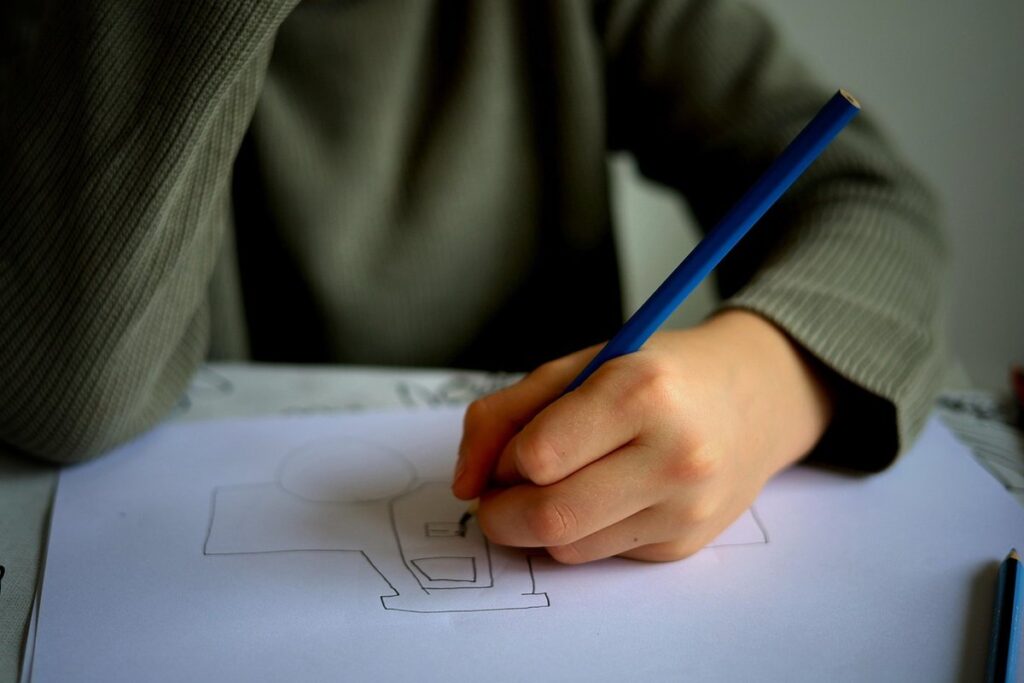
Understanding the Basics
To draw effectively, it’s essential to grasp some fundamental concepts that will serve as the building blocks of your artistic skills. Let’s start by covering the basics of line work and shape creation.
The Fundamentals of Drawing
Drawing is a fundamental language that requires an understanding of its core elements. At its core, drawing consists of four essential components: line, shape, value, and color. Line is perhaps the most basic element of drawing, as it can convey form, movement, and emotion. A single line can evoke a sense of energy or calmness, depending on its direction, thickness, and continuity.
Shape and form are closely related, yet distinct concepts. Shapes are two-dimensional forms that can be geometric (squares, circles) or organic (free-flowing). Forms, on the other hand, are three-dimensional representations of objects, achieved through the use of lines, shapes, and values. Understanding how to create convincing forms is crucial for drawing realistic subjects.
The mediums you choose will also impact your drawings. Traditional mediums like pencils, charcoal, and ink offer unique textures and expressive qualities that can be difficult to replicate digitally. Familiarize yourself with a variety of tools and experiment with different techniques to discover what works best for you. By mastering the fundamentals of line, shape, value, and color, you’ll establish a strong foundation for further exploration in drawing.
Choosing the Right Tools and Materials
When it comes to drawing, having the right tools and materials can make a significant difference in your overall experience and outcome. You’ll find that different mediums suit various techniques and styles, so it’s essential to experiment and find what works best for you.
Let’s start with the basics: pencils, pens, markers, charcoal, and paper are the most common drawing tools. Pencils come in a range of hardness levels, from 6H (lightest) to 9B (darkest), and HB is the standard middle ground. Fine-tip pens are great for details, while thicker markers are ideal for bold lines and color blocking. Charcoal offers expressive possibilities but can be messy.
When choosing paper, consider its texture and weight. Smooth papers like hot press watercolor work well with precise tools, while rough papers suit looser styles. Look for acid-free and lignin-free options to ensure your artwork lasts. Setting up a comfortable drawing space is also crucial. Designate a quiet area with good lighting, and invest in an ergonomic chair or standing desk to avoid fatigue.
You’ll need a surface to work on as well – consider a drawing board, clipboard, or even a sketchbook with a built-in stand.
Learning Basic Techniques
Mastering basic techniques is essential for creating engaging and realistic drawings. This section will cover fundamental skills, including line art, value shading, and texture creation.
Understanding Line Art
Line art is a fundamental aspect of drawing, as it provides the foundation for shape, form, and texture. There are several types of lines to master: straight lines, used for defining edges and borders; curved lines, which create smooth transitions between shapes; and diagonal lines, employed to add energy and movement to your drawings.
Hatching and cross-hatching techniques involve layering lines to build up tone and value. Hatching involves creating a series of parallel lines that follow the contours of a subject, while cross-hatching uses layers of hatching lines at different angles to create deeper shading. To achieve smooth transitions between areas of light and dark, use gentle, continuous motion with your drawing tool.
To create textures with lines, experiment with varying line weights and directions. For example, using short, heavy strokes can produce a rough, stone-like texture, while longer, more delicate strokes might suggest the softness of fur or fabric. When exploring different line techniques, remember to pay attention to the expressive potential of your marks – every line has the power to convey emotion and character in your artwork.
Mastering Shapes and Forms
Drawing basic shapes is a fundamental skill that serves as the building block for more complex forms. Start by learning to draw spheres, cylinders, and cubes accurately. A sphere is a perfect circle in three dimensions, while a cylinder is essentially a rectangle wrapped around its length. To draw a sphere, focus on capturing the overall curvature of the shape rather than individual details. Use gentle, flowing lines to suggest the shape’s contours.
When drawing cylinders, pay attention to the proportions and alignment of the top and bottom edges. Cubes are more straightforward, consisting of six square faces that meet at right angles. To draw a cube, focus on accurately rendering the straight lines and sharp corners that define its shape.
Forms can be created by combining multiple shapes in various ways. For example, you might combine two spheres to form an oval or use cylinders to create a rectangular prism. Practice drawing different combinations of basic shapes to develop your skills and experiment with creating more complex forms.
Drawing from Observation
Effective drawing relies heavily on observation skills, and learning to draw from life will help you develop a keen eye for detail and accurate proportions. Let’s explore how to observe and render what you see in front of you.
Understanding Perspective
Perspective drawing is a fundamental aspect of creating realistic drawings. It’s essential to understand how to use one-point, two-point, and three-point perspectives to create depth and distance in your artwork. A one-point perspective involves using a single vanishing point on the horizon line, creating a sense of depth by receding lines. This is commonly used for drawing roads, corridors, or any long, narrow space.
In contrast, two-point perspective uses two vanishing points, one on either side of the central axis, to create a more complex and realistic scene. This technique is often used for drawing buildings, rooms, or other rectangular spaces. Three-point perspective takes it a step further by using three vanishing points: one on the horizon line and two others, one above and one below. This creates an even greater sense of depth and dimension.
To use vanishing points effectively, start by identifying the main lines and shapes in your scene. Then, establish the vanishing point(s) on your paper or canvas. Use a ruler to draw receding lines that converge at the vanishing point, creating the illusion of depth. Practice using different types of perspective to develop your skills and create more realistic drawings.
Still Life Drawing
When setting up a still life composition, consider the negative space around each object. This empty area can make your drawing more visually appealing and help the viewer’s eye move through the piece. Place objects of varying heights and textures to create visual interest.
Observe the values – light and dark areas – in your still life setup. Notice how the shadows fall on different surfaces, creating a sense of depth. Use a range of values in your drawing to capture this subtlety. Pay attention to textures as well: smooth, rough, or patterned.
Focus on capturing the essence of each object rather than its exact likeness. This means simplifying forms and shapes, eliminating unnecessary details. Practice observing and rendering the overall shape, volume, and weight of an object. For example, a vase might be simplified into a cylinder with a narrow neck, while a book might become a rectangular block.
When drawing still life compositions, consider creating multiple value studies or sketches to break down the complexity of the scene. This can help you identify the most important elements and simplify your drawing process.
Bringing Your Drawings to Life with Color
Adding color to your drawings can be a game-changer, transforming flat illustrations into vibrant and dynamic works of art. Let’s explore how to bring depth and emotion to your creations using color theory principles.
Understanding Color Theory
Color theory is a fundamental aspect of creating visually appealing drawings. At its core, color theory revolves around understanding how colors interact with each other and how they’re perceived by the human eye. The primary colors – red, blue, and yellow – are the base unit of color theory. From these three hues, secondary colors emerge: orange (red + yellow), green (blue + yellow), and violet (blue + red).
Understanding warm and cool colors is also crucial. Warm colors like red, orange, and yellow tend to evoke feelings of warmth and energy, while cool colors like blue, green, and violet are often associated with calmness and serenity. The color wheel is a circular representation that illustrates the relationships between colors. It shows how colors harmonize or clash, making it an essential tool for artists.
To begin applying color theory in your drawings, familiarize yourself with the color wheel. Notice which colors sit next to each other, as well as those directly across from one another. This knowledge will help you create balanced and visually appealing compositions. When selecting colors, consider the mood or atmosphere you want to convey in your artwork. Warm colors can add a sense of excitement, while cool colors can create a soothing effect.
Adding Color to Your Drawings
When creating a color palette for your drawings, consider the subject’s characteristics. Warm colors like orange, red, and yellow evoke feelings of energy and warmth, while cool colors like blue, green, and purple can create a sense of calmness. For example, when drawing a sunset, you might choose warm colors to capture its vibrant hues.
To select colors for different subjects, think about their textures and properties. Leaves are typically green, but you might add yellow or brown undertones to suggest age or dryness. Skin tones can range from pinkish to golden, depending on the individual’s ethnicity. When drawing a still life, consider the colors of the objects’ surfaces – metal might appear shiny and silver, while wood could be warm and golden.
To blend colors for realistic effects, experiment with layering and glazing techniques. Start by blocking in large areas with flat washes, then gradually build up layers of transparent paint to achieve depth and luminosity. For instance, when drawing a landscape, you might use blue for the sky, green for the trees, and brown for the soil. By carefully balancing colors and textures, you can bring your drawings to life and create more engaging, believable scenes.
Advanced Techniques for Intermediate Artists
As you’ve honed your skills and grown more confident, it’s time to push yourself further and explore advanced techniques that will take your art to the next level. This means refining your style and mastering new methods.
Exploring Different Drawing Styles
When it comes to drawing, there’s no one-size-fits-all approach. Different styles suit different tastes and skill levels, from the hyper-realistic to the abstract. Let’s explore some of these styles.
Realism involves accurately depicting subjects as they appear in real life. Cartooning, on the other hand, is all about exaggeration and simplification for comedic effect or visual impact. Abstract art takes a more expressive route, using shapes and colors to convey emotions rather than representational accuracy. Each style requires its own unique set of skills and techniques.
To experiment with different styles, try working within specific constraints – say, drawing only with monochromatic pencils or focusing on loose brushstrokes. Alternatively, switch mediums: what looks like a watercolor might take on an entirely new character in charcoal. Some artists find it helpful to start by copying the work of masters from each style they’re interested in.
Experimenting with different techniques and mediums can help you discover your strengths and interests. You may find that your skills lie in one area, but your passion lies elsewhere – or vice versa. By exploring various drawing styles, you’ll not only expand your artistic horizons but also develop a more versatile skillset.
Creating Depth and Dimension
When drawing a scene, it’s easy to focus on rendering every detail with precision. However, creating depth and dimension requires more than just technical skill – it also demands an understanding of how to manipulate light and space.
Atmospheric perspective is one key technique for achieving this effect. By softening colors and reducing contrast in the distance, you can create a sense of fading into the background. This is particularly effective when drawing landscapes or cityscapes, where the distant horizon often blends with the sky.
To apply atmospheric perspective effectively, try using cooler tones in the background and warmer tones for foreground elements. You can also experiment with layering – placing objects in front of one another to create a sense of depth. For example, if you’re drawing a forest scene, place trees in the background with more muted colors, while leaving the ones in the foreground more vibrant.
In addition to atmospheric perspective and layering, texture is another important element for creating depth. Consider using different textures to distinguish between objects or surfaces, such as rough bark on tree trunks or smooth stone walls. By incorporating these visual cues, you can create a rich and immersive drawing that draws the viewer in.
Overcoming Common Drawing Challenges
One of the most frustrating parts of learning to draw is overcoming common challenges that hold you back from creating your best work. Let’s tackle some of these obstacles together, starting with proportions and measurements.
Tips for Improving Your Skills
Improving hand-eye coordination is crucial for drawing, as it allows you to accurately capture proportions and details. To develop this skill, practice simple exercises like drawing circles, spirals, and zigzags with varying line weights. You can also try drawing shapes from memory or copying a complex shape from a reference image.
Developing observational skills is another essential aspect of improving your drawing abilities. When observing an object, pay attention to its texture, shape, and proportions. Practice drawing objects in different environments and lighting conditions to get a sense of how they change visually. For example, try drawing the same chair in a bright room, a dimly lit room, or outdoors.
Managing time and space constraints can be challenging when trying to draw from life or observation. To overcome this, break your drawing session into smaller intervals with regular breaks. This allows you to conserve energy and maintain focus over an extended period. You can also use a limited canvas size or work on a specific aspect of the subject, such as its overall shape or detailed textures.
Common Mistakes to Avoid
When learning to draw, it’s easy to fall into common pitfalls that can hinder progress. One mistake beginners often make is overlining – placing too many lines on an object or surface, which can lead to a cluttered and confusing drawing. To avoid this, try to break down complex subjects into simple shapes and focus on capturing their overall form.
Another error is poor proportion – failing to accurately measure the relationships between different parts of a subject. This can result in distorted or unbalanced compositions. Use measuring tools or sketch grids to help you get proportions right from the start.
Additionally, be cautious not to over-detail your drawings. While it’s tempting to add lots of intricate details, this can distract from more important aspects of your art. Focus on capturing the essence and character of a subject rather than getting bogged down in minute specifics.
Finally, don’t be too hard on yourself when you make mistakes – they’re an inevitable part of the learning process. Instead, analyze what went wrong and use those insights to improve your skills moving forward.
Frequently Asked Questions
How long does it take to see improvement in my drawing skills?
It takes time and consistent practice to develop your skills. Set aside dedicated time each day or week to draw, and focus on improving one aspect at a time. Be patient with yourself, as progress may be slow but steady.
What if I’m struggling with color theory? How can I apply it in my drawings?
Color theory is a complex topic, but don’t worry if you’re not grasping it right away! Start by experimenting with basic color combinations and palettes. Practice mixing colors to create harmonious blends. Remember that practice makes perfect, so keep trying until you feel comfortable applying color theory concepts.
Can I use digital drawing tools or mediums alongside traditional ones?
Yes, many artists successfully combine digital and traditional techniques in their work! Don’t be afraid to experiment with digital drawing software or apps, especially if you find it easier to learn. However, remember that traditional mediums can offer unique textures and effects, so try not to rely too heavily on digital tools alone.
How do I know when to stop adding details to a drawing? When is ‘good enough’ good enough?
It’s easy to get caught up in perfectionism, but sometimes it’s necessary to know when to stop. Use the ‘golden ratio’ as a guide: if your drawing feels balanced and visually appealing, you’re likely done! Additionally, take breaks from your work to come back with fresh eyes – often, stepping away can help you gauge whether you’ve added too much detail.
What about drawing inspiration from other artists? How do I incorporate their styles into my own unique voice?
Drawing inspiration from others is a great way to spark creativity and learn new techniques! Study the works of your favorite artists, analyzing what makes them tick. Experiment with incorporating elements of their style into your own work, but remember to stay true to yourself – don’t be afraid to put your own twist on borrowed ideas.

