Improving your pencil drawing skills can be a daunting task, especially for those who are just starting out. Setting up a dedicated workspace and understanding the basics of pencil shading, perspective, and texture can make all the difference in creating realistic and engaging drawings. However, with so many techniques and tools available, it’s easy to get overwhelmed and unsure where to begin. Mastering advanced techniques like hatching and cross-hatching can be particularly challenging, but with practice and patience, you can achieve professional-looking results. In this step-by-step guide, we’ll cover the fundamentals of pencil drawing, from setting up your workspace to mastering these complex techniques, helping you to improve your skills and take your artwork to the next level.
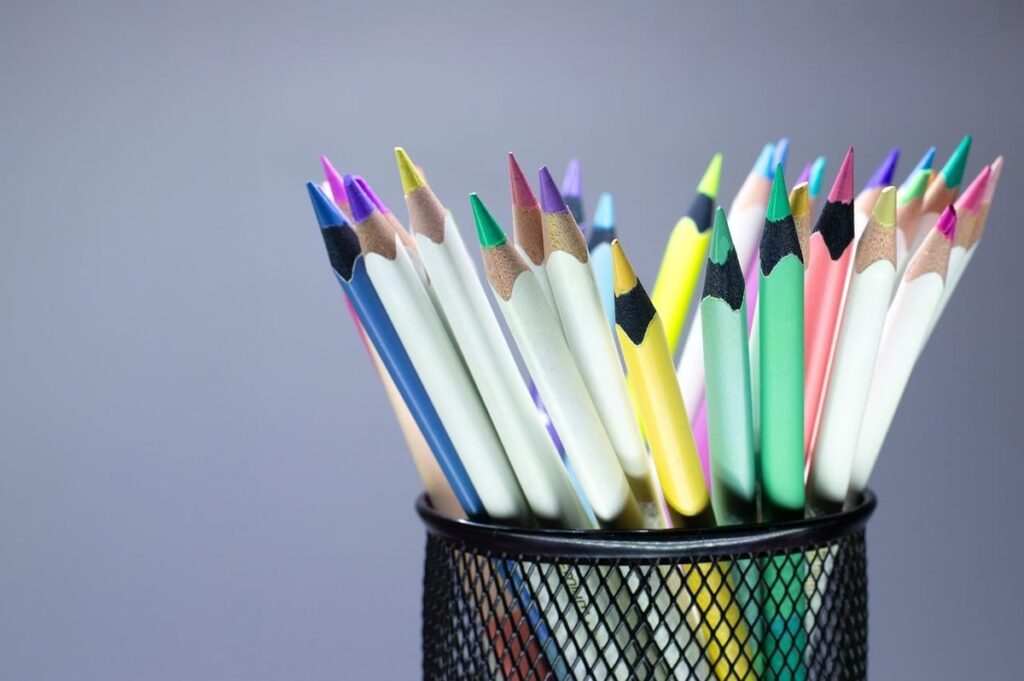
Getting Started with Pencil Drawing
To begin, you’ll need to gather a few essential tools and materials, including high-quality pencils, erasers, and paper that suits your drawing style. Familiarize yourself with these basics before moving forward.
Understanding the Basics of Pencil Drawing
A pencil drawing begins with a selection of pencils. You’ll encounter graphite pencils, which range from 6H (light) to 6B (dark), along with colored pencils and charcoal. The HB is the standard middle grade, offering a balance between light and dark marks. Familiarize yourself with the different types to understand their unique characteristics.
Basic strokes are essential for creating a variety of lines. Start by practicing hatching, where parallel lines are drawn close together, followed by cross-hatching, which involves layering hatching lines at different angles. Stippling creates detailed images using small dots. Practice each technique on scrap paper until you feel comfortable with the pencil’s response.
Common techniques include blending and smudging. Blend multiple pencil strokes to create smooth transitions between values. Smudge graphite marks by gently rubbing them with a tortillon or your finger to achieve softer, more subtle shading. These fundamental concepts form the foundation of pencil drawing. Understanding their application will help you develop your skills and produce detailed, nuanced artwork.
Setting Up Your Workspace
To set up a comfortable drawing space, start by considering the lighting. Natural light is ideal, but if you’re working indoors, invest in a good desk lamp to provide focused illumination without harsh shadows. Position your workspace so that the light source is at a 90-degree angle to your paper, rather than directly behind or above it.
Next, think about ergonomics. Sit comfortably with your back straight and feet planted firmly on the floor. Your drawing board or surface should be at a comfortable height, allowing you to work without straining your neck or shoulders. A document holder can help keep your reference materials at eye level, reducing the need for constant looking down.
Essential tools for pencil drawing include a variety of graphite pencils (HB, 2B, 4B, 6B), an eraser (kneaded or white vinegar), and a sharpener. You’ll also want a comfortable drawing surface, such as a tabletop or drawing board with a non-slip mat to prevent your paper from sliding around. Consider investing in a pencil case or container to keep your supplies organized and within easy reach.
Choosing the Right Pencils and Materials
When it comes to creating amazing pencil drawings, having the right tools is crucial. This section will cover the essentials of choosing the perfect pencils and materials for your art.
Understanding Pencil Grades and Marks
When working with pencils, it’s essential to understand their varying grades and the marks they produce. Pencil grades are indicated by a number or letter on the pencil itself, which refers to its softness or hardness. The lower the number (or softer the grade), the darker and softer the mark will be. For instance, a 6B pencil is extremely soft and produces very dark lines, while an 9H pencil is hard and produces light marks.
The most commonly available grades are HB (medium), H (hard), F (firm), B (black) and 2B to 6B (increasingly softer). It’s crucial to select the right pencil for your desired effect. If you’re aiming for delicate, detailed work, a hard grade like 9H is ideal. In contrast, for darker, richer lines, a soft grade like 4B or 6B is better suited.
Experimenting with different grades can help you achieve unique effects and textures in your drawings. For example, layering softer pencils over harder ones can create intricate, blended shading. Conversely, using multiple hard pencils of varying degrees can produce detailed, precise lines. By understanding pencil grades and selecting the right tool for the job, you’ll be able to control the marks on your paper and achieve more effective results in your pencil drawings.
Selecting Paper and Erasers
When it comes to selecting paper for pencil drawing, consider the tone you want to achieve. Smooth paper with a high-finish will produce subtle gradations of value and is ideal for detailed work. Look for papers labeled as “hot press” or “vellum finish,” which are designed specifically for graphite drawings. On the other hand, textured papers like cold press or rough can add expressive, organic qualities to your work.
For durability, choose paper with a weight of at least 80 gsm (grams per square meter). Thicker papers will resist buckling and creasing better than thinner ones. Consider also the paper’s surface size; larger sheets allow for more freedom in composition but may be cumbersome to handle.
When it comes to erasers, opt for a kneaded or white vinegar-based eraser for correcting mistakes. These are gentle on surfaces and can lift even stubborn graphite marks without leaving behind residue. Use a sharpener to maintain the tip of your pencils; dull tips lead to inconsistent marks and waste paper.
Basic Strokes and Techniques
To become proficient in pencil drawing, you need to master the fundamental strokes that bring your subjects to life on paper. Mastering basic hatching, cross-hatching, and stippling techniques is a great place to start.
Mastering Hatching and Cross-Hatching
Hatching involves creating parallel lines that follow the contours of a subject, with each line closer to the next. The key is to maintain even spacing and keep strokes consistent in pressure and direction. To achieve smooth transitions between areas of tone, overlap hatching lines carefully, feathering them into adjacent strokes.
Cross-hatching is similar but incorporates layers of intersecting lines at different angles. This creates deeper tones and adds dimensionality to your drawing. For successful cross-hatching, ensure the lines are evenly spaced and not too dense or sparse – ideally about 3-5 strokes per millimeter.
Stippling, another basic technique, involves creating patterns with closely grouped dots. These can be used for high-contrast areas like shadows or textures like wood grain. Pay attention to spacing between individual dots; a general rule of thumb is to keep them about the same distance apart as the line width.
Using Different Pencil Angles and Pressures
To achieve varying line weights and textures, you need to manipulate your pencils at different angles and pressures. Start by experimenting with holding your pencil vertically for fine lines and details. For thicker lines, try tilting the pencil slightly towards the direction of the stroke.
As you apply pressure, pay attention to how the lead responds. Gently pressing down will produce a subtle scratch mark, while applying more force will create a deeper, darker line. This technique is useful for creating layered shading effects in your drawings.
To add texture and interest to your lines, try varying the angle of your pencil. Holding it almost flat against the paper will produce a smooth, even stroke, whereas tilting it more sharply will create a rougher, more expressive line. Experiment with different angles and pressures to achieve unique textures and shading effects in your drawings.
When creating gradual transitions between areas of light and shadow, use gentle pressure and soft strokes to blend the pencil marks together smoothly.
Shading and Value Techniques
To create depth and dimension in your pencil drawings, you’ll need to master various shading and value techniques that can bring your subjects to life on paper. These essential skills are explored in this next section.
Understanding Value and Shading Fundamentals
Value and shading are fundamental elements of pencil drawing. To create a convincing image, you need to understand how light behaves on different surfaces and how to capture it with pencil marks. Start by grasping the difference between light and dark values. Light values (tints) represent the highlights or areas that catch direct light, while dark values (shades) are used for shadows and areas away from direct light.
Atmospheric perspective is another crucial concept in value and shading. It’s the way objects appear lighter and cooler as they recede into the distance due to the Earth’s atmosphere scattering light. This effect can be achieved by using a range of values, with the background being lighter than the foreground. Basic shading techniques involve creating smooth transitions between values. Use gentle hatching or cross-hatching for subtle areas like foliage, while applying more deliberate strokes for shadows and dark details.
Remember that value is not just about lightness or darkness but also about depth and dimension. Practice observing how light interacts with different textures and surfaces to develop your skills in capturing atmosphere and spatial relationships through value and shading. Pay attention to the subtlety of transitions between values, as this can greatly enhance the realism of your drawings.
Advanced Shading Techniques
Glazing is a technique used to achieve subtle shifts in value by applying multiple thin layers of fixative over a previously shaded area. This allows you to create smooth transitions between different values without building up texture or compromising the underlying drawing. When glazing, use a soft brush and gentle strokes to avoid disrupting the existing pencil marks.
Scumbling involves using a dry brush to scratch through the surface of the paper, creating a textured effect that can be used to suggest rough stone, tree bark, or other organic surfaces. To scumble effectively, choose a graphite stick with a high level of hardness (9H or 6H) and apply it lightly at an angle.
Burnishing is similar to glazing but requires a harder tool – typically a sharp stylus or the edge of a metal ruler. This technique is used to achieve extremely high values by scratching through layers of graphite, resulting in a smooth, reflective surface that can be used for glass, metal, or other shiny materials. When burnishing, work slowly and carefully to avoid damaging the paper or marring the surrounding areas.
Drawing from Observation and Reference
To create convincing drawings, it’s essential that you learn how to draw from observation and reference accurately. Let’s discuss some effective methods for incorporating real-life references into your pencil art.
The Importance of Observation
Observing subjects in real life or through reference images is crucial for accurate representation. When drawing from life, you’re able to capture the subtleties of light and shadow, texture, and form that can be difficult to replicate from a photograph. This direct observation helps develop your ability to render volume and weight.
When using reference images, it’s essential to study them carefully, not just as a starting point but also as an ongoing resource throughout your drawing process. Analyze the lighting, composition, and overall atmosphere of the image. Note how the artist has used value and texture to convey mood and detail. Pay attention to areas of high contrast and how they inform the overall sense of depth.
To apply this in your own practice, try making quick sketches from life or using reference images as a prompt for gesture drawings. As you work, ask yourself questions like: What is the primary source of light in the scene? How does it affect the forms and textures present? By cultivating your observational skills, you’ll be able to draw with greater accuracy and nuance, regardless of whether you’re working from life or using reference images.
Using Reference Images Effectively
When using reference images effectively, it’s essential to understand their limitations. Photographs, for instance, can be overly detailed and distracting if not used judiciously. A still-life composition can provide a more balanced arrangement of forms, but only if you observe its underlying structure. To harness the benefits of visual references, start by studying the overall proportions and relationships between objects in your reference image.
Notice how light falls on each form, creating areas of highlight and shadow. Observe the textures, patterns, and details that contribute to the overall appearance of each object. Use a tracing paper or lightly sketching these observations onto your drawing paper, rather than trying to replicate them directly from the reference. This helps you translate the visual information into your own drawings.
Avoid over-reliance on reference images by incorporating your own observational studies alongside them. Remember that your goal is to create an original drawing that reflects your understanding of the subject matter, not simply a copy or reproduction of someone else’s work. By combining observation and reference in a balanced way, you’ll develop a more nuanced and convincing representation of reality.
Tips for Improving Your Pencil Drawing Skills
To take your pencil drawing skills to the next level, focus on refining your hatching techniques and experimenting with different line weights and textures. Practice these essential skills consistently for noticeable improvement.
Overcoming Common Challenges
When working on a pencil drawing, it’s common to encounter challenges that can be frustrating and discouraging. One of the most significant obstacles is lack of confidence. As an artist, you need to remember that everyone starts somewhere, and even professionals had to begin with simple sketches. To build your self-assurance, focus on mastering basic shapes and lines, rather than trying to create a masterpiece from the outset.
Poor proportions can also hinder your progress. To avoid this issue, always sketch the main features of your subject first – such as the eyes, nose, and mouth in a portrait – before moving on to details. This will give you an opportunity to check for any discrepancies in size or shape.
Shading is another area where many artists struggle. A key tip is to start with simple shading techniques, like hatching or cross-hatching, which can help create depth and texture without requiring intricate layering. Practice these basic methods on simpler subjects before moving on to more complex ones. By breaking down your drawing into manageable components, you’ll be better equipped to tackle each challenge as it arises.
Advanced Techniques for Experienced Artists
Experienced artists can elevate their pencil drawings by employing advanced techniques like hatching and cross-hatching. Hatching involves creating a series of closely spaced parallel lines that follow the contours of the subject, while cross-hatching achieves depth by layering lines at different angles.
To master these techniques, study the work of masters such as Albrecht Dürer and Rembrandt, who frequently employed hatching in their drawings. Analyze how they used varying line weights and textures to convey volume and emotion. Practice creating gradual transitions from light to dark areas using soft pencils (HB-6B) and sharp pencils (2H-4H).
Another key concept is gesture drawing – capturing the essence of a subject’s movement or energy through expressive lines. Set a timer for 10-15 minutes, pick up a pencil, and quickly sketch your subject without worrying about details. This exercise helps you develop your ability to observe and render the underlying structure of a subject.
By incorporating these advanced techniques into their practice, experienced artists can create richly textured, highly nuanced drawings that showcase their skill and craftsmanship.
Frequently Asked Questions
How to Transition from Basic Strokes to More Complex Techniques?
When moving on to more advanced techniques like glazing or scumbling, start by practicing basic strokes and shading fundamentals. This will help you develop a solid foundation and make the transition smoother.
Yes, it’s normal for beginners to struggle with these transitions; focus on mastering each technique individually before combining them. Practice regularly to build your skills and confidence.
Can I Use Digital Tools in My Pencil Drawing Workflow?
While traditional pencil drawing is ideal, incorporating digital tools like scanning or editing software can be beneficial for refining your work. Yes, many artists successfully combine traditional and digital methods; just ensure you understand the limitations of each medium.
Consider how you can use digital tools to enhance your drawings without losing the essence of traditional pencil work. Experiment with different software and techniques to find what works best for you.
How Do I Know When My Drawing is Finished?
Determining when a piece is complete requires patience and practice. Trust your instincts, and pay attention to areas that feel incomplete or lacking in detail. Yes, it’s okay to step back from your work and revisit it later with fresh eyes; this can help you spot imperfections.
Take regular breaks to clear your mind and approach your drawing with a critical eye. Consider getting feedback from others or joining a community of pencil artists for support and guidance.
Can I Still Improve My Skills if I’m Working on Large-Scale Projects?
While it’s true that working on smaller pieces can help you refine your skills, large-scale projects also offer opportunities for growth. Yes, focusing on complex drawings can push you to experiment with new techniques and develop problem-solving skills.
To overcome challenges in large-scale drawing, break down the project into manageable sections, and focus on one aspect at a time. Experiment with different pencils, paper types, or techniques to achieve the desired effect.