
Camping under the stars can be one of life’s greatest joys, but a nighttime camping experience can quickly turn into a disappointment if you’re not prepared. A well-planned campfire is essential for warmth and cooking, while stargazing can be a magical way to connect with nature. However, many campers struggle to find activities that are safe and enjoyable after dark. This guide will provide you with some exciting ideas on how to plan a safe and enjoyable nighttime camping experience. From campfire activities like singing songs or telling ghost stories, to stargazing tips and outdoor adventures like flashlight scavenger hunts, we’ll cover it all. By the end of this article, you’ll have a better understanding of what to do while camping at night, allowing you to make the most of your next camping trip.
Planning Your Evening Routine
A well-planned evening routine can help you make the most of your camping trip and ensure a restful night’s sleep under the stars. Here, we’ll share some tips to help you create an enjoyable evening schedule while camping at night.
Setting Up a Campfire Safety Zone
When setting up a campfire for an evening of s’mores and stargazing, safety should be top priority. You’ll want to choose a flat spot away from flammable materials like dry leaves, twigs, or branches. Avoid areas with overhanging trees or shrubs that could catch fire. Keep the campfire at least 15 feet away from your tent and any other structures.
Clearing the area of combustible materials is crucial. Remove any dead leaves, grass clippings, or pine needles within a 3-foot radius of the campfire pit. Avoid using rocks or gravel as they can heat up quickly and cause burns. Instead, opt for a fire ring or a designated campfire pit with a non-flammable surface.
Before igniting the flames, take a moment to survey your surroundings. Look out for any nearby power lines, dry underbrush, or other potential fire hazards. Once you’ve cleared the area and checked your surroundings, you can start building your campfire. Use small twigs and kindling to get the fire going, gradually adding larger logs as it grows. By taking these simple precautions, you’ll be able to enjoy a safe and enjoyable evening around the campfire.
Creating a Campfire Plan
Before building a campfire, you need a solid plan. Start by checking local fire restrictions and regulations. These can often be found on park websites, visitor centers, or by contacting the park service directly. Understand what materials are allowed for burning and if there are specific rules for campfires in your area.
Next, gather the necessary materials: kindling (small twigs and branches), tinder (dry leaves, grass, or small dry sticks), and larger logs for sustained heat. You’ll also need a way to contain the fire, such as a fire pit or ring, which can be rented at many campsites or purchased if you plan on camping frequently.
Don’t forget a backup plan in case of rain or strong winds. This might include storing some tinder and kindling under sheltered areas or having alternative activities prepared for your group. You should also have a way to fully extinguish the fire when it’s time to leave, such as using a fire extinguisher or dousing with water.
Evening Entertainment Options
As night falls on your campsite, it’s time to unwind and have some fun. From stargazing to campfire games, we’ll explore the best evening entertainment options for a memorable camping experience.
Stargazing and Astronomy
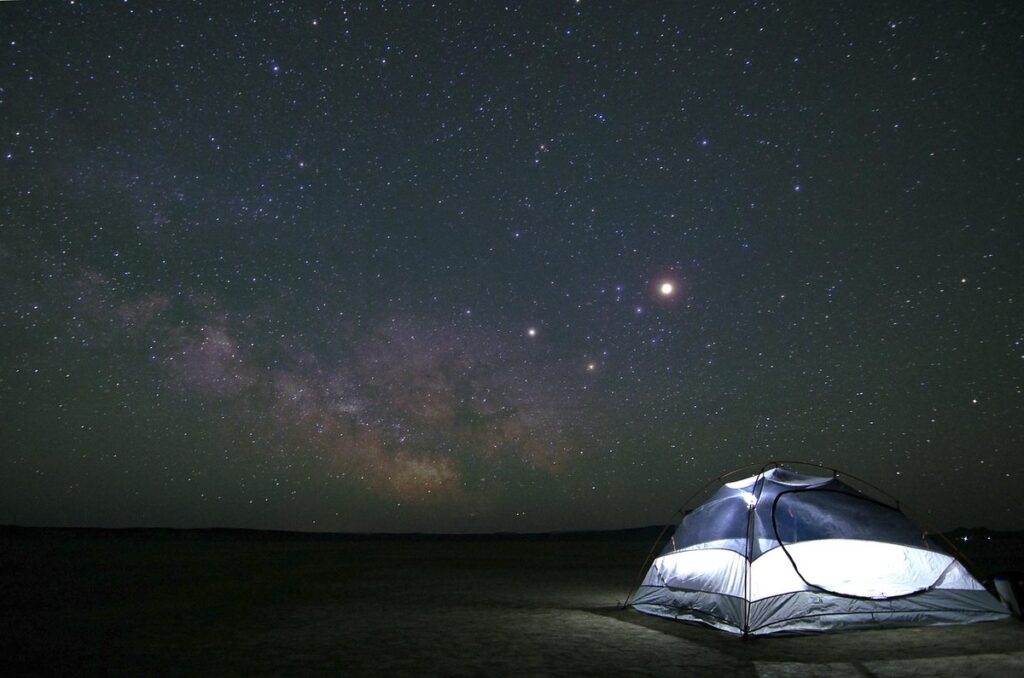
Stargazing and astronomy are ideal activities for a night-time camping trip. The darkness of the surrounding environment offers improved visibility of the stars, making it an excellent opportunity to connect with the celestial world. To enhance your stargazing experience, consider downloading a mobile app or carrying a star chart that can help you identify constellations.
Begin by locating the North Star, which serves as a reference point for navigating the night sky. You can also use apps like Sky Map or Stellarium Mobile to generate a personalized star chart based on your location and time of year. Identify patterns and shapes in the stars, and learn the names of prominent constellations such as Orion and Cassiopeia.
If you’re camping near a designated dark-sky preserve or attending an astronomy event in the area, be sure to take advantage of these resources. Many local astronomy clubs offer stargazing events and guided tours, providing valuable insights into the night sky. Some preserves also have telescopes available for public use.
Campfire Games and Storytelling
Gather ’round the campfire and let the games begin! There’s a reason why s’mores, ghost stories, and would-you-rather scenarios are staples of camping culture. They’re more than just fun diversions – they’re ways to bring people together and create shared experiences.
Ghost stories, for example, can be a great way to spark imagination and get everyone in on the action. Encourage campers to share their own spooky tales or make up new ones on the spot. Would-you-rather scenarios are another crowd-pleaser – pose difficult choices (e.g., “Would you rather have a million dollars or the ability to travel anywhere for free?”) and watch the debate ensue.
But it’s not just about games – personal storytelling is an essential part of any campfire gathering. Encourage people to share anecdotes, either from their own experiences or passed down through family and friends. This can be a powerful way to build connections and create a sense of community. For instance, you could ask everyone to share a story about the most memorable camping trip they’ve ever been on – or the worst!
Outdoor Adventures Under the Stars
As you settle into your campsite under the starry sky, consider taking a break from s’mores to explore some of the most magical nighttime activities.
These stargazing pursuits are sure to add an extra layer of excitement and wonder to your camping trip.
Nighttime Hiking and Nature Walks
Nighttime hiking and nature walks offer a unique experience that immerses you deeper into nature. As the sun sets, many animals become more active, and their nocturnal habits make for fascinating encounters. A quiet forest floor can transform into a bustling scene with owls hooting in the distance and raccoons scavenging for food.
To navigate these nighttime trails, use a headlamp or flashlight to light your way. Be mindful of battery life and keep spare batteries handy. Local parks often have designated night-hiking trails that are well-marked and illuminated. Research these trails before heading out, as some may require specific permits or have unique regulations.
For example, the Appalachian Trail in North America has several sections suitable for nighttime hiking, with many campers and hikers reporting encounters with nocturnal wildlife such as deer and possums. The same goes for the John Muir Trail in California, where a full moon can illuminate the trail and create an ethereal atmosphere.
When choosing a trail, consider factors like terrain difficulty, accessibility, and nearby amenities. Always let someone know your planned route and estimated return time to ensure safety. With caution and preparation, nighttime hiking can become a thrilling addition to your camping experience.
Wildlife Watching and Birding
Spending a night under the stars can be made even more magical by spotting nocturnal wildlife. Many campers have reported thrill and excitement when catching a glimpse of an owl perched on a nearby tree branch, or watching bats flit about in the dark sky. Even deer have been known to make appearances near campsites, especially if they’ve become accustomed to human presence.
To increase your chances of spotting nocturnal wildlife, set up a wildlife-watching station near your campsite. Bring along a good pair of binoculars – 7x or 8x magnification is ideal for observing distant animals without disturbing them. A field guide specific to the region’s wildlife will also come in handy for identifying species and learning more about their habits.
Some popular field guides include the National Audubon Society Field Guide to North American Mammals, the Sibley Guide to Birds, or the Peterson Field Guide to Mammals. Take note of the time of year and weather conditions, as some nocturnal animals are more active during certain seasons or when it’s cloudy or rainy.
Cooking and Food Preparation
As night falls, a warm meal can be just what you need to recharge before enjoying more campsite activities. Gathering food and cooking over an open flame is a fun way to socialize and refuel.
Campfire Cuisine and Recipes
When it comes to cooking over an open flame, you have several methods to choose from. Grilling is a great option for thicker cuts of meat like burgers and steaks, as well as vegetables like bell peppers and onions. Stewing is another popular method that’s perfect for tougher cuts of meat or hearty stews. Simply place your ingredients in a pot with some liquid, cover it, and let the heat do its magic.
Pan-frying is also an option when you have a camping stove or a cast-iron skillet over the campfire. This method works well for dishes like scrambled eggs, hash browns, and even pancakes. When using any of these methods, remember to keep a close eye on your food as it can quickly go from perfectly cooked to burnt.
Some simple yet delicious recipes to try include grilling chicken skewers with vegetables, making campfire skillet meals by sautéing ground beef and potatoes in a cast-iron pan, or even whipping up a one-pot stew using pre-cut ingredients. Always prioritize cooking safety by keeping a bucket of water nearby to extinguish any flames that get out of control, and never leave your food unattended while it’s cooking.
Food Storage and Handling
When camping at night, it’s essential to keep a clean and secure campsite to prevent attracting wildlife. This means storing food and trash properly, both to avoid attracting unwanted visitors and to maintain a safe environment for yourself and others. When it comes to storing perishable items like meat and dairy products, consider the temperature extremes you’ll be facing.
If it’s hot outside, keep these items in a shaded area or use a cooler with ice packs to keep them chilled. If it’s cold, store them in an insulated container or bring a portable refrigerator. Remember that raw meat, poultry, and seafood should always be stored separately from cooked foods and utensils to prevent cross-contamination.
Some campgrounds have bear-proof containers available for rent; if this is the case at your site, use one to store scented items like food, toothpaste, and soap. If not, hang these items from a tree at least 10 feet off the ground and 4 feet out from the trunk using a sturdy rope or cable. This will help keep wildlife out of reach while you’re enjoying your nighttime activities under the stars.
Safety Precautions and Emergency Planning
Before you start enjoying nighttime activities, it’s crucial to understand how to stay safe and what emergency measures to take if needed. We’ll walk through essential precautions to ensure a fun and worry-free camping experience.
Campfire Safety Rules
When building a campfire for evening entertainment, safety should be your top priority. This means adhering to essential campfire safety rules to prevent accidents and minimize risk.
First and foremost, ensure you fully extinguish the fire before leaving it unattended. This involves dousing the flames with water, stirring the ashes to ensure everything is cool to the touch, and then repeating the process until no heat or smoke remains. It’s also crucial to keep a bucket of water nearby at all times in case the fire gets out of control.
In the event of an emergency, know how to properly use fire extinguishers or other equipment. Familiarize yourself with the different types of extinguishers and their corresponding labels – A for ordinary combustibles, B for flammable liquids, C for electrical fires, and D for metal fires. Learn how to operate a fire extinguisher by PASS: Pull the safety pin, Aim the nozzle at the base of the flames, Squeeze the handle, and Sweep the nozzle back and forth.
When choosing an extinguishing agent, consider using a fire-resistant mat or sand nearby to smother small flames. Always keep emergency equipment within easy reach, but not so accessible that children or pets can accidentally trigger them.
Emergency Preparedness and First Aid
A comprehensive emergency kit is essential for any camping trip, and it should be easily accessible in case of an unexpected situation. When assembling your kit, consider including a flashlight with extra batteries, a first aid manual, bandages, antiseptic wipes, pain relievers, and any medications you or your group members may need. Don’t forget to pack blankets or emergency bivvy sacks, which can provide warmth in case of an overnight stay outdoors.
In the event of a burn, cool the affected area with water for at least 10 minutes before applying topical creams or ointments. For wounds, clean and disinfect them using antiseptic wipes, then cover with bandages to promote healing. If someone experiences an allergic reaction, such as hives or difficulty breathing, administer epinephrine via an EpiPen (if available) and seek medical attention immediately.
It’s also crucial to know basic first aid techniques for common injuries that can occur while camping, like splinters, snake bites, and broken bones. A wilderness first aid course can provide the necessary training to handle these situations.
Frequently Asked Questions
Can I use a portable grill on my campsite?
Yes, many campsites allow portable grills, but be sure to check with the campsite administration or local regulations before setting one up. Also, ensure that you follow proper fire safety precautions and fully extinguish the grill when finished.
What if it rains while we’re trying to set up our campfire?
If rain is forecasted, consider postponing your campfire plans until the next day. If a sudden downpour occurs, quickly douse the flames with water and move any flammable materials away from the fire area. You can also use a tarp or canopy to provide some shelter for your campfire.
How do I prevent attracting wildlife to my campsite?
To minimize attractants, keep your campsite clean and free of food scraps and trash. Store food and scented items in sealed containers and hang them at least 10 feet off the ground from any trees using a bear bag or rope. This will help reduce the likelihood of unwanted visits from wildlife.
What if we spot a wild animal during our nighttime hike?
If you encounter a wild animal, remain calm and give it plenty of space to leave. Avoid direct eye contact, as this can be perceived as aggressive behavior by some animals. If the animal appears aggressive or threatening, slowly back away while maintaining eye contact until it leaves.
Can I use my smartphone for stargazing, or should I bring a separate star chart?
While your smartphone can be a great tool for identifying constellations using apps like Sky Map or Stellarium Mobile, consider bringing a physical star chart as a backup. This will ensure you have a reliable and accessible resource in case of battery drain or app malfunction during your stargazing session.

