
Learning to draw can be a daunting task, especially for those who feel like they have no natural talent. However, with practice and patience, anyone can develop their drawing skills and unlock their creative potential. Whether you’re looking to improve your artistic abilities or simply want to learn how to express yourself through art, this guide is here to help. We’ll cover the basics of drawing, from understanding perspective and proportion to mastering various techniques and tools. You’ll learn how to overcome common challenges and build confidence in your ability to create. By the end of this ultimate guide, you’ll have a solid foundation in drawing and be well on your way to realizing your artistic vision with confidence and precision.
Getting Started with Drawing Basics
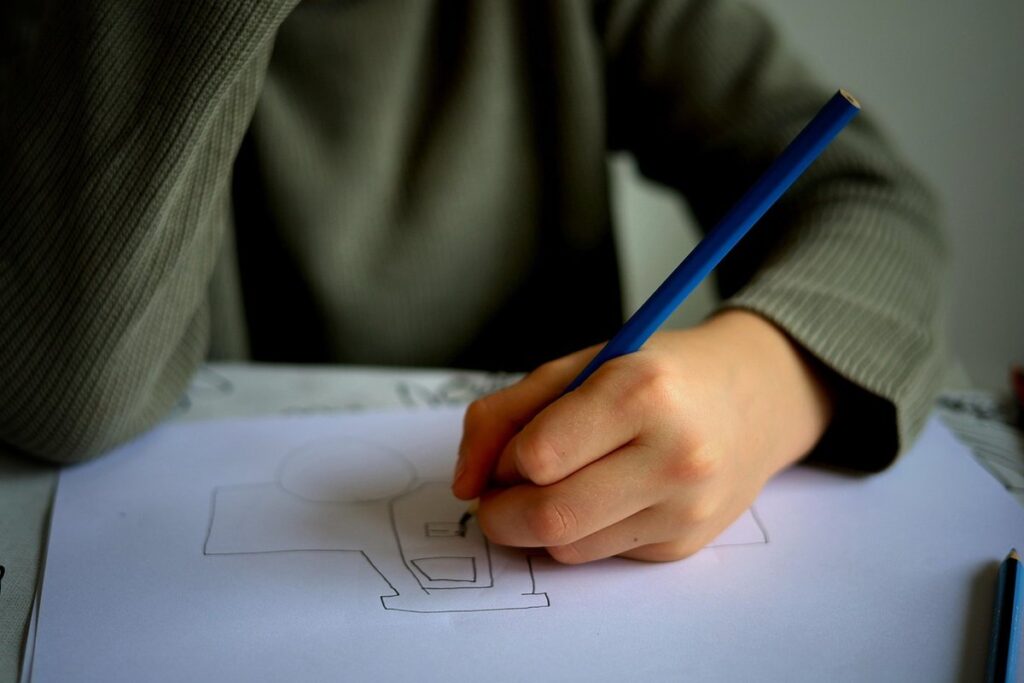
Let’s begin with the fundamentals, where you’ll learn how to hold a pencil correctly and understand basic shapes, lines, and values that form the building blocks of any drawing. This will set the stage for more advanced techniques.
Understanding the Fundamentals of Art
When learning to draw, it’s essential to understand the fundamental elements of art. These building blocks – line, shape, value, and color – work together to create the illusion of three-dimensional form on a two-dimensional surface.
A line is a continuous mark made on a surface by a drawing tool. It can vary in width, length, direction, and curvature. Understanding different types of lines – straight, curved, diagonal, and zigzag – will help you achieve various effects in your drawings. For example, using long, flowing curves to suggest movement or short, broken lines for more energetic expressions.
Shapes are the foundation of form. They can be geometric (square, circle, triangle) or organic (free-flowing, irregular). Basic shapes are combined to create more complex forms. Think of a simple exercise: drawing a basic shape and then adding details to turn it into a recognizable object.
Value refers to the lightness or darkness of an area on your paper. It’s achieved through varying line weights, texture, and shading techniques. Understanding value is crucial for creating depth and dimension in your drawings. Color adds another layer of meaning and emotion to your artwork. When used thoughtfully, it can evoke mood, atmosphere, and even narrative.
Choosing the Right Tools for You
When it comes to selecting tools for drawing, you have a wide range of options available. Traditional mediums like pencils, pens, and charcoal are popular choices for many artists, offering a tactile experience and expressive qualities that can be difficult to replicate with digital tools.
Some artists prefer graphite pencils because they allow for subtle shading and blending, while others swear by the bold lines and expressive strokes made possible with felt-tip pens or fine liners. Charcoal is also a versatile option, capable of producing both delicate textures and richly detailed sketches.
For those who prefer working digitally, there are numerous drawing software programs to choose from, such as Adobe Illustrator Draw, Autodesk Sketchbook, or Krita. These tools often come with a range of brushes and customization options, allowing you to create realistic effects or experiment with unique styles.
Consider your personal preference for texture and feel when selecting traditional mediums. For digital tools, think about the type of work you’ll be doing most often – portrait drawing, landscape painting, or cartooning – and choose software that offers relevant features and brushes.
Setting Up Your Drawing Space
To create a conducive drawing environment, it’s essential to set up an area that promotes comfort and focus. Start by selecting a dedicated space for drawing, free from distractions and interruptions. If possible, position yourself near a natural light source or invest in a good desk lamp. Avoid placing your easel or drawing board directly under a window, as this can create harsh shadows.
Set up your easel or drawing board at a comfortable height, allowing you to work without straining your neck or back. Choose a stool or chair with good lumbar support and consider investing in an anti-fatigue mat for long drawing sessions. Keep frequently used tools within easy reach to avoid interruptions and maintain focus.
When setting up your space, consider the ergonomics of your workspace. Ensure that your monitor (if you’re using one) is at eye level or slightly below, and your chair height allows you to rest your feet flat on the floor. Experiment with different layouts until you find a setup that feels comfortable and conducive to creative work.
Understanding Basic Shapes and Forms
Mastering basic shapes and forms is the foundation of drawing, so let’s start by learning to recognize and create these essential elements. This will help you build a strong foundation for more complex drawings.
Recognizing Basic Geometric Shapes
Recognizing basic geometric shapes is an essential skill for drawing and art. These shapes are the building blocks of form and structure, found in everyday objects like furniture, buildings, and even the human body. Start by familiarizing yourself with common geometric shapes: circles, squares, triangles, rectangles, and hexagons. A circle can be recognized by its continuous curved edge, while a square is defined by four equal sides meeting at right angles.
Notice how these shapes are used in real-life objects to create visual interest and balance. For example, the circular shape of a clock face or a coin creates symmetry, while the rectangular shape of a book cover or a piece of paper provides a sense of stability. When drawing, try to break down complex forms into their basic geometric components.
Consider a simple still life composition: a vase on a table. The vase is composed of a cylindrical body (circle) and a circular base (disc), resting on a rectangular tabletop. By recognizing the underlying geometric shapes in everyday objects, you’ll develop your observational skills and improve your ability to accurately draw forms from real-life observation.
Breaking Down Complex Forms into Simple Shapes
When drawing complex forms like spheres or cylinders, it can be overwhelming to capture their curves and contours. However, these shapes often have underlying structures made up of simpler geometric forms that you can break down for easier drawing. For example, a sphere is essentially a collection of interconnected circles, while a cylinder is two connected circles with a rectangle in between.
To visualize these simpler shapes, try mentally dissecting the complex form into its constituent parts. Look at the sphere and imagine it as a series of concentric circles, each one overlapping the next to create a seamless curve. Alternatively, you can draw the shape by focusing on its individual components, such as drawing separate ellipses for the top and bottom of a cylinder.
One technique for creating these forms is to use a grid method: divide your paper into a series of squares or rectangles and then map out the complex form’s contours onto the grid. This allows you to build up the shape gradually, one section at a time, rather than trying to draw it all at once.
Practicing Different Drawing Techniques
Now that you’ve mastered the basics, it’s time to experiment and refine your skills by practicing various drawing techniques. Let’s start with gesture drawing and hatching.
Basic Line Art Exercises
To improve your line art skills, it’s essential to practice basic strokes and techniques. Start with hatching, which involves creating parallel lines that follow the contours of a subject. Begin with simple subjects like spheres or cylinders, gradually moving on to more complex forms. Experiment with varying line weights and spacings to achieve different textures and effects.
Next, try cross-hatching by layering hatching strokes at different angles. This technique creates deep, rich tones and adds dimension to your drawings. Pay attention to how the lines intersect and interact – this will help you develop control over your pencil marks.
Stippling is another valuable exercise for improving line quality. Create images using small dots that gradually build up to form a complete picture. Start with simple subjects like fruit or household objects, then move on to more complex compositions. Remember, stippling requires patience and attention to detail – but the results are well worth the effort.
Remember to practice gesture drawing as well, which involves quickly sketching the overall pose and movement of a subject. This exercise helps loosen up your lines and capture the energy of a scene.
Value and Shading Exercises
To achieve smooth transitions between light and dark areas, practice value and shading exercises using a range of tools and mediums. Start by creating a simple still life setup with objects of varying textures and values. Using a graphite pencil, create a basic underdrawing to establish the overall shape and form of the composition.
Next, focus on capturing subtle value shifts by applying gentle hatching and cross-hatching techniques. For example, use short, soft strokes for lighter areas and longer, more deliberate strokes for darker areas. Experiment with blending stumps or tortillons to smooth out transitions between values. When working with darker shades, consider using a range of pencils from 2H to 6B, as each has a distinct value and texture.
To add depth and dimension to your drawing, incorporate shading techniques such as chiaroscuro, sfumato, or hatching with varying line weights. You can also use other mediums like charcoal, pastels, or ink to achieve unique textures and values. Practice these techniques regularly to develop a keen sense of value and shading in your drawings.
Learning from Examples and Observations
When studying the works of masters, it’s easy to get caught up in trying to replicate their style exactly. Instead, focus on understanding what makes their drawings effective.
Analyzing the Work of Other Artists
When analyzing the work of other artists, it’s essential to identify what makes their pieces successful. Start by looking at composition – how they balance elements within a single frame. Pay attention to negative space and how it contributes to the overall mood or energy of the artwork. Notice how the artist leads your eye through the piece using visual flow.
Consider the style of the artist, including brushstrokes, line weight, and color palette. Are there any distinct characteristics that make their work recognizable? Try to understand what elements they emphasize – texture, form, gesture, or something else entirely.
Look at how the artist uses value and contrast to create depth and dimension. Notice if they use chiaroscuro, atmospheric perspective, or other techniques to create a sense of space.
When you’re analyzing another artist’s work, ask yourself: What do I like about this piece? Is it the composition, the style, or something else? Can I apply any of these elements to my own artwork? By studying the work of others and understanding what makes their pieces successful, you can develop your skills and grow as an artist.
Drawing from Observation
Drawing from real-life subjects is an essential aspect of learning to draw. When you observe and draw from observation, you develop a deeper understanding of form, texture, and structure. This skill helps you create more accurate and detailed drawings.
To improve your observation skills, practice drawing from life by observing objects, people, or still-life compositions. Start with simple subjects like fruit or household items and gradually move on to more complex ones. As you draw, pay attention to the shapes, proportions, and details of the subject. Notice how light falls on different surfaces and how it affects their appearance.
When drawing from observation, focus on capturing the essence of the subject rather than trying to create a perfect representation. Use simple shapes and lines to break down complex forms into manageable parts. Practice observing and drawing regularly to develop your skills. Set aside time each day or week to observe and draw from life, even if it’s just for a few minutes.
Some tips for improving observation skills include:
• Focusing on one aspect of the subject at a time (e.g., shape, value, texture)
• Using simple shapes to break down complex forms
• Paying attention to proportions and measurements
• Practicing regularly with different subjects and environments
Overcoming Common Challenges in Learning to Draw
One of the biggest hurdles new artists face is overcoming self-doubt and frustration when their drawings don’t turn out as expected. We’ll tackle these common challenges head-on in this section.
Dealing with Self-Criticism and Fear of Failure
When you’re just starting out with drawing, it’s common to feel self-critical and worried about making mistakes. This fear of failure can hold you back from practicing regularly and exploring your creativity. One major obstacle is comparing yourself to others – whether it’s professional artists or classmates who seem more skilled. Try to focus on your own progress rather than comparing yourself to someone else’s finished work.
It’s essential to remember that everyone starts somewhere, even the most experienced artists. They too had to begin with simple shapes and forms before mastering complex techniques. When self-criticism creeps in, try to reframe your thoughts by focusing on what you’ve accomplished so far, rather than dwelling on what’s still to learn.
To overcome fear of failure, set achievable goals for each practice session. Start with short exercises that allow you to experiment with different lines, values, and shapes without feeling overwhelmed. As you build confidence, gradually increase the complexity of your drawings. Celebrate small victories, no matter how tiny they may seem, and remind yourself that mistakes are an essential part of the learning process – not something to be ashamed of.
Building Confidence through Consistent Practice
Consistent practice is essential for building drawing skills and confidence. When you commit to regular practice, you begin to notice improvements in your work, which can be a powerful motivator. To stay on track, set aside a specific time each day or week for drawing, and try to make it a habit.
One way to track progress over time is by setting achievable goals. Break down larger projects into smaller, manageable tasks, and focus on completing one task at a time. This will help you build momentum and see tangible results. You can also use a sketchbook or digital tool to record your work, allowing you to look back on past pieces and see how far you’ve come.
To stay motivated, remind yourself why you started drawing in the first place. Whether it’s for relaxation, self-expression, or creative challenge, reconnect with your original goals and passions. Experimenting with different styles and techniques can also help keep things fresh and exciting. For example, try drawing from life (still-life compositions) one day, and then move on to gesture drawing or simple shapes the next. This variety will help prevent boredom and keep you engaged in the learning process.
Mastering Advanced Techniques and Styles
As you become more confident in your drawing skills, it’s time to take on new challenges and master advanced techniques that will elevate your art to the next level. We’ll explore some of the most complex styles and methods to help you push your creativity further.
Exploring Different Drawing Styles and Genres
Drawing styles and genres offer a vast array of possibilities for artists to express themselves. Realism seeks to accurately depict the world around us, often with minute attention to detail. Cartooning, on the other hand, involves simplifying forms and exaggerating features for comedic or humorous effect.
Illustration can take many forms, from children’s book art to graphic novels. Abstract art breaks free from representational constraints, exploring color, texture, and emotion through non-representative means. Understanding these styles is essential for artists looking to expand their skill set.
One key aspect of mastering different drawing styles is adapting them to your own unique voice. This requires experimentation and practice. Start by researching the characteristics of various styles – study the work of notable illustrators or cartoonists, analyze the techniques used in realism, and explore the emotional resonance of abstract art.
To incorporate these styles into your work, try the following exercises: Develop a personal project that combines elements from multiple styles; create a series of pieces showcasing different genres (e.g., a cartoon character in a realistic setting); experiment with non-traditional materials or techniques to achieve unique textures and effects. By embracing diverse drawing styles and genres, you can break free from creative stagnation and unlock new avenues for self-expression.
Refining Skills through Practice and Experimentation
To refine your drawing skills, it’s essential to continue practicing and experimenting with new techniques. This involves pushing yourself beyond your comfort zone, where you may feel uncertain or uncomfortable about the outcome. Start by trying a different style or medium, such as switching from pencils to ink or watercolors. Experimenting with various tools can help loosen up your drawing habits and encourage creativity.
Another way to challenge yourself is to set aside time each week for freestyle practice, without referencing any tutorials or guides. This allows you to focus on the process, not just the end result. You might try capturing a subject from memory, or attempting a more complex composition. It’s also helpful to take breaks and approach your drawing with fresh eyes – often, stepping away from a piece can help you see it anew.
For instance, if you’re struggling with rendering textures, practice drawing different surfaces like wood, fabric, or stone. You might study the brushstrokes used by artists in various styles or mediums, then try to replicate them. By consistently pushing your skills and exploring new techniques, you’ll develop a more nuanced understanding of drawing and its many possibilities.
Frequently Asked Questions
Can I start learning to draw with digital tools or should I stick to traditional media?
You can start with either digital or traditional media, as both have their own benefits and drawbacks. Digital drawing software can be more forgiving and allow for easier experimentation, while traditional media can provide a more tactile experience and better understanding of fundamentals.
How long will it take me to see significant improvement in my drawing skills?
The amount of time it takes to improve depends on the frequency and quality of practice. Consistent effort over several weeks or months is likely to yield noticeable progress, but individual results may vary. Be patient and focus on building a solid foundation in the basics.
What if I get stuck or frustrated with a particular drawing exercise – how do I overcome the mental block?
When feeling stuck or frustrated, try taking a break from the specific exercise and come back to it later with fresh eyes. Alternatively, switch to a different exercise or medium to maintain momentum and interest. Don’t be afraid to seek guidance from online resources or more experienced artists.
Is it necessary to practice drawing regularly, even if I’m busy or don’t feel inspired?
Yes, regular practice is essential for building and maintaining drawing skills. Try setting aside a specific time each week for drawing, even if it’s just 15-20 minutes. Consistency will help you stay motivated and develop a stronger connection with your creative potential.
Can I apply the techniques learned from this guide to other forms of art or creative pursuits?
Yes, the fundamental principles of art and drawing can be applied across various mediums and disciplines. By understanding how to break down complex subjects into basic shapes and value structures, you’ll be able to adapt these skills to painting, sculpture, photography, or any other creative pursuit that interests you.

