
It’s a familiar scene: opening the fridge door to reveal a jumbled mess of containers, leftovers, and mysterious Tupperware from who-knows-when. You know you need to tackle your fridge organization, but where do you even start? A cluttered fridge not only wastes time when searching for what you need, but it’s also a major contributor to food waste. In fact, did you know that the average household throws away around 40% of its groceries due to spoilage and expired items? By implementing some simple storage solutions and maintenance strategies, you can save yourself from this frustrating cycle and keep your fridge running smoothly. In this article, we’ll share expert tips on how to organise the fridge, so by the end, you’ll be able to create a functional space that makes meal prep a breeze and helps reduce food waste.
Understanding the Importance of Fridge Organisation
A cluttered fridge can be a recipe for food waste and frustration, so let’s start by understanding why organisation is key to maintaining a clean and functional kitchen. Proper storage can make all the difference in keeping your perishables fresh.
Benefits of a Well-Organsied Fridge
Keeping your fridge organized can have a significant impact on various aspects of your kitchen environment. One of the most notable benefits is the time saved when searching for ingredients or leftovers. A well-organized fridge allows you to quickly identify what’s inside, making meal planning and grocery shopping more efficient.
Reducing food waste is another advantage of maintaining a tidy fridge. When food is stored in designated areas and easily accessible, it’s less likely to spoil prematurely. Labeling containers with their contents also helps prevent accidental disposal of edible items. Typically, a small minority of households experience significant losses due to expired or spoiled food; organizing your fridge can help mitigate this issue.
An organized kitchen environment also contributes to a more pleasant cooking space. Clearing clutter from the fridge shelves and drawers not only makes it easier to find what you need but also prevents the buildup of unpleasant odors and stains. By dedicating specific sections for frequently used items, condiments, and leftovers, you can maintain a sense of order and visual balance in your kitchen.
Common Challenges with Fridge Organisation
When trying to organize their fridges, many people face common obstacles. One of the most significant challenges is the lack of space within the fridge itself. Fridges come in various sizes, but the average kitchen has limited storage capacity. This can lead to cluttered shelves and a disorganized layout.
Another challenge is maintaining order over time. It’s easy to put off cleaning or reorganizing the fridge when it gets busy, but this often leads to forgotten leftovers and expired food. To combat this issue, consider implementing a “first in, first out” policy for your groceries and regularly checking expiration dates. For example, you can store newer items at eye level, making them more visible and accessible.
Additionally, people may struggle with categorizing and storing specific types of food, such as fruits or vegetables, which require distinct storage conditions to maintain freshness. To overcome this challenge, consider assigning a dedicated shelf for each type of food, using dividers or containers to keep items organized and easily identifiable.
Creating a Fridge Layout That Works for You
Now that you’ve decluttered your fridge, let’s focus on arranging your contents in a way that makes sense for your daily routine and food preferences. This involves strategically placing frequently used items within easy reach.
Maximising Vertical Space in Your Fridge
Make the most of your fridge’s vertical space by using stackable containers and baskets. These can be used to store items like condiments, oils, or even leftovers. For example, you could use a set of small glass jars with lids for your spices or seasonings. This keeps them organized and easy to access, while also keeping countertops clear.
Another option is to use baskets to corral similar items together. A wicker basket can hold produce like apples or carrots, keeping them fresh and visible. You can also use a stackable container to store bulk items like canned goods or bread. Label each container or basket so you know what’s inside without having to open it.
To maximize vertical space in your fridge, consider the height of each shelf as well as the depth. Make sure to place heavy items at the bottom and lighter items towards the top. This prevents the shelves from bowing under too much weight and keeps your fridge running efficiently. By using stackable containers and baskets strategically, you can create a more organized and functional fridge that makes the most of its available space.
Effective Storage Solutions for Fridge Shelves
When it comes to storing items on fridge shelves, you need solutions that keep contents organized and easily accessible. Baskets are a great option for this purpose, as they can be placed on individual shelves or even used to separate different types of food within a single shelf. You can opt for wire baskets, which allow for airflow and visibility, or choose wicker ones for a more rustic look.
Plastic bins are another versatile storage solution that can be used on fridge shelves. They come in various sizes and can be easily cleaned with soap and water. To maximize their effectiveness, consider using stackable bins to make the most of vertical space. This is particularly useful for storing condiments or leftovers.
Dividers are also a great way to separate items within a single shelf, preventing clutter from building up. They come in various materials, including adjustable metal dividers that can be customized to fit different-sized shelves. Some examples include the accordion-style divider or the telescoping divider with multiple compartments. These solutions help keep your fridge tidy and make it simpler to find what you need when you open the door.
Organizing Food Groups in the Fridge
To optimize fridge storage, categorize and group similar foods together, such as meats, dairy products, fruits, and vegetables. This will make it easier to find what you need when cooking.
Categorising and Storing Fresh Produce
When categorizing fresh produce, group similar items together, such as all fruits or all leafy greens. This makes it easier to monitor their freshness and use them before they spoil. Store fruits, like apples and bananas, on the top shelf where ethylene production is highest, which can help ripen other nearby produce.
For crisp vegetables like carrots and broccoli, store them in the crisper drawer with high humidity to slow down moisture loss. Leafy greens like lettuce and kale prefer a slightly drier environment and should be stored away from strong-smelling foods that may transfer odors.
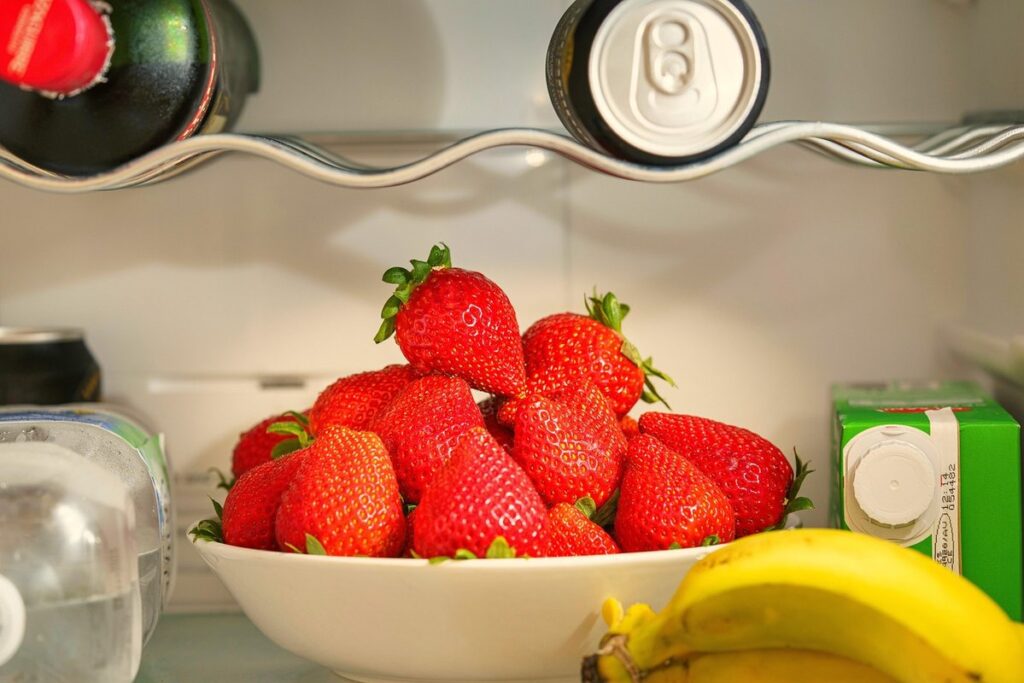
To keep berries fresh for longer, store them in a covered container on the middle or top shelf. Berries release ethylene gas quickly, which can cause nearby produce to spoil faster. Some fruits, like grapes and pineapples, are best stored at room temperature away from direct sunlight.
Managing Meat, Dairy, and Eggs in the Fridge
When storing meat, dairy products, and eggs in the fridge, it’s essential to keep them separate from other food groups to prevent cross-contamination. Meat should be stored in a covered container on the bottom shelf to prevent juices from leaking onto other foods. Labeling raw meat with its contents and date can help you identify it quickly when it’s time to use or dispose of it.
Dairy products, such as milk and cheese, typically have a shorter shelf life than other items. Store them in their original containers on the middle shelf, away from strong-smelling foods like fish. Raw eggs should be stored in their carton on the middle or top shelf, where they’re less likely to get knocked over.
When storing meat, consider the different types separately: raw meat (beef, pork, and lamb), poultry, and fish. Store raw meat in a covered container, while cooked or ready-to-eat poultry and fish can be stored on the top shelf in covered containers. Regularly check expiration dates and consume perishable items before they spoil to maintain a safe and organized fridge environment.
Maintaining Your Fridge’s Organisation
Now that you’ve organized your fridge, let’s talk about how to maintain that tidiness and keep it clutter-free for the long haul.
This involves implementing a few simple habits and regular check-ins to ensure everything stays in its place.
Regular Cleaning and Maintenance
Regular cleaning and maintenance are essential to maintaining your fridge’s organisation over time. A clean fridge is not only more aesthetically pleasing but also helps prevent the growth of bacteria and mold, which can cause unpleasant odors and even food poisoning.
Set aside some time each week to wipe down shelves, walls, and floors with a mixture of soap and warm water. This will help remove any spills or splatters that may have accumulated. It’s also crucial to regularly clean the fridge’s drawers and shelves, as these areas can harbor dirt and debris.
In addition to cleaning, make sure to check expiration dates on stored food items and discard expired or spoiled goods immediately. Remove any magnets, notes, or other removable items from the fridge walls and sort them into categories for easier organisation in the future. This simple habit will save you time and energy in the long run, allowing you to maintain your fridge’s organisation with minimal effort.
Strategies for Resisting Clutter Build-Up
Implementing a “first-in, first-out” system is an effective way to prevent clutter build-up in your fridge. This means that you consume older items before they expire and newer ones replace them. Label each item with the date it was opened or purchased, making it easier to identify which products are closest to their expiration dates.
To take this approach a step further, consider designating a “front” section for frequently used items and a “back” section for less frequently consumed goods. This will help you access what you need quickly while keeping the less essential items out of sight. By doing so, you’ll be more inclined to use up older products before they go bad.
Additionally, establish a regular cleaning schedule to remove expired or spoiled food from your fridge. Set aside time each week or month to clean and reorganize your fridge, checking expiration dates and disposing of any items that are past their prime. This proactive approach will prevent clutter build-up and maintain the organization of your fridge over time.
Advanced Organisation Techniques
For those who already have a solid grasp of fridge organisation basics, we’ll take it up a notch with advanced techniques to maximise storage and efficiency. This includes clever container use and zone creation strategies.
Utilising Fridge Accessories for Maximum Efficiency
Customizing your fridge with the right accessories can significantly boost its organisational potential. For instance, adjustable shelves enable you to accommodate items of varying heights, making it easier to store jars and bottles behind heavier containers. Some shelves even have built-in dividers that keep perishables separate from non-perishables.
Drawer inserts are another organisational gem for fridge storage. These usually come in the form of ventilated baskets or crisper drawers that preserve produce freshness by maintaining optimal humidity levels. Some models feature removable liners, which facilitate cleaning and maintenance.
You can also repurpose the space on your fridge doors with magnetic strips or hooks. Store frequently used items like spice jars, cheese boards, or even a small knife block within easy reach. This keeps countertops clear and makes it simpler to access essentials during meal prep. When selecting accessories, consider the types of containers you use most often – do you have tall juice bottles or wide containers for leftovers? Choose a shelf or drawer configuration that accommodates these dimensions for maximum efficiency.
Customising Your Fridge’s Layout for Specific Needs
For large families, consider assigning a designated shelf or section for frequently consumed items, such as milk, juice, and snacks. This keeps essentials within easy reach and prevents overcrowding. You can also label each shelf with its contents to ensure everyone knows where to find what they need.
If you follow a specific diet, like gluten-free or vegan, store corresponding products together to streamline meal planning and preparation. Designate a separate area for frozen meals or leftovers to help track consumption and reduce waste.
To accommodate varying family members’ preferences, set up a “community fridge” section where everyone can contribute and access shared items. This could be a dedicated shelf or container for communal foods like yogurt, cheese, or fruit. Be sure to establish clear labeling and rotation procedures to maintain organization and fairness.
Consider your personal needs as well – if you have limited mobility or vision impairments, choose easy-to-reach storage locations and label items in large print or Braille.
Troubleshooting Common Organisation Issues
We’ve all been there – a messy fridge that’s driving you crazy. Let’s tackle some of the most common organisational problems you might be facing in your kitchen.
Addressing Obstacles Like Overcrowding and Accessibility
Overcrowding is a common problem in many fridges, making it difficult to find what you need and potentially leading to food waste. To address overcrowding, start by removing any expired or spoiled items from the fridge. Be ruthless – if it’s past its prime, get rid of it. Next, take everything out of the fridge and sort items into categories (e.g., dairy, meats, produce). This will help you see what you have and where it should go.
For limited accessibility, focus on improving visibility and reach in your fridge. Consider installing adjustable shelves or baskets that can be moved up or down to accommodate taller items. You can also use stackable containers or bins to maximize vertical storage space. For example, store infrequently used items like leftovers or frozen meals at the back of a shelf or in a high cabinet.
Another issue related to accessibility is labeling and inventory management. Use sticky notes or a whiteboard marker to label contents on shelves, making it easier to find what you need without having to dig through containers. You can also use an app or spreadsheet to track your fridge’s inventory, helping you keep tabs on what’s running low and avoid buying duplicates.
When addressing overcrowding and limited accessibility in the fridge, remember that prevention is key. Set a “first-in, first-out” rule for perishable items to ensure older products get used before they expire. This will help maintain an organized system and reduce waste over time.
Frequently Asked Questions
How Can I Adapt My Fridge Organisation System for an Out-of-Town Trip?
You can adapt your fridge organisation system for an out-of-town trip by using containers with airtight seals to keep food fresh and implementing a “first-in, first-out” system to ensure you consume perishable items before they spoil. This will help prevent food waste and keep your home from smelling unpleasant while you’re away.
Can I Mix Cold-Storage Categories on the Same Shelf for Convenience?
Yes, you can mix cold-storage categories on the same shelf for convenience, but it’s essential to group similar items together and maintain a logical organisation system to avoid confusion. Consider using labels or dividers to separate categories and keep frequently used items at eye level.
What if I Have Limited Space in My Fridge – Are There Any Compact Organisation Solutions?
Yes, there are compact organisation solutions for fridges with limited space. Look into using stackable containers, fridge baskets, and wall-mounted shelves to maximise vertical space and keep your fridge clutter-free. Consider a magnetic spice strip or a fridge liner to add extra storage without taking up valuable shelf real estate.
How Do I Maintain My Fridge Organisation System When Family Members Don’t Follow the Rules?
Maintaining a fridge organisation system when family members don’t follow the rules can be challenging, but implementing clear communication and setting expectations can help. Consider creating a shared fridge calendar to track expiration dates or designating specific shelves for each person’s food items. This will promote accountability and encourage others to respect your organisation system.
Can I Use My Fridge Organisation System for Other Kitchen Areas, Like the Pantry?
Yes, you can use your fridge organisation principles for other kitchen areas like the pantry by applying similar storage solutions and categorising systems. Consider using stackable containers, baskets, or shelves in your pantry to keep items off the floor and within easy reach. This will help maintain a clutter-free kitchen environment and save time when searching for ingredients.

